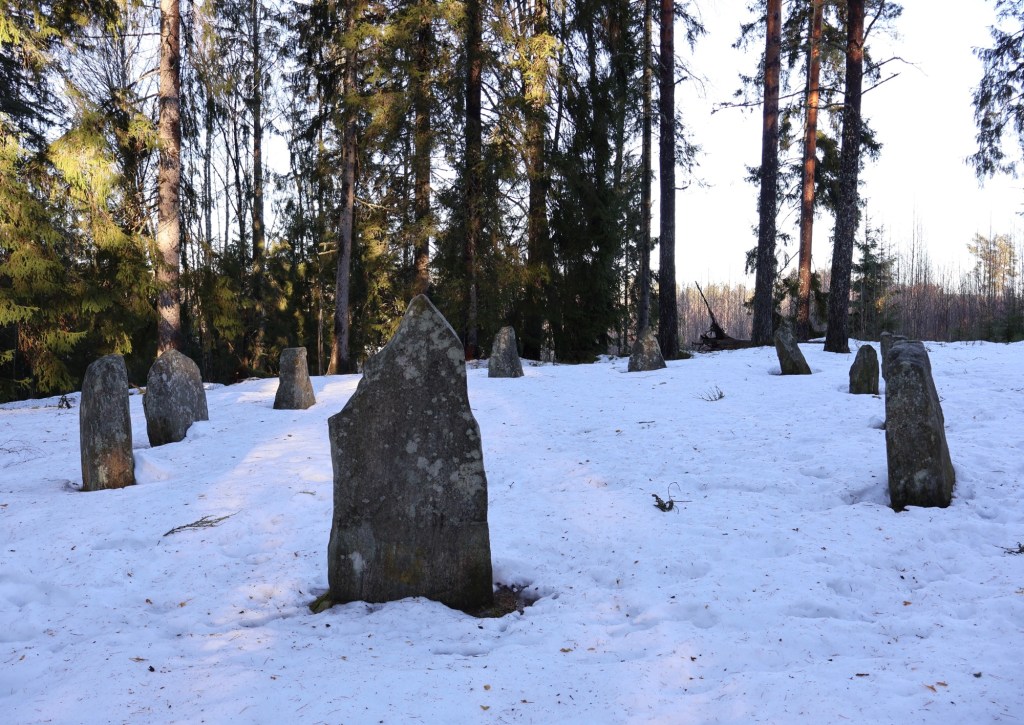
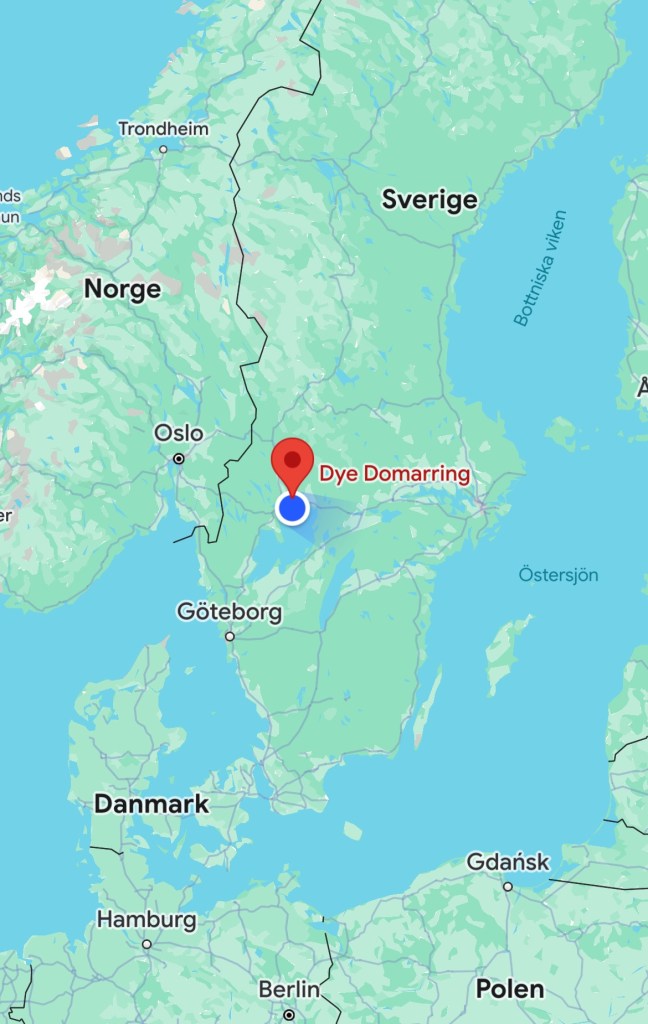
On a hill in the woods just outside of Karlstad lies Dye Domarring. We are now in the province of Värmland, Sweden and the wood were the monument is located used to be a training area for the military regiment I2. So the wood is often called I2 skogen among locals.

This hill seems to have been important to people for a very long time. During the Stone Age the hill was an island. Back then the land was much lower and the water line mutch higher than it is today, this is because the ice sheet during the Ice age was so thick, 3.5 kilometers. The enormous weight of all that ice pushed the land down. When the ice melted the land started to rise up again.
This process is still going on here in Scandinavia, the further north you go the more it rises each year.
In 1971-72 archeologists excavated the circle and found fire pits dated to 3600 BCE and flint shards from Stone Age tool production.
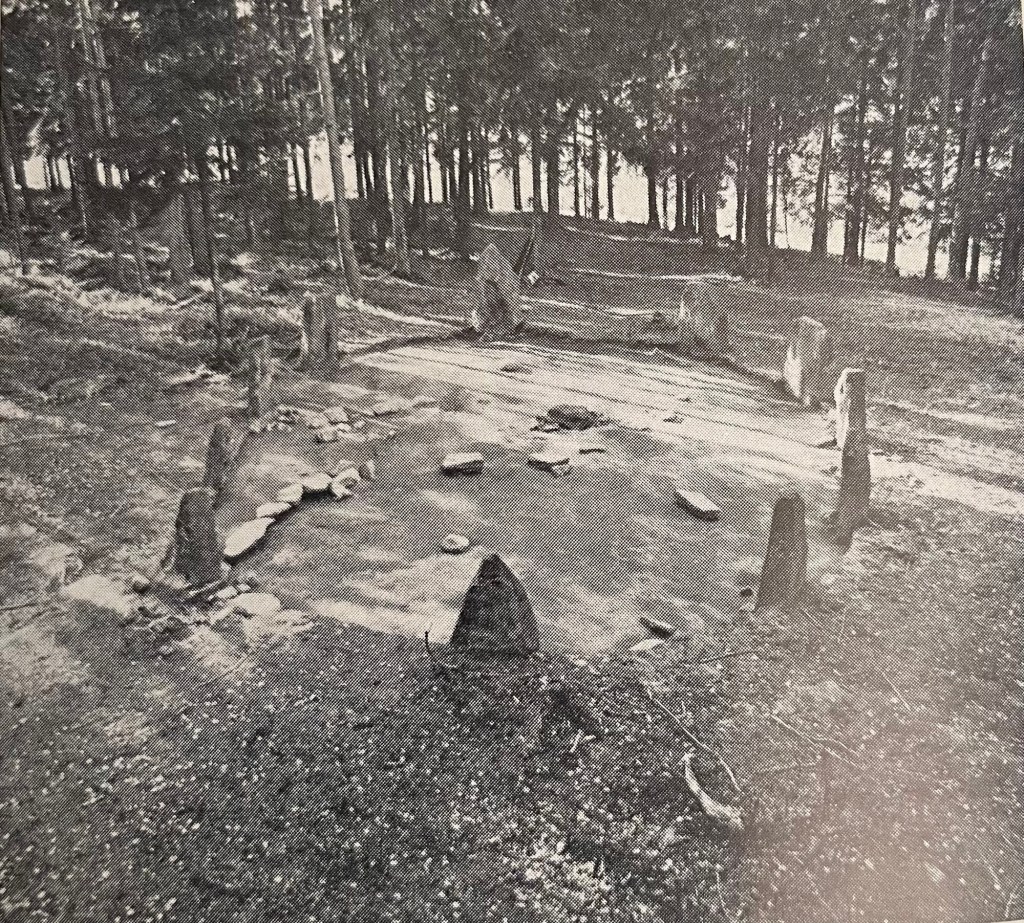
These Stone Age finds predates the stone circle with several thousands of years. The stones were erected sometime between 390 and 590 CE according to carbon dating.
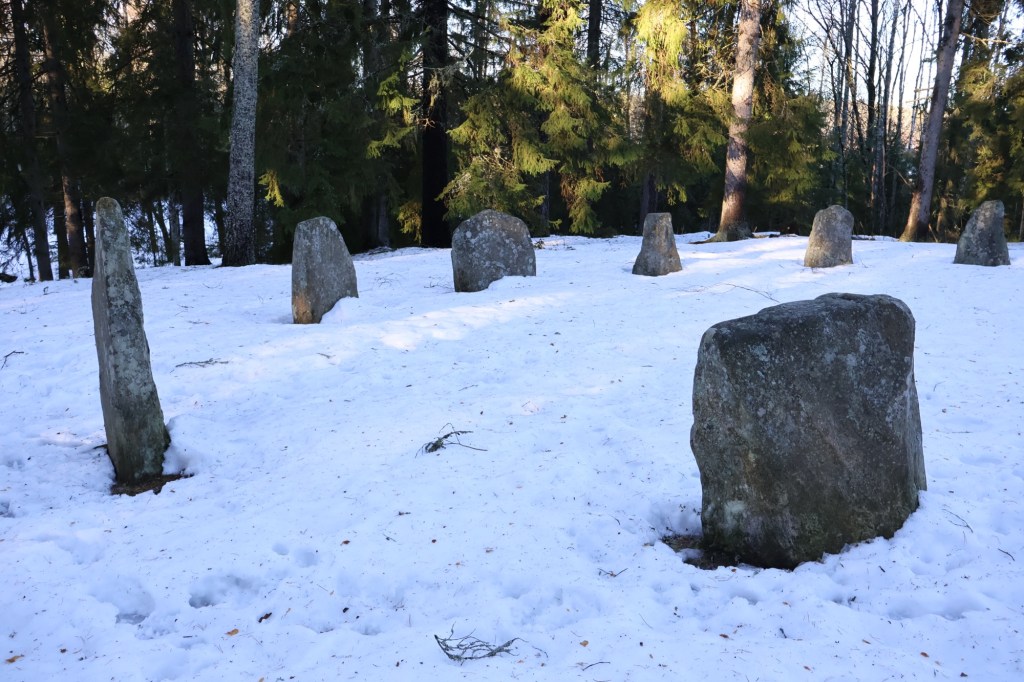
The circle is today oval in shape made up of 11 raised stones. There are a base of a broken stone in the middle that has been broken off. Originally there were two circles just next to each other forming a figure 8 or an infinity symbol. But the second circle is no longer visible.
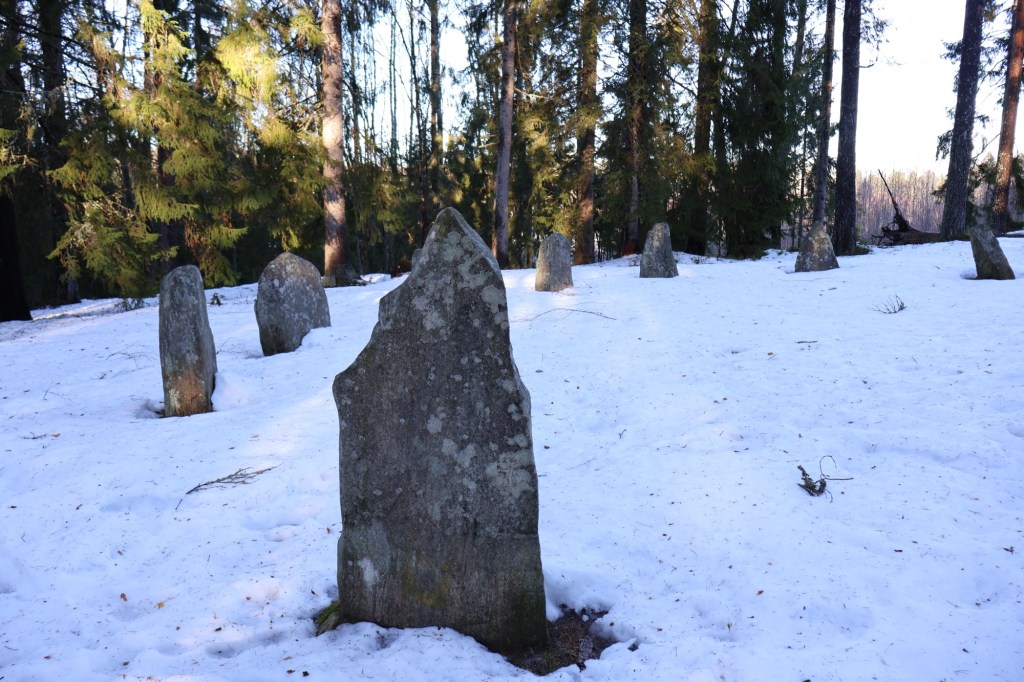
In 1922 the circle was measured by surveyor that got the opinion that the circle should have 12 stones. So when he restored the stones the Swedish National Heritage Board gave their permission to add two more stones, but with the condition that the new stones should be marked to make it possible to tell the difference between old a new stones. For some reason this was not done.
According to a sketch from 1871 made by an unknown artist each circle originally contained 9 stones each.

Inside the circle a stone slab was barely poking through the turf and during the excavation a pit was found under it in which the cremated skeletal remains of a human and a dog was found. The human was between 20 and 40 years of age and the dog had a similar size as a modern German shepherd. A iron rivet was also found in the ashes. The ashes was carbon tested and the results was year 490 +-100 years. In the second circle no graves were found which makes me believe that the rings had a ceremonial use with one circle representing death and one life both being connected.
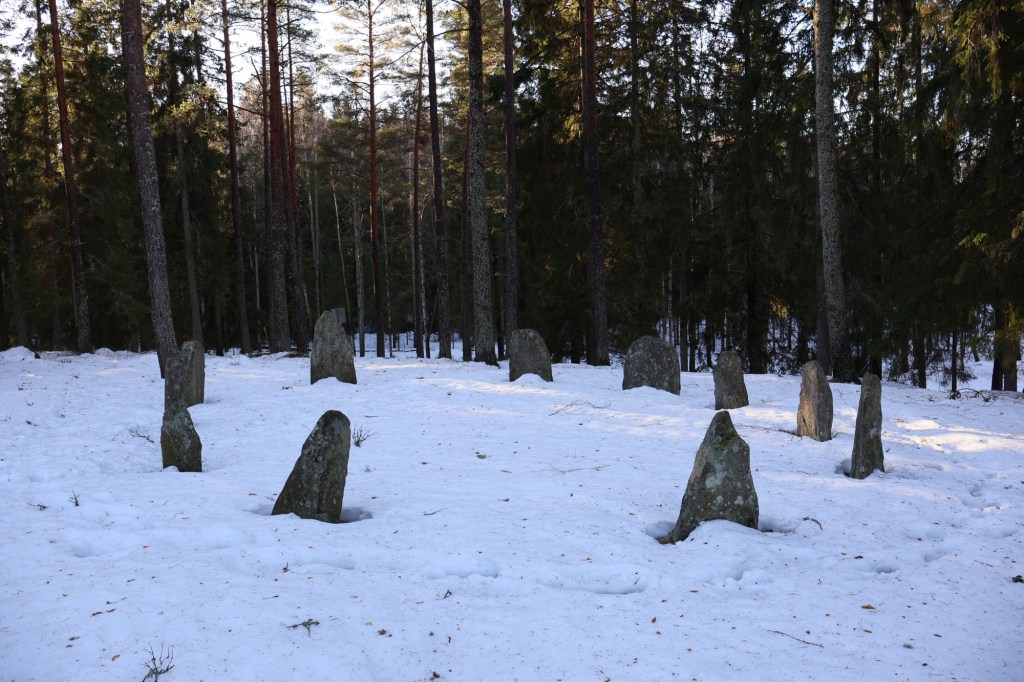
The rest of the hill hasn’t been excavated but it is likely that it contains more graves as this type of stone circle often are found as a part of Iron Age grave fields. They are relatively rare in this part of Sweden and there are only about 30 registered monuments of this type in Värmland. They are more common further south.
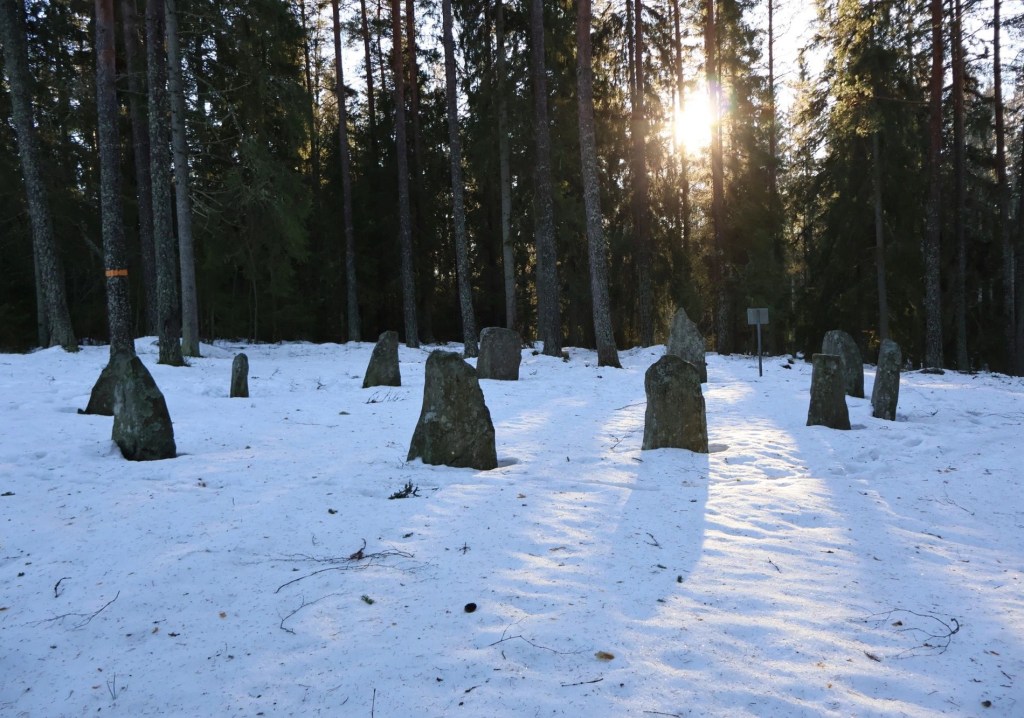
According to old accounts Dye is called “Tingsplatsen” which refers to a place were a Thing was held. This goes back to the popular idea that the stone circles were originally Thing places for local chiefs. This is why they are known as Domarring in Swedish which translates to judging ring. This is most likely a 19th century idea similar to the myth about Vikings whit horned helmets.
In my opinion it is more likely that Ting was held where the nearby town Karlstad now stands. The central parts of town are called Tingvalla and that is the name used in written sources from medieval times abut the place that would become Karlstad.
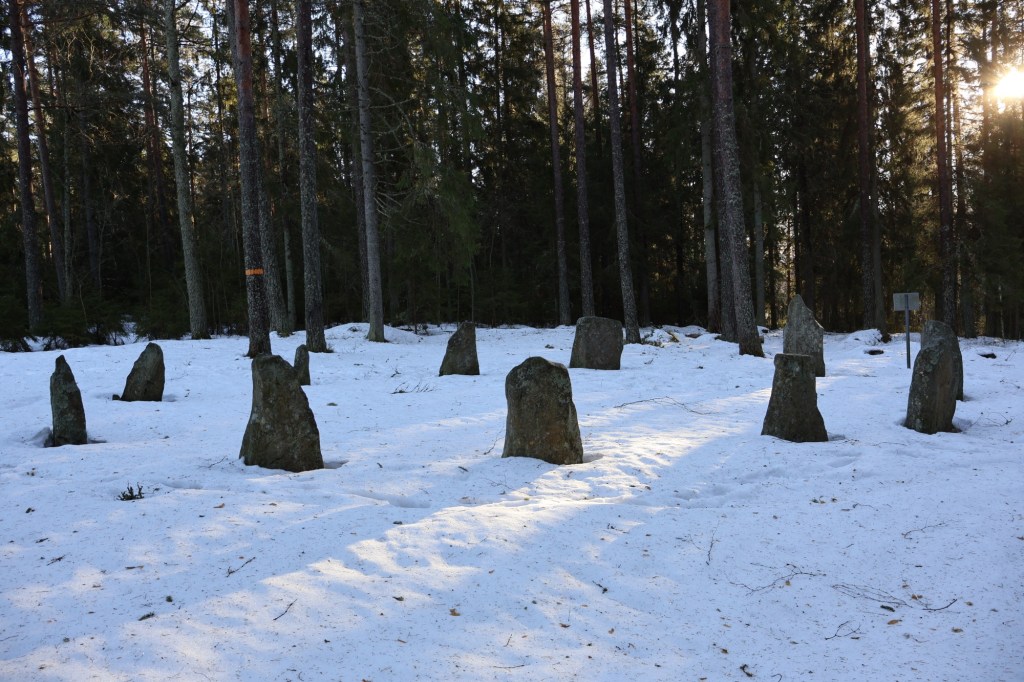
The circles are a type of monument that doesn’t seem to be popular for a very long period and most are dated to a few hundreds of years from each other.
One reason why this site was excavated was that it previous to the 1970s had been badly damaged and vandalized at several different occasions. Some people had lit fires against some of the stones resulting in some of them cracking. A riding trail was going straight through the rings and someone had dug a trash pit in it.
Hopefully this is a thing of the past and the place is nowadays much more respected. It has become a popular place for walkers and other locals.
 Fornminnen
Lämna en kommentar