Källby Hallar or Källby ås as it is also known are located close to Källby on the southern shore of Lake Vänern in the province of Västergötland.
This site really exited me in a way that I rarely experiences when it comes to runes stones. The reason is that I immediately upon arrival realized that this was a very complex site and the monumental size of the rune stones filled me with awe.
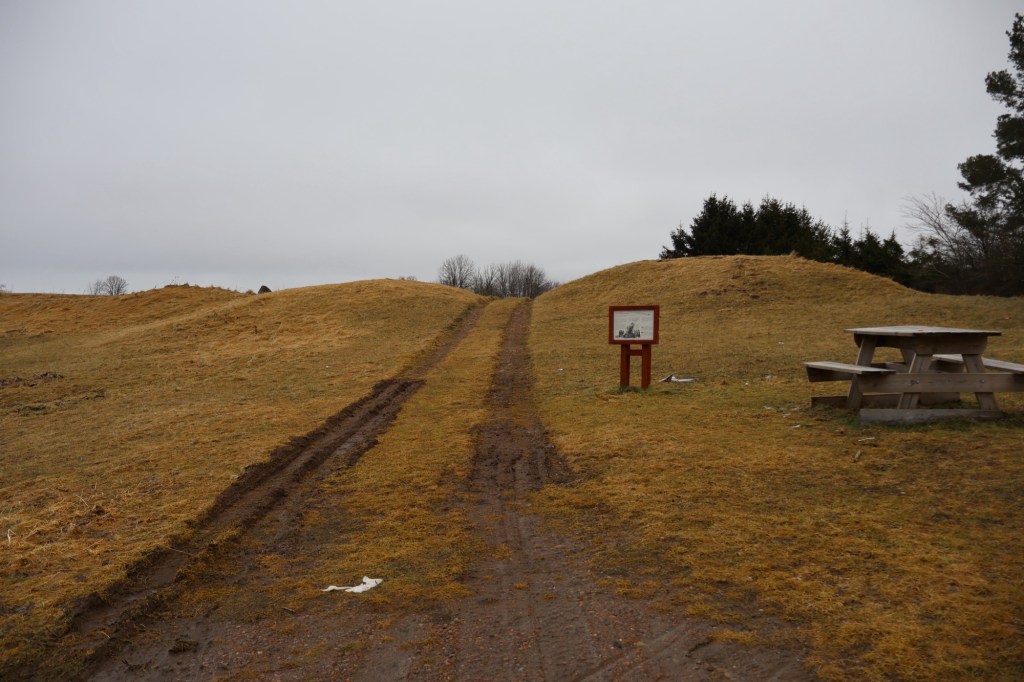
The site consists of a smaller grave field that belonged to a nearby iron age farm. The grave field was in use between 400-1050 CE and consists of several graves in the form of mounds that contain the cremated ashes of the dead placed in an urn together with some grave goods. The grave field was originally larger than it is now, because several graves have been destroyed when locals have used a nearby gravel pit that eventually swallowed large parts of the grave field.

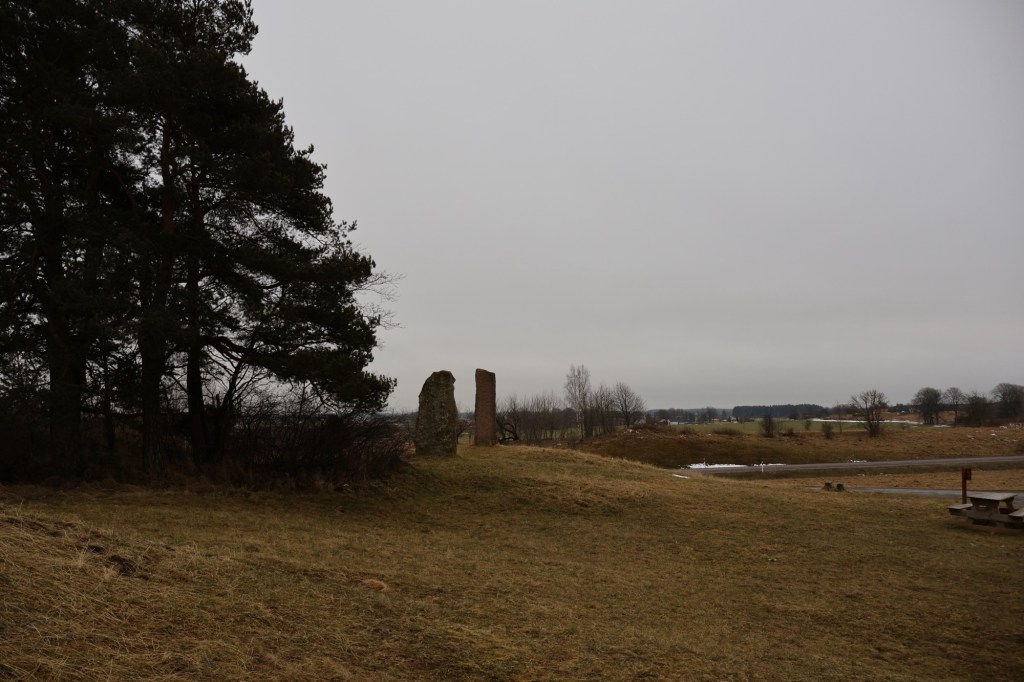
The site also contains two large rune stones located on the top of two mounds on either side of a small road facing each other. According to a local legend the two mounds are supposed to contain mass graves of fallen warriors from a nearby battlefield.

In 1555 Olaus Magnus mentions this place in his book “A Description of The Northern Peoples”. According to him there was originally three large rune stones here with “götiska bokstäver” (Geatish letters) on them. By this he means runic inscriptions. There are however only two stones here now. So if he was correct there is one more large stone that is missing.

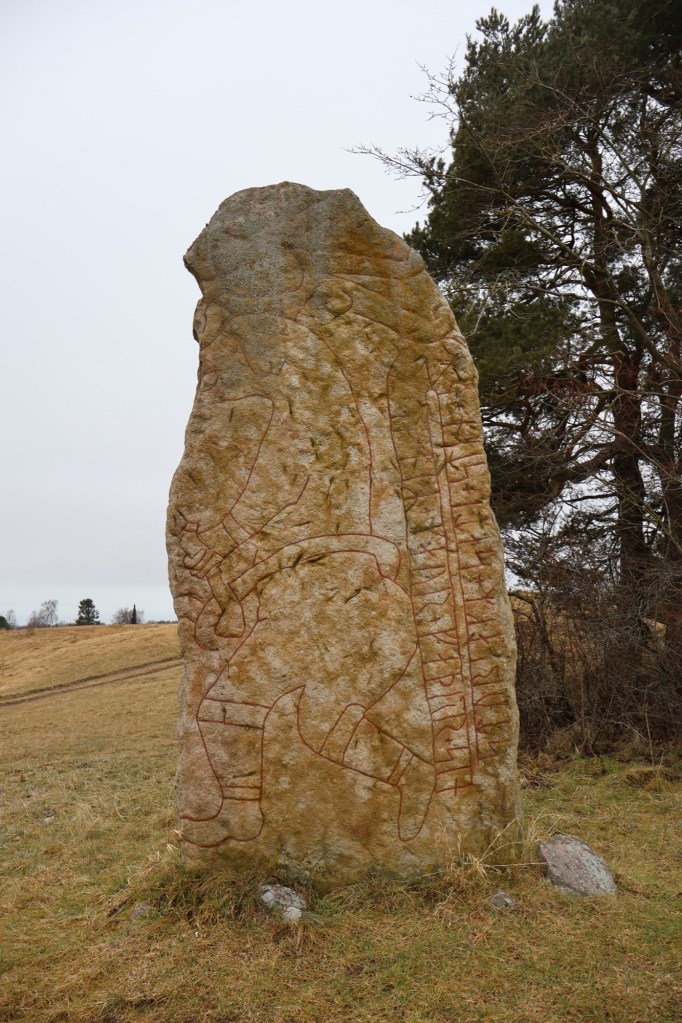
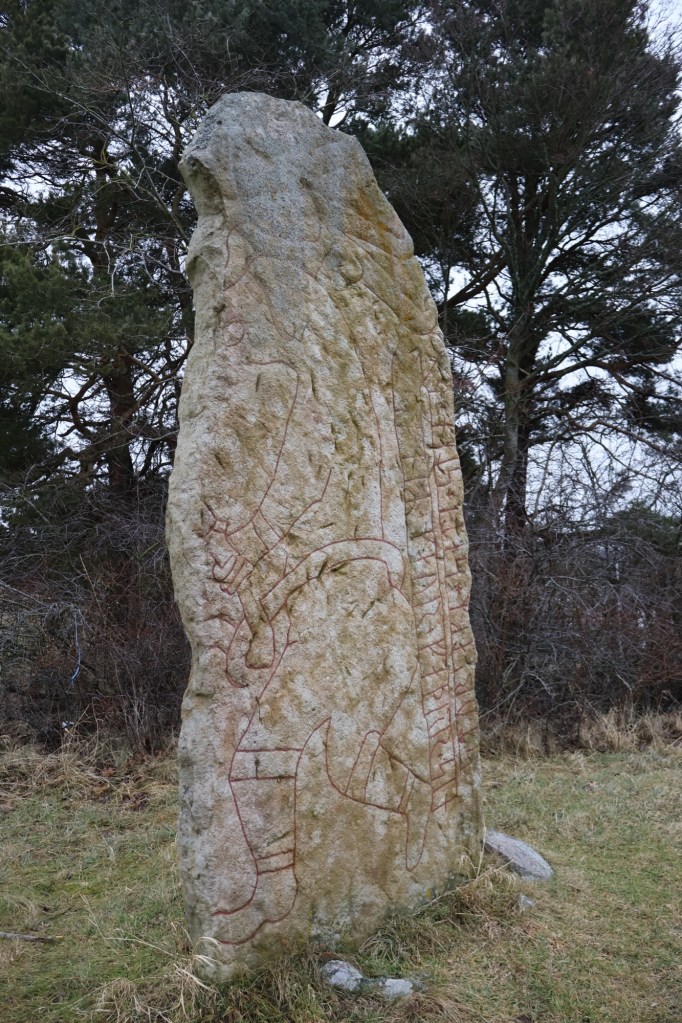
The so called northern rune stone or Vg 56 as it is also known are the smaller of the two measuring 3,1 meters tall and 1,43 meters wide. It is made using red sandstone.

On it there is a quite spectacular depiction of a huge humanoid creature with a head that is animalistic with two long horns. The figure is wearing a belt and holding a snake in his hand. The inscription are made using the younger futhark and it says:
Styrlakr/Styrlaugr satti stæin þannsi æftir kaur, faður sinn.
Styrlakr/Styrlaugr raised this stone after Kaur, his father.
The runic institution is slightly damaged in the beginning making it impossible to say if the person mentioned in the beginning was named Styrlakr or Styrlaugr. The difference between the two are that Styrlakr is a male name and Styrlaugr a female name.
The name of the father is also a bit debated as Kaur isn’t known from anywhere else, making some believe that his name was actually Kår.
This stone is most likely pagan based on the depiction of the big figure. But who is it? There have been many theories.

Some thought that it might be the Devil that are bound. That would place the stone in a Christian tradition. But this is not likely because there are no other such rune stones and it has no cross or mention of Christianity in its inscription.

A popular interpretation among experts is that it is a depiction of Thor with his power-belt megingjǫrð and wrestling with a snake. Maybe the snake is the Midgård serpent that Thor once caught while fishing. Thor also owns two goats that might be the reason why he has a goats head.
Another interpretation is that it is shaman or maybe a type of berserker that takes on the characteristics of an animal. Some have also theorized that it is a giant or maybe a troll.
When I first saw the figure it reminded me of the horned figures that have been found on Vendel Era pressblech.
This stone have been moved, in 1669 the Count Magnus Gabriel De la Gardie that lived at Läckö Castle visited the site and found only one stone and the broken of base of another stone. The locals told him that the stone hade been removed and used in a bridge constructed over a creek in the village Skälvum a few kilometers away.
De la Gardie ordered that the stone should be returned to its place at Källby Hallar. But it didn’t fit the broken of base so it is possible that the locals were wrong or the broken of base might be from the third stone mentioned by Olaus Magnus a hundred years earlier.

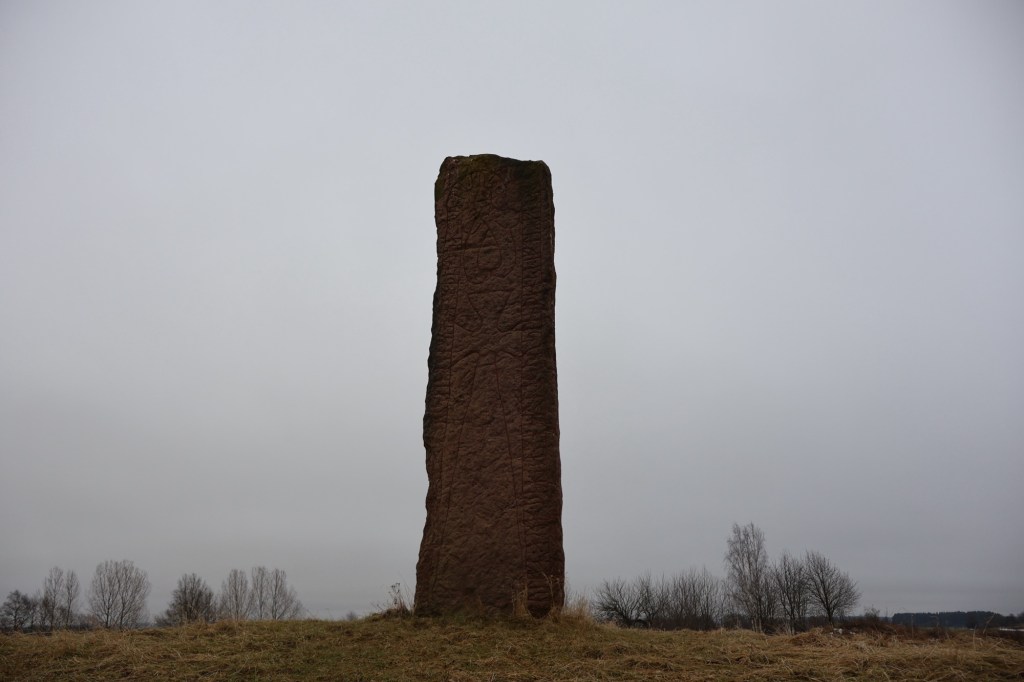
Opposite of the northern rune stone stands the taller but slimmer southern rune stone or Vg 55 as it is also known. It measures a towering 4,4 meters tall and 1,27 meters wide. It is clearly Christian with a large cross and a inscription in younger futhark that reads:
ulfR + auk + þiR + ra(k)nar + risþu + stin + þansi + iftiR + fara + faþur sin … ristin + man + saR + hafþi + kuþa + tru + til + kus +
Ulf and Ragnar, they raised this stone in memory of Fare, their father… kristen man. He believed in God.
This stone is an incredible strong statement to the surrounding community about this family’s faith. Especially as it is facing the pagan stone, if this are the original placement of the stones. It would have been so even if the other stone was placed in the other village from which it was moved.

Both stones were erected during the later part of the Viking Age which was period of great change, as more and more became Christian. This part of what is now Sweden was for a Swedish context christianized relatively early.
This stone might also have been a statement of support for the Royal power that was gaining strength at this time.

Only 6 kilometers away is the church of Husaby where King Olof Skötkonung was baptized. He was the first Swedish king to rule over both Mälardalen (Svitjod, the kingdom of the Swedes) and Västergötland (the kingdom of the western Geats). He lived during the same time as the stones were erected.
 Fornminnen
Lämna en kommentar