I am by nature a person that dislikes to intrude on people. It’s probably not just me but a national trait among Swedes to keep our distance to each other.
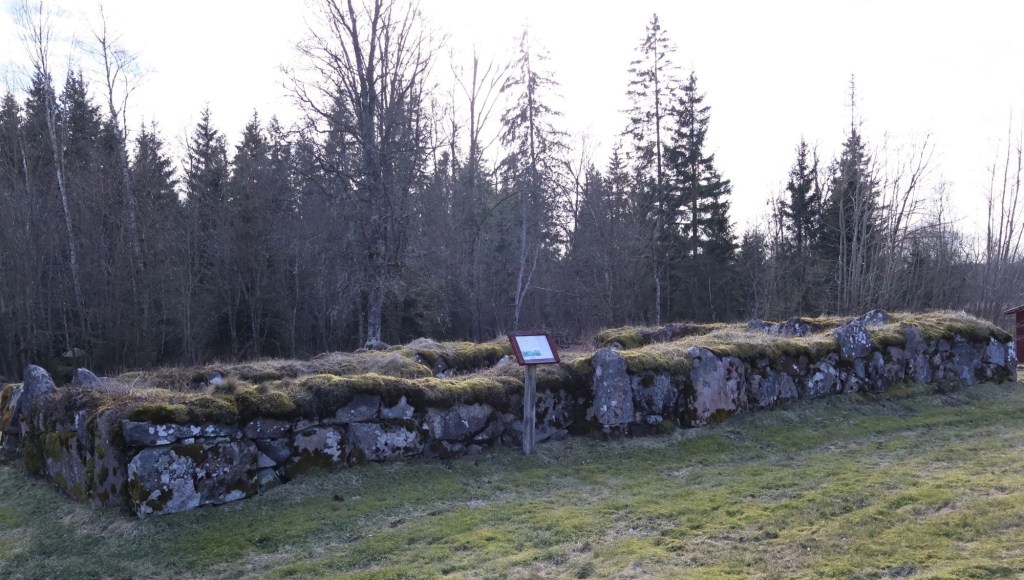
That’s probably why I sometimes feel rather uncomfortable when I want to approach an ancient monument that is located very close to someone’s house. A lot of them are however located in such a place because people have lived in the same places for very long.
This time I was traveling from my home and had been driving for a couple of hours in Västergötland, Sweden when I decided to make a stop at a church ruin.

Little did I know beforehand that it was located in the middle of a farmyard just next to barn. I got out of my van to take a look at the ruins. Almost immediately a car turned up and parked nearby, the driver got out and approached me, but instead of telling me off, he greeted me politely and we talk for a bit. He told me that this was his family farm and that he grew up here. I imagined that the ruin must have been a great playground for children.
I was made to feel welcome and I was told that there are a few people each year coming to watch the ruin.m, which isn’t strange as it is located off the beaten path.
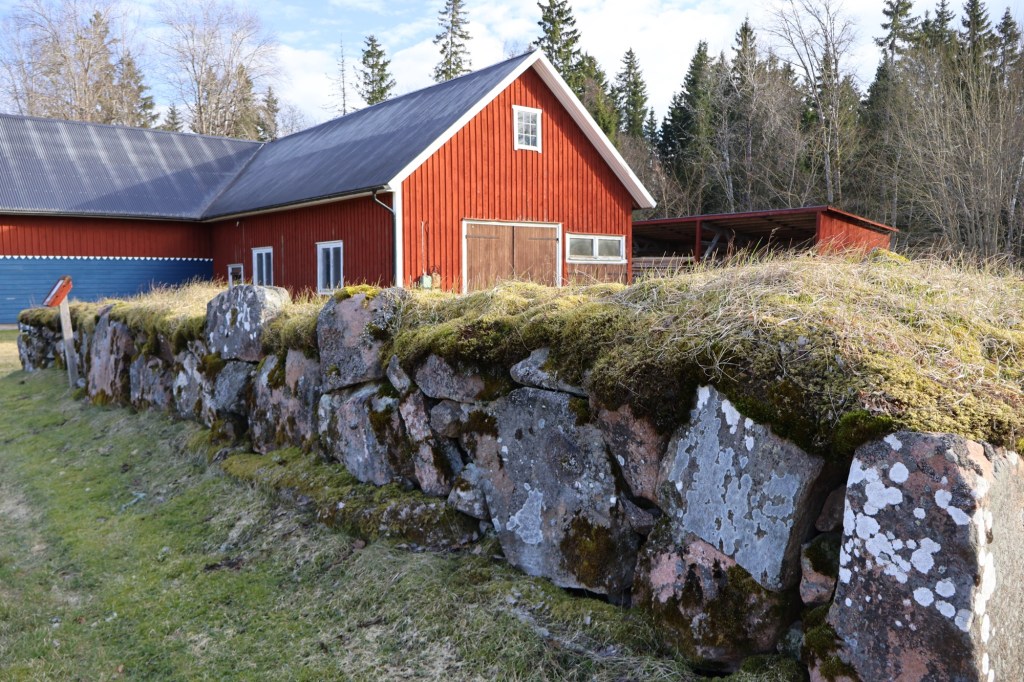
The church was built some time during the 11th or 12th century. It used to function as a sockenkyrka, a socken are a county division used in Sweden originally as a parish and later a civil parish. So a sockenkyrka is a sort of parish church that serviced the entire parish. In this case the name of the parish was Sånnums socken and later Sandhems socken.
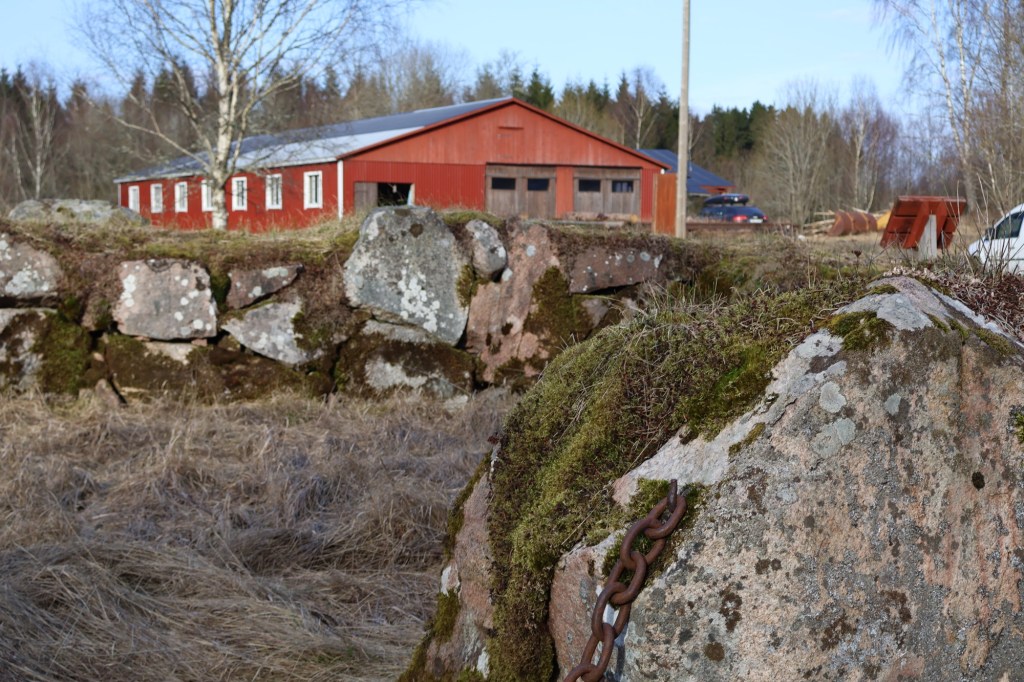
The Church also functioned as a gårdskyrka (farmchurch) that would service the owner of a particular farm that also was the patron that had the church constructed. Many of the first Viking Age churches were just such churches constructed by de individual local magnate.
The placement of them at the farm reflected their worldview where life was centered around the farm or gård as it is known in swedish. This idea can be seen in their name of our world Midgård that literally means farm in the middle.

This church’s role as a farm church explains its location just next to a barn. The name of the farm is Mussla which seemed a rather odd name in my ears as it means mussel in Swedish and we are far from the sea. It is likely that the farm of Mussla is the same farm that the church once served. Just think about living on a farm with at least 1000 years of continuous history!
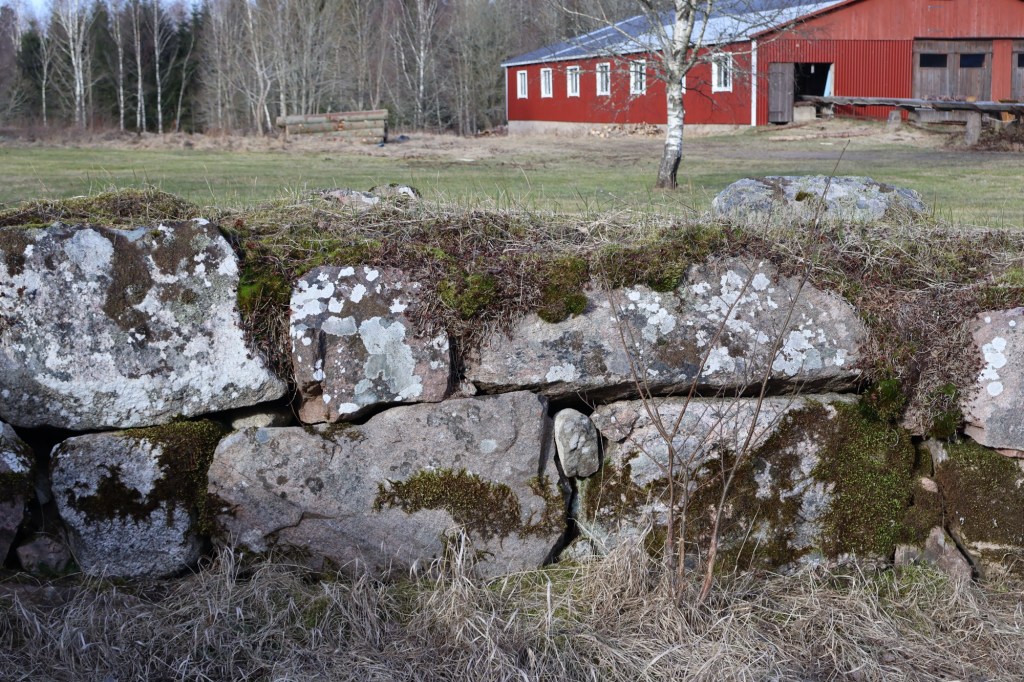
The church was constructed using granite blocks with the odd sandstone here and there. I was amazed at how small it was when I walked inside the ruin.
The remaining walls are around 1-1,2 meters tall. The nave measures only 7 x 6 meters on the inside and 8 x 9 meters on the outside. In the floor between the nave and the choir a massive stone slab is placed in the floor that measures 2 x 2 meters.

The choir are located to the east and it is truly tiny, measuring only 4 x 4 meters on the inside and 6 x 6 meters on the outside. The door opening is found in the southern wall which I found unusual as most churches have their opening in the opposite side to the Choir. So the natural placement would have been the western wall. In the opening two big stone slabs are located in the ground measuring 0,5 x 0,7 meters respectively 1 x 1,2 meters.
In the north western corner of the ruin a round stone is found that is 1 meter in diameter and 5 centimeters thick. In the middle of this stone are a hole that is 3 centimeters in diameter, this hole supposedly had the function to lead away the water used at baptism. This must have been a wet affair to need such a drain.
The church most likely had a vaulted roof.
The church was in use up until the early 1500s when it was abandoned and ceased to function as a place of worship.

In the 1940 the ruin was conserved by Lars Erik Bergström, at this time a large crucifix was erected in the ruin that has since then been removed. As it was wood it probably rotted away over time as it looks to be in bad shape in some old photographs.
Human bones have been found in the ground around the ruins and there used to be gravestones there that have since then disappeared.

Even if it’s just some parts of the walls that remain of the church I can really recommend a visit if you are in the area. The feeling of entering a Viking Age room, even if it lacks a roof is simply amazing and nothing that I expected before my visit. This is why there are so few photos from the inside. So don’t be shy, but be respectful, and experience the cultural heritage because life is to short not to.
 Fornminnen
Lämna en kommentar