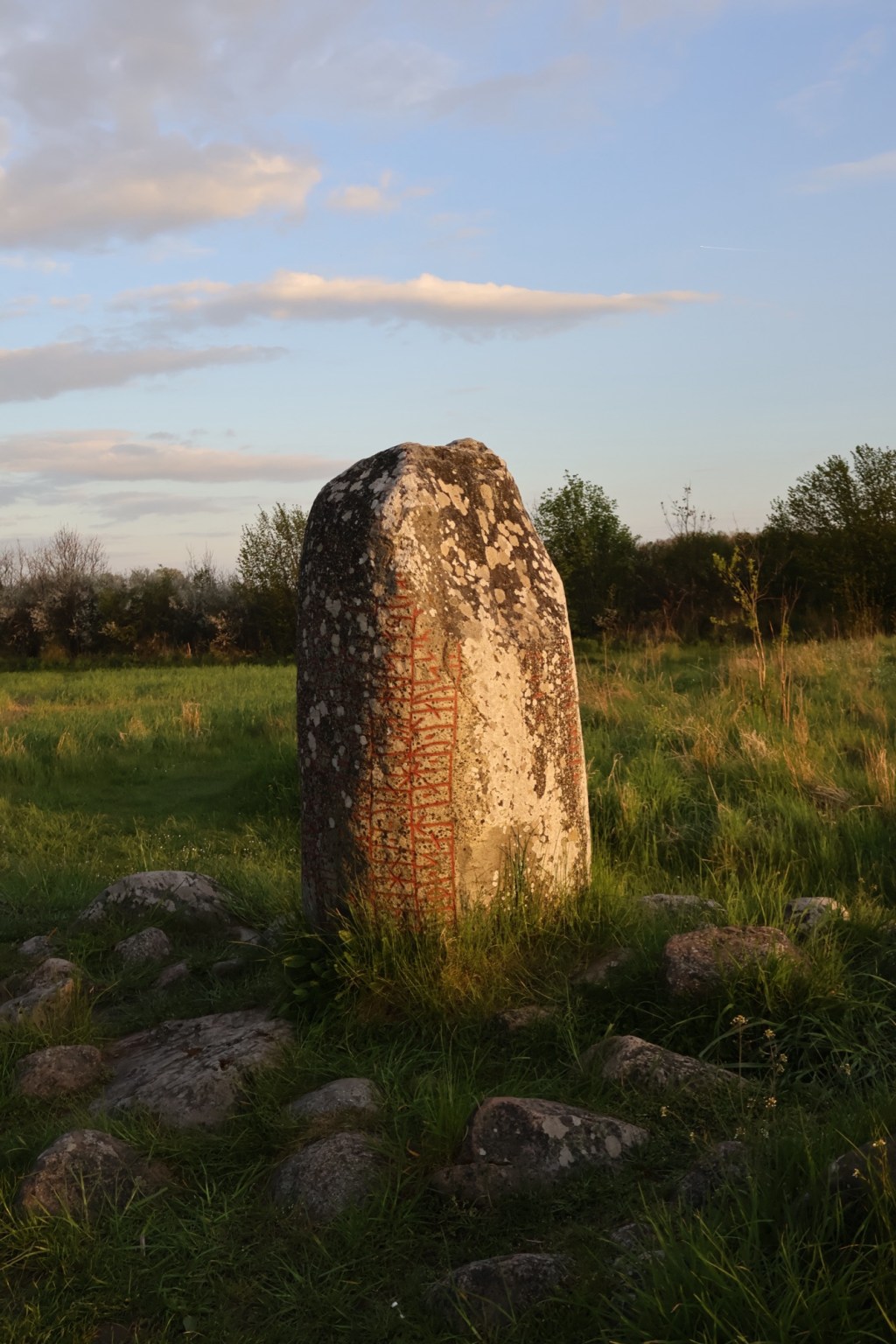
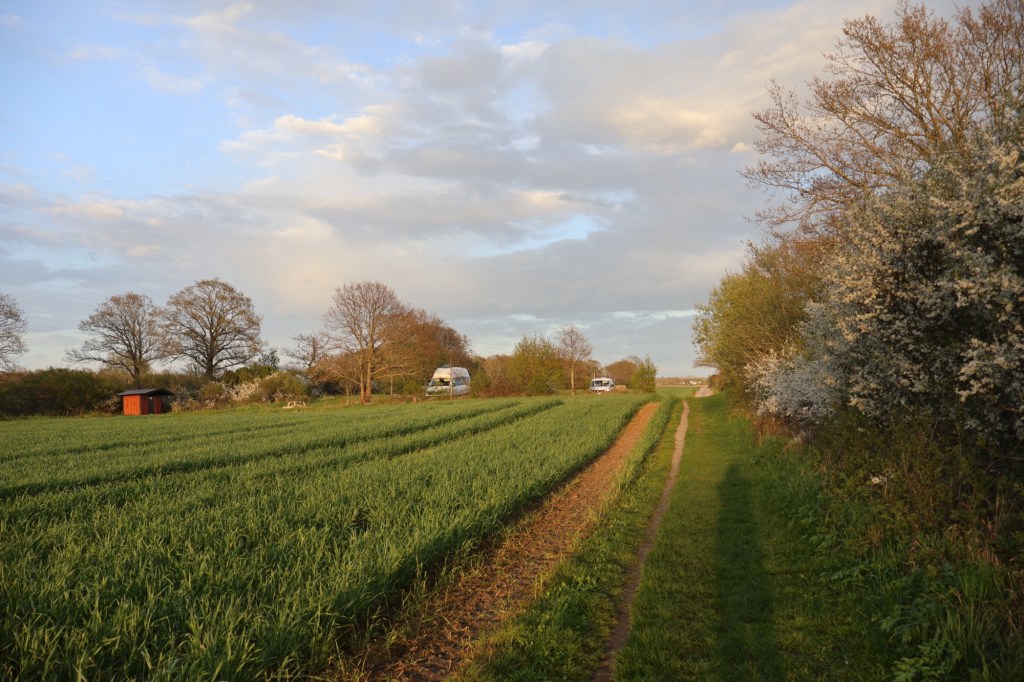
This was my first stop on the island of Öland on my recent trip there. It’s was a great place to spend the night in my Campervan as I arrived late in the evening after crossing the long bridge to Swedens second largest island located in Baltic Sea of the coast of Småland. I wasn’t the only one with that idea and several vans and RVs had chosen this place to spend the night.

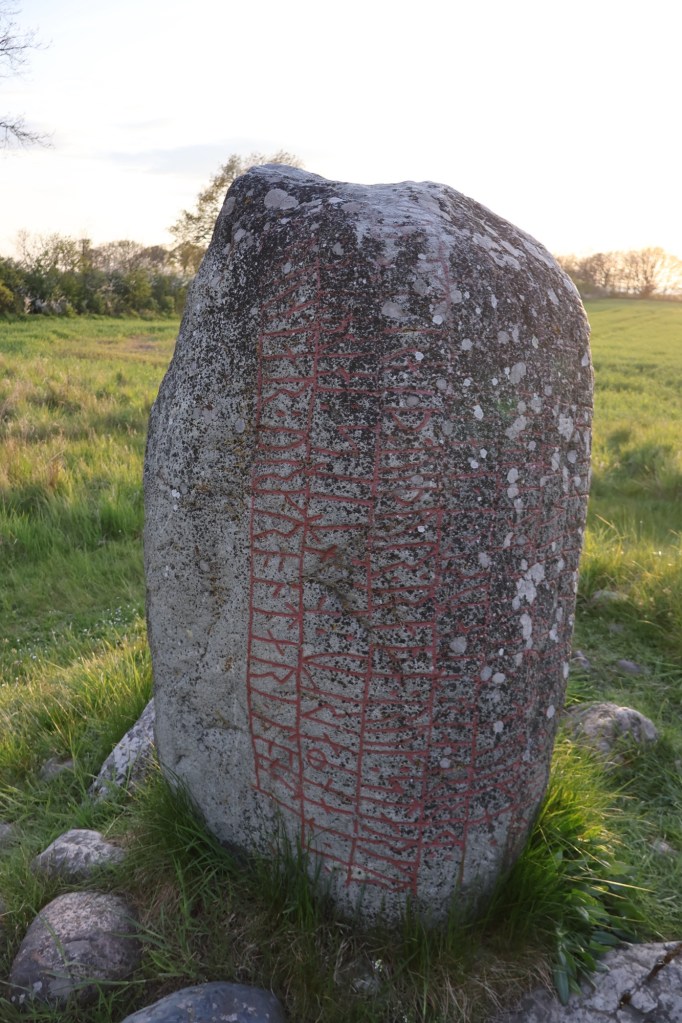
The Karlevi rune stone or Karlevistenen as it is called has the designated name ÖL 1. It’s dated to the end of the 10th century. It might be possible to date it more exactly, but more about that later.
This rune stone stands out from other rune stones, not only one the island but also in the entire country. This is because of several reasons.
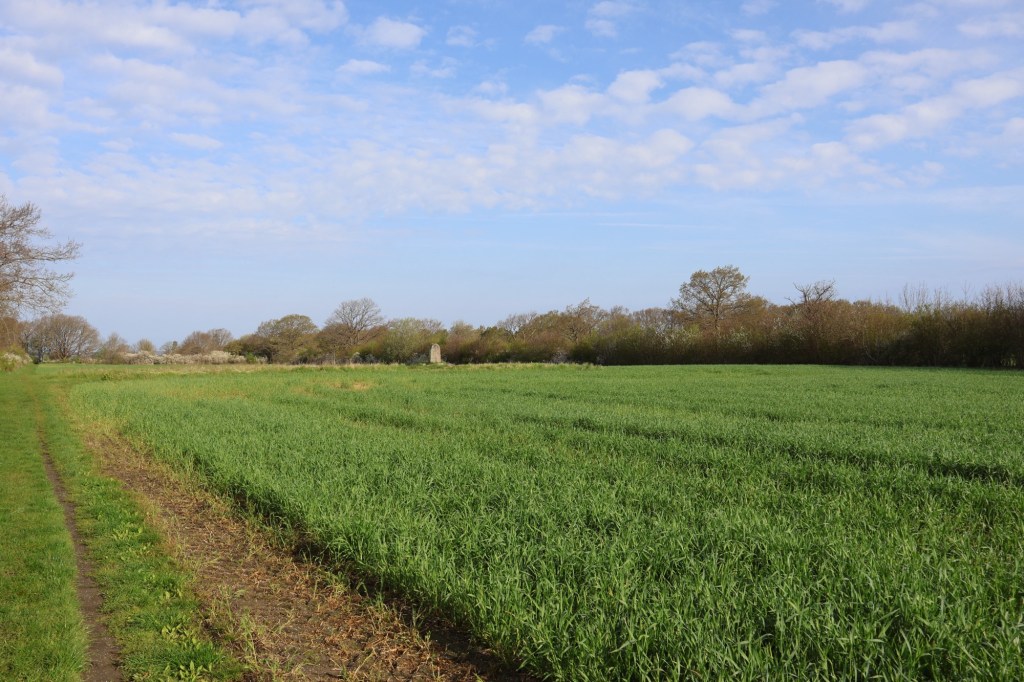
First of the location of the stone is strange, in the middle of a field near the sea quite far away from where people lived during the Viking Age. It’s more common for rune stones to be placed close to farms or villages or roads so that people can see and read them. The field was originally pasture land and according to a sketch made in the 1670s the stone was flanked by two mounds with small stones at the base framing them, the rune stone standing between the two like a much smaller version of Harald Bluetooths stone and mounds at Jelling in Denmark.
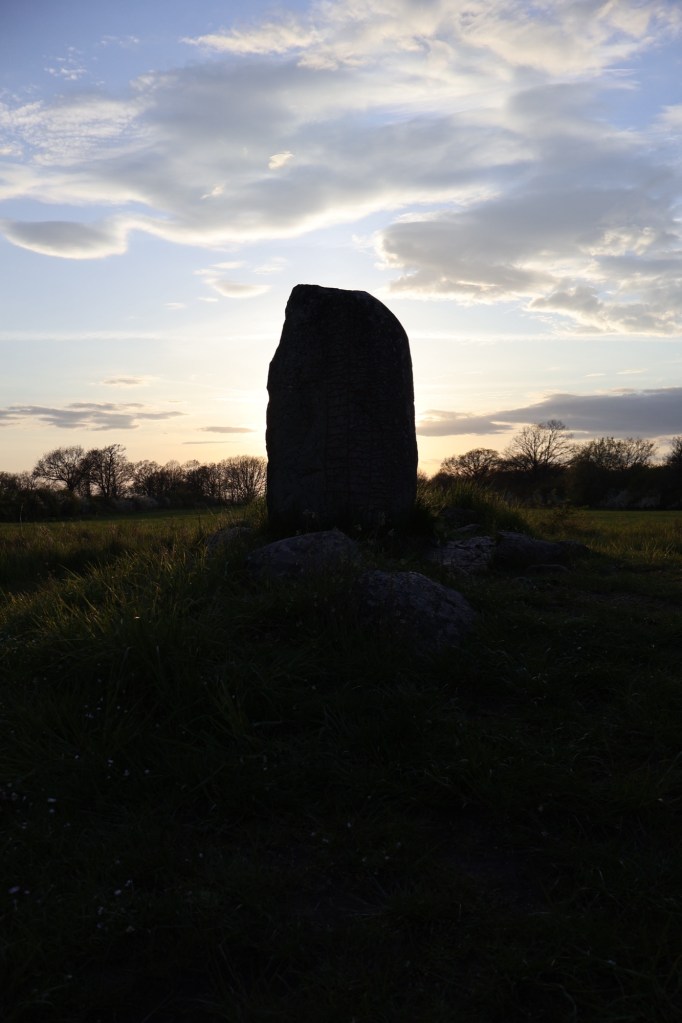
At some point during the 17th century farmers tore down the stone as it was in the way for their oxen that they used to plow the pasture land into a field. The mounds were probably destroyed in this way as well and a supposed find of a late Viking Age brooch in the field would suggest that this was indeed the site of graves.
The stone in itself is strange measuring 1.4 m tall, 1 m wide and 0.8 m thick. It’s made out of granite which is a fairly common stone to use for rune stones. But not here on Öland an island consisting mostly of chalk stone and slate. The stone has most likely been brought in from another place and it matches the stones in the area around Oskarshamn on the mainland to the north. It could probably have been brought to Öland by the ice during the ice age or with ship by the people that made it.

The inscription that is written using the verse mode dróttkvætt which was a type of complimantary poem about a ruler. I don’t know of any other rune stones written using dróttkvætt which was considered as the hardest form of skaldic poetry to master for a skald. The karlevi rune stone is the only completely preserved example of dróttkvætt in existence. The use of this complicated form of poetry must mean that it was a skald that made the stone. The inscription is written in the west Norse dialect used in Norway and not in Sweden or Denmark. This means that he was most likely a Norwegian as well or possibly Icelandic. There is also an inscription in Latin using the Latin alphabet.
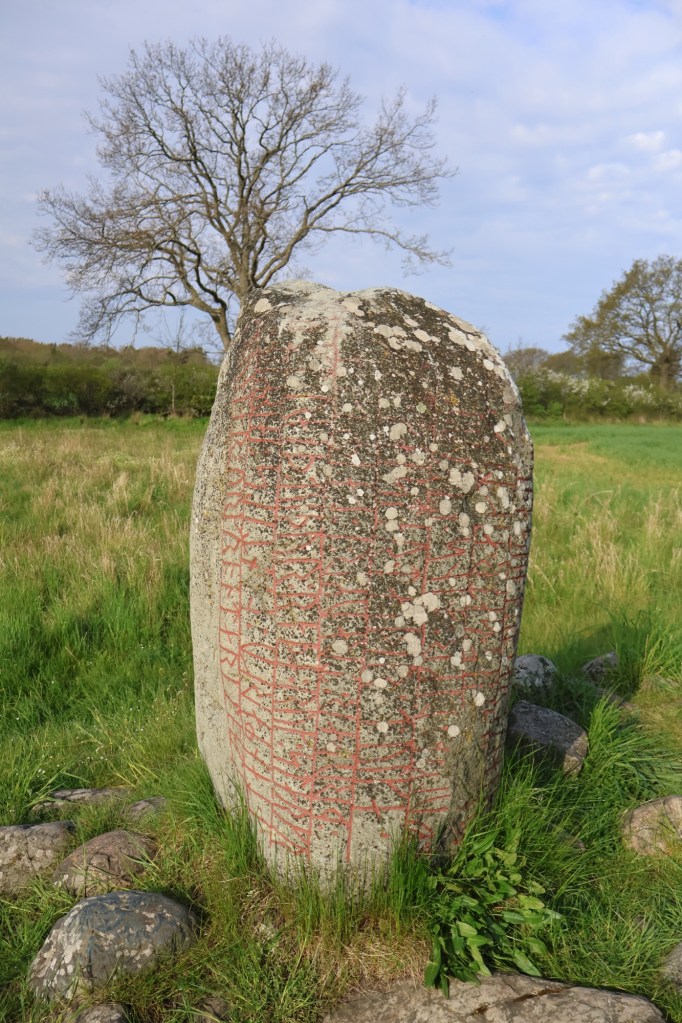
The inscription in younger futhark followed by the Latin reads:
§A + s-a… –(s)- i(a)s · satr · aiftir · si(b)(a) · kuþa · sun · fultars · in hons ·· liþi · sati · at · u · -ausa-þ-… +: fulkin : likr : hins : fulkþu : flaistr (:)· uisi · þat · maistar · taiþir : tulka · þruþar : traukr : i : þaimsi · huki · munat : raiþ:uiþur : raþa : ruk:starkr · i · tanmarku : –ntils : iarmun··kruntar : urkrontari : lonti
§B {÷ IN| |NONIN- ¶ + HE… …}
§A S[t]æ[inn] [sa]s[i] es sattr æftiʀ Sibba Goða/Guða, sun Fuldars, en hans liði satti at … … Fulginn liggʀ hinns fylgðu, flæstr vissi þat, mæstaʀ dæðiʀ dolga Þruðaʀ draugʀ i þæimsi haugi; munat Ræið-Viðurr raða rogstarkʀ i Danmarku [Æ]ndils iarmungrundaʀ uʀgrandaʀi landi.
§B {In nomin[e](?) Ie[su](?) …}
This stone is placed in memory of Sibbi the Good, Fuldarr’s son, and his retinue placed on …
…He lies concealed,he who was followedby the greatest deeds (most men knew that),a chieftain (battle-tree of Þrúðr) in this howe; Never again shall such a battle-hardened sea-warrior (Viðurr-of-the-Carriage of [the Sea-king]Endill’s mighty dominion ( = God of the vessels of the sea) ), rule unsurpassed over land in Denmark.
The Latin inscription probably means In the name of Jesus.

So the grave contains a Danish chieftain or sea-king named Sibbi. This somewhat explains the strange location of the stone as it is erected by outsiders not living in the island. When Sibbi died his men had to find a way to give him a proper burial and to make it known who lies in the grave to the strangers living on the island they made the stone in his memory.
Many believe that Sibbi is one of the Danes that took part in the battle of Fýrisvellir near Uppsala in Sweden. The battle took place in the 980s and was between the Swedish corulers Eiríkr inn sigrsæli and Styrbjǫrn Sterki. There are many different accounts of what happened but Styrbjörn was denied rule and left and became the chieftain of the Jomsvikings and together with Danish support he attacked his uncle Eric.
Eric was victorious giving him the name inn sigrsæli or Segersäll as he is known in swedish, meaning victorious. Sibbi would then be one of the Danes that were defeated and possibly died there or by his wounds during the return trip. What is strange about this theory that doesn’t really ad up to me is that it isn’t mentioned on the stone.
The battle is mentioned on several other rune stones in both Uppland and Skåne. It is However an interesting fact that Styrbjörn married the daughter of Harald Bluetooth, Tyra. That would explain why they choose to make a mini Jelling for him.
This mysterious rune stone really makes you speculate about what happened here so long ago.
 Fornminnen
Lämna en kommentar