Gamla Skogsby (old forest village) is located on the island of Öland in the Baltic Sea, the second largest island in Sweden. The site lies close to the village of Skogsby and 5km from the small town of Färjestaden.
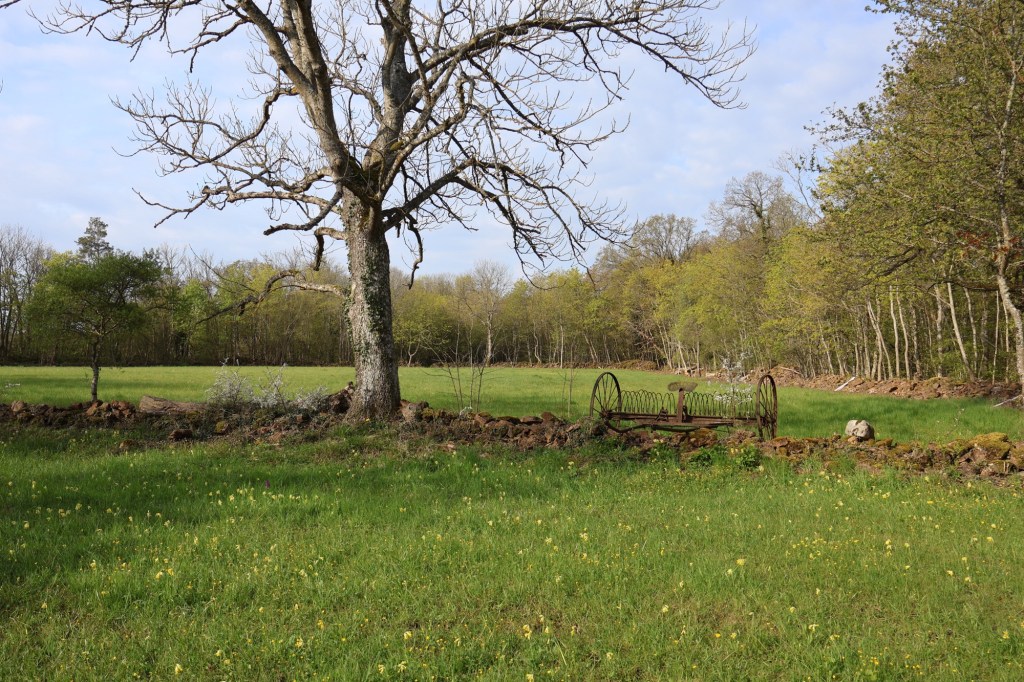
Even though this place is easily found on google maps, it was surprisingly hard for me to find as the parking along the small road is easy to miss.
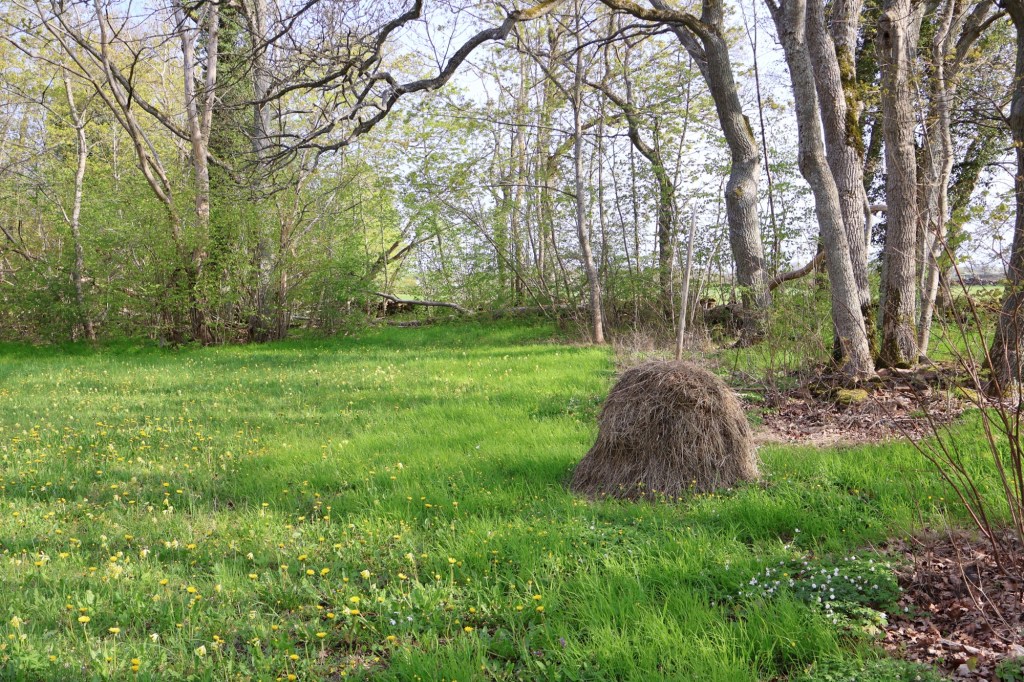
I ended up searching through thickets of shrubby woods in the wrong place. But I was close, just about 100 meters from the entrance to the area but on the wrong side of a creek.

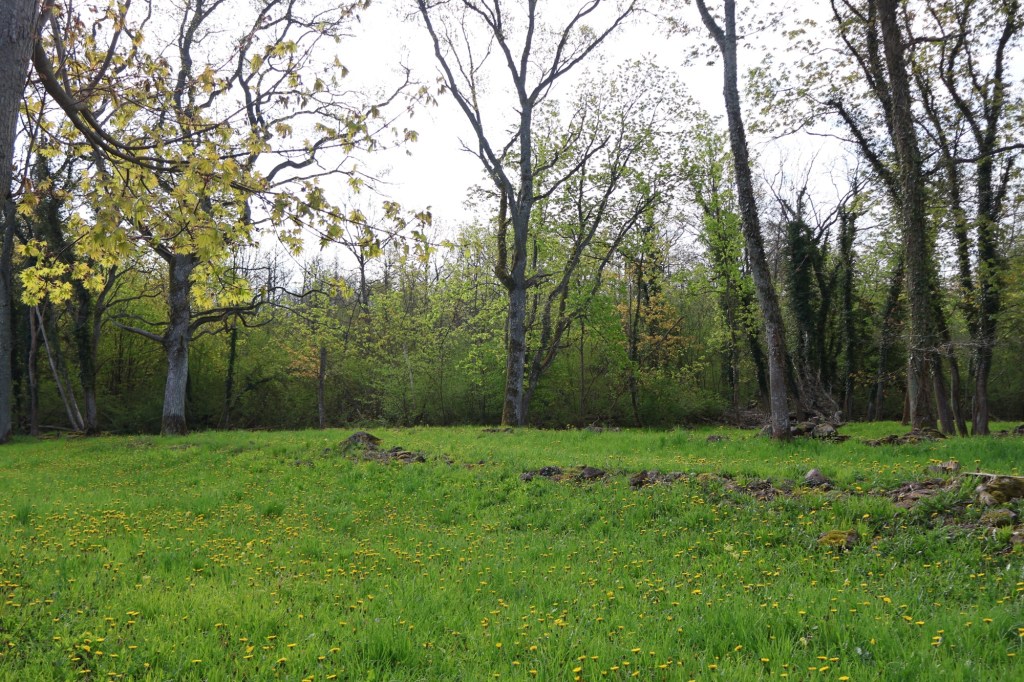
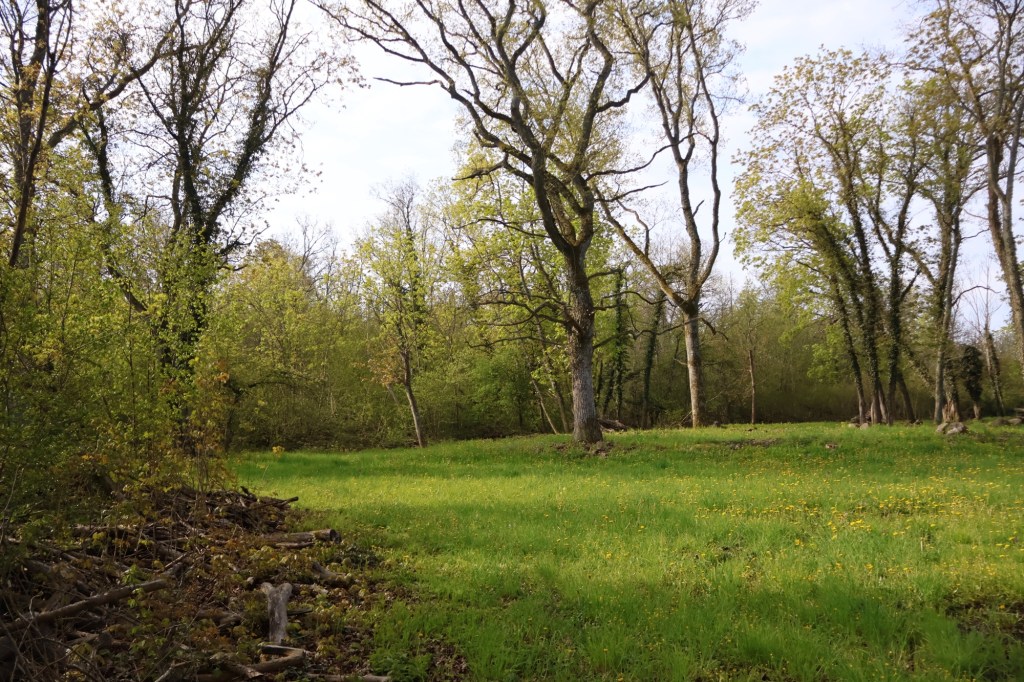
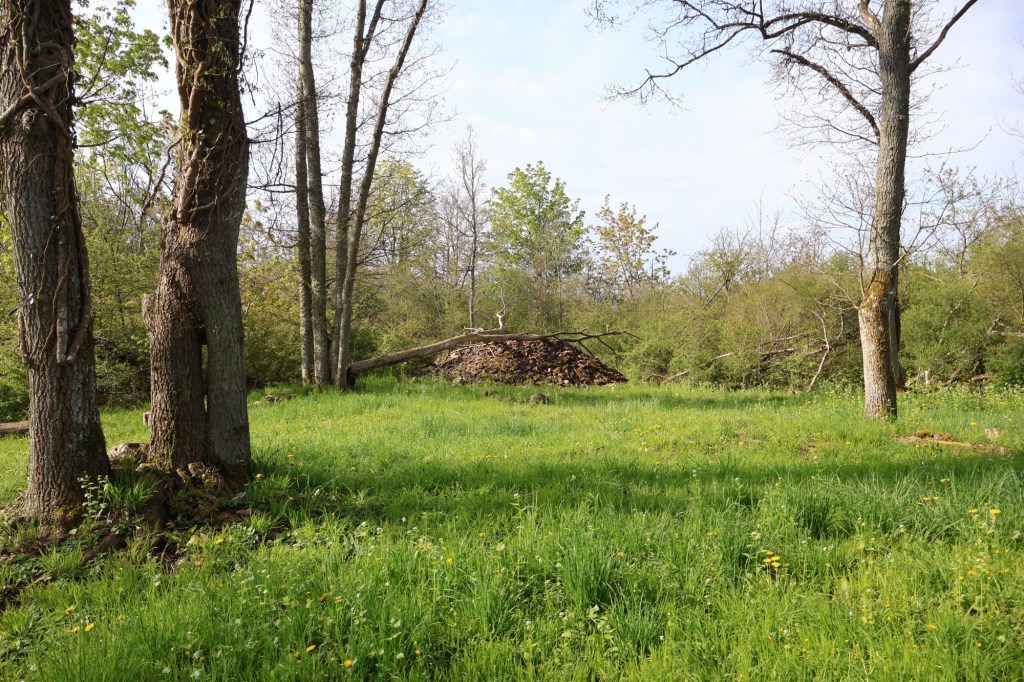
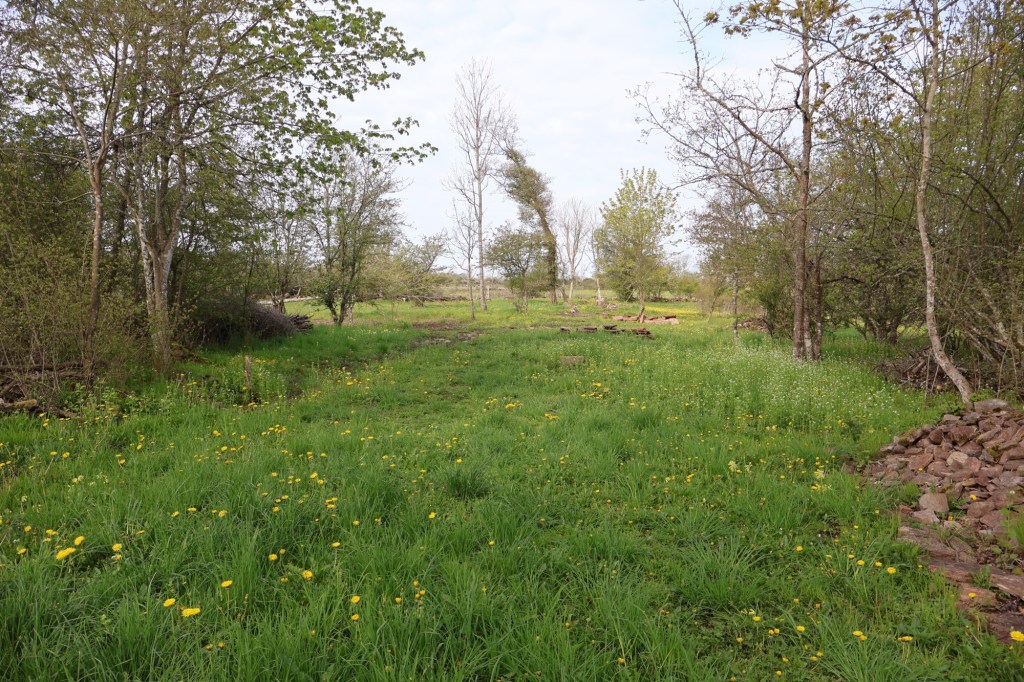
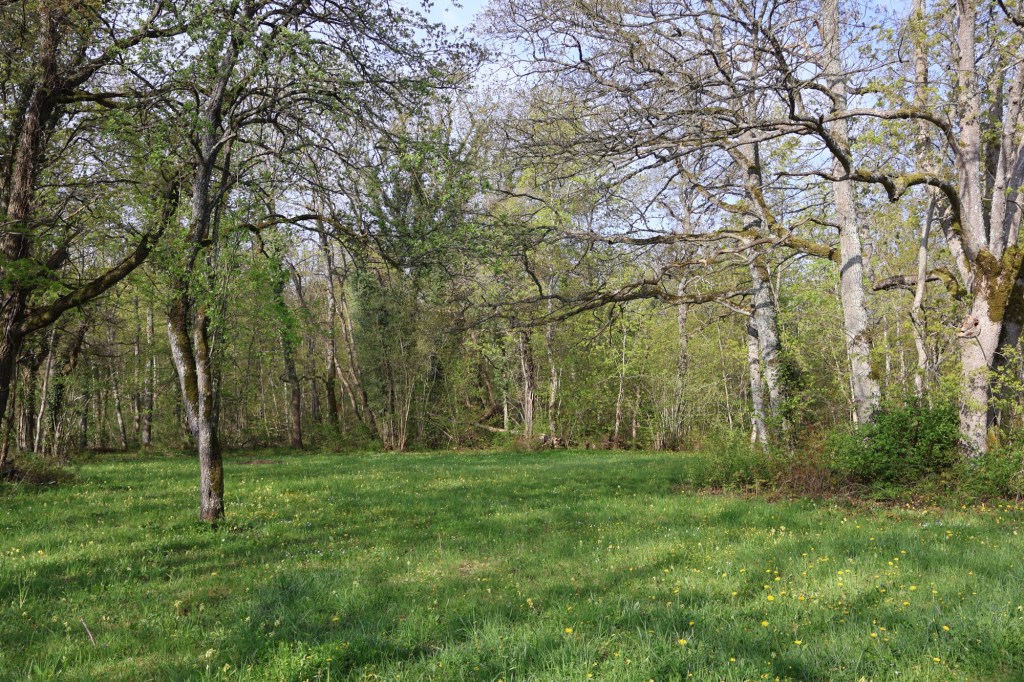
I eventually found the path that leads to Gamla Skogsby. The path runs through an exceptionally beautiful area consisting of forests meadows that has been in use since the migration period and possibly even before that.
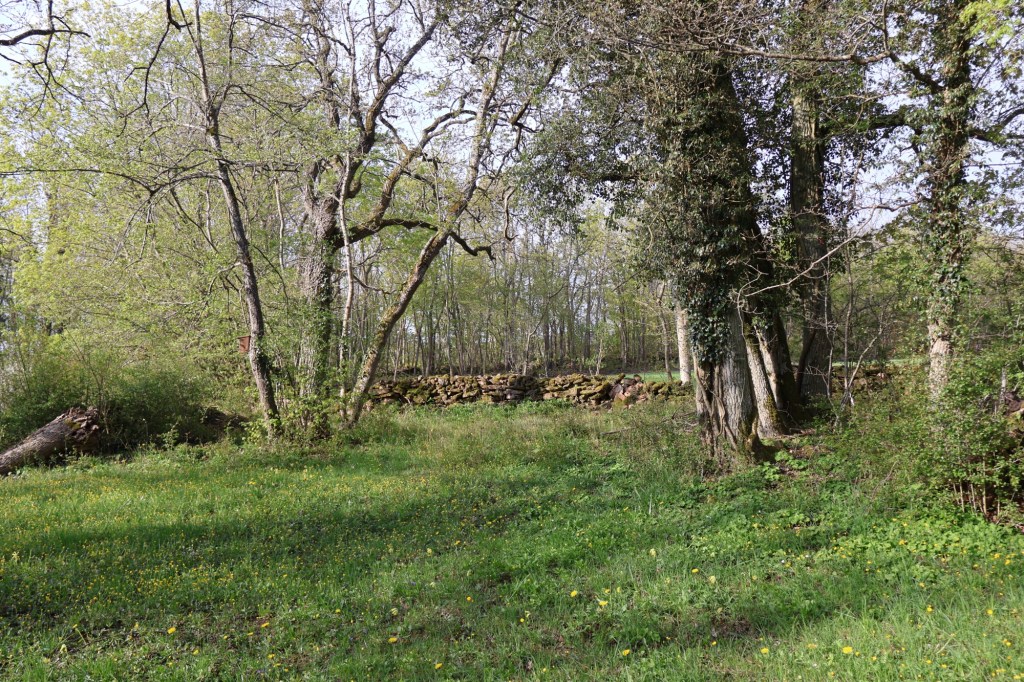
The area has historically been used for haymaking and the cutting of leaf fodder from the trees to use as winter fodder for livestock during the winter.

The amount that could be collected during the summer months regulated how much of the livestock could be kept over winter. So it was a matter of life and death for the people who lived here.
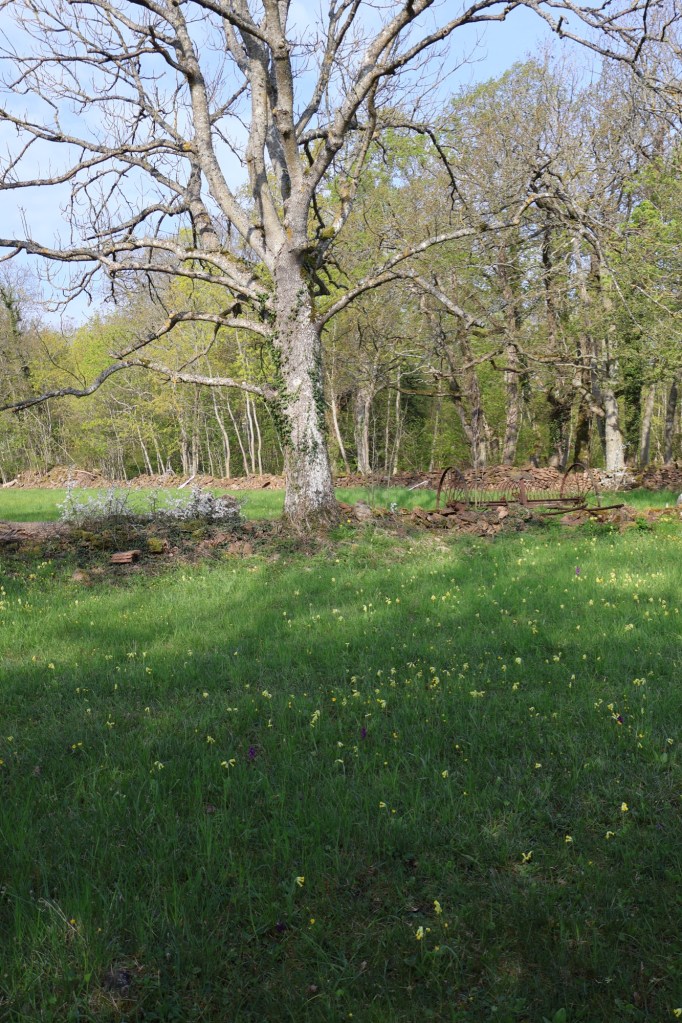
Parts of the meadows were kept in this way until the 1990s when a committee took over the management of the area and named the meadows Rune Jons Löväng after the last farmer that owned the land in the 1990s.
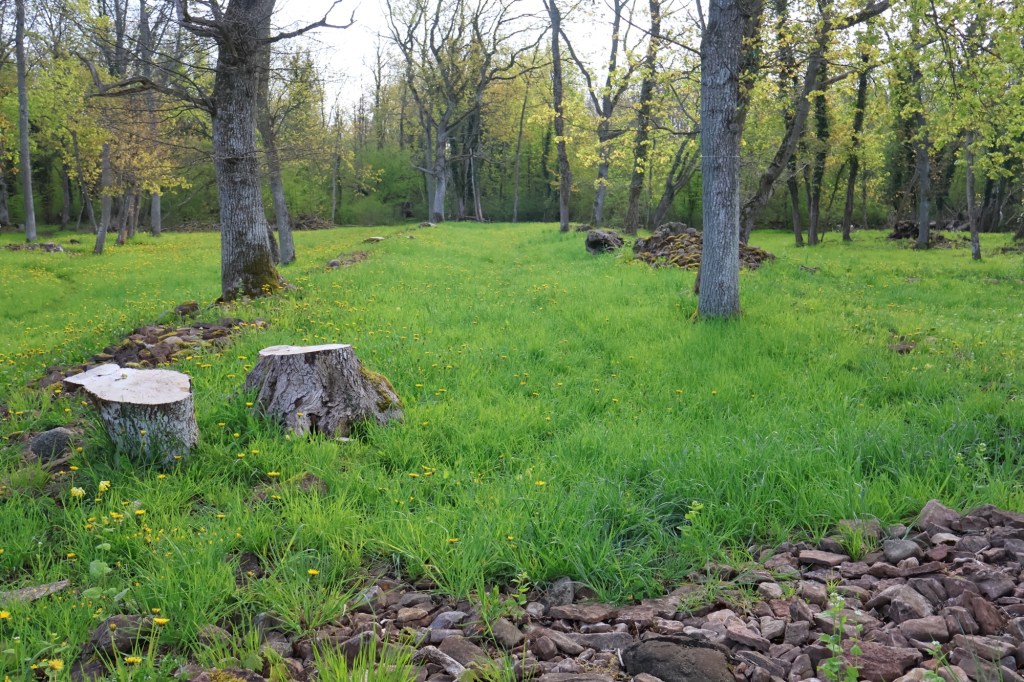
The area is cared for in the traditional way as the meadows have exceptionally high biodiversity that is a direct result of the interaction between humans and nature.
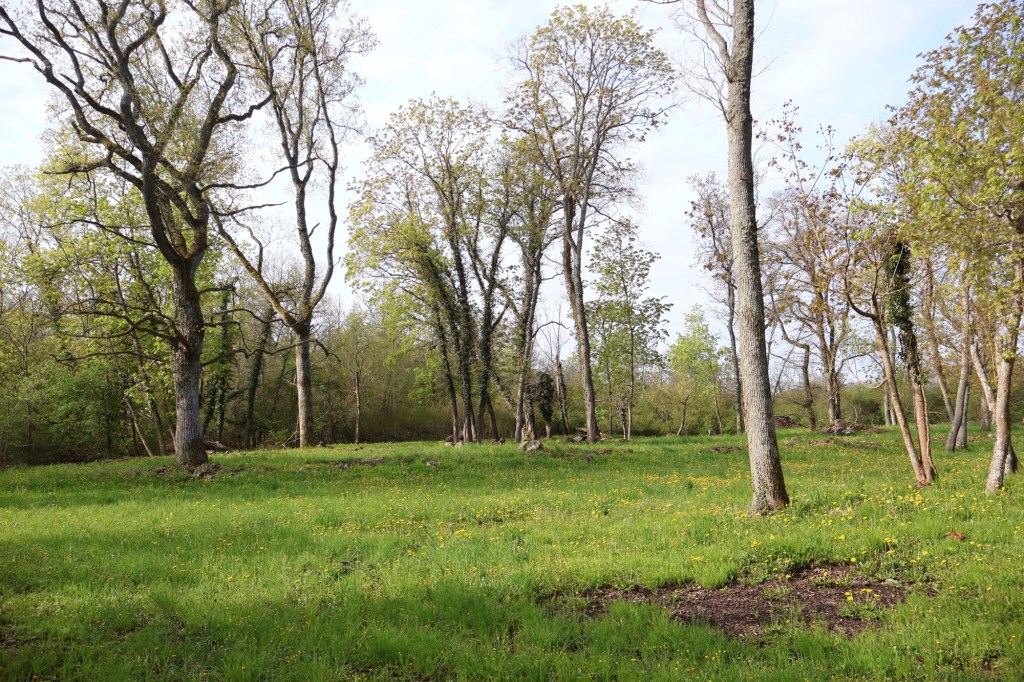
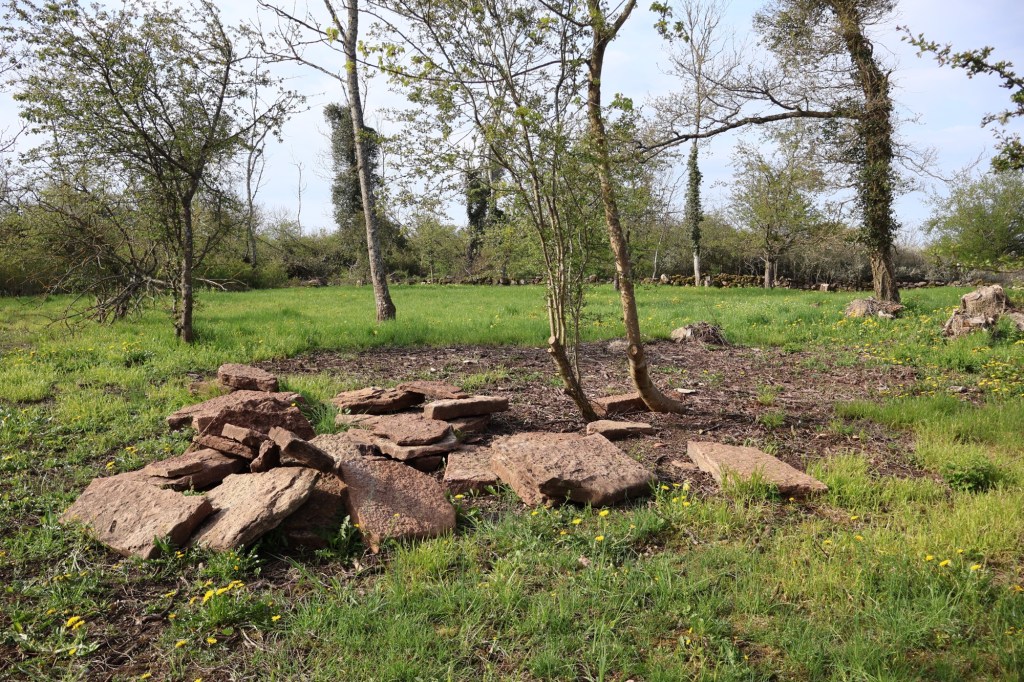
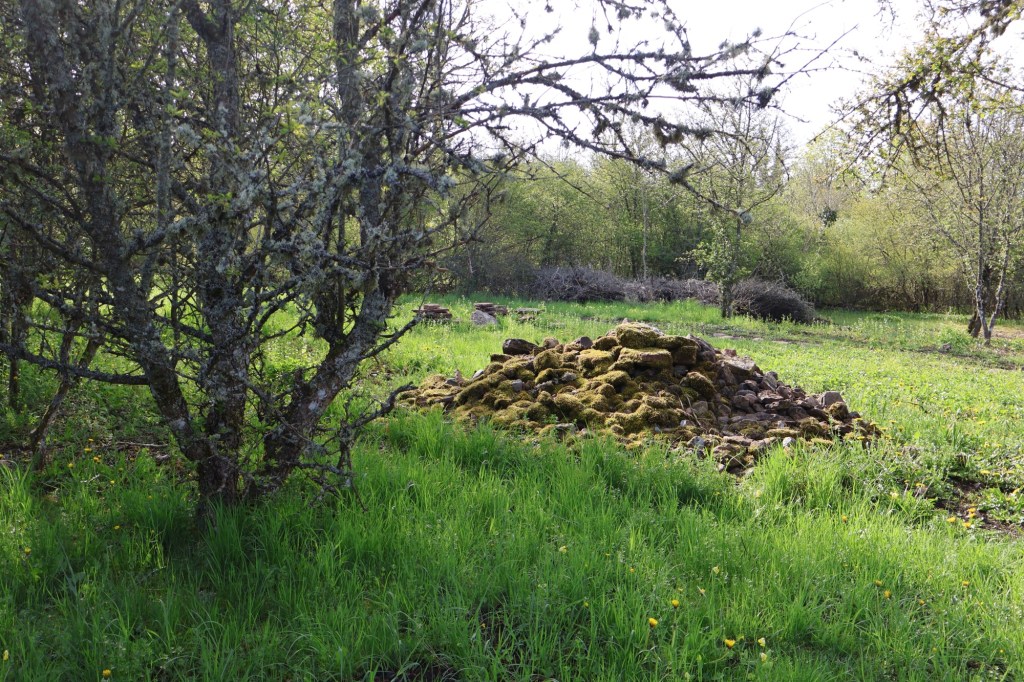
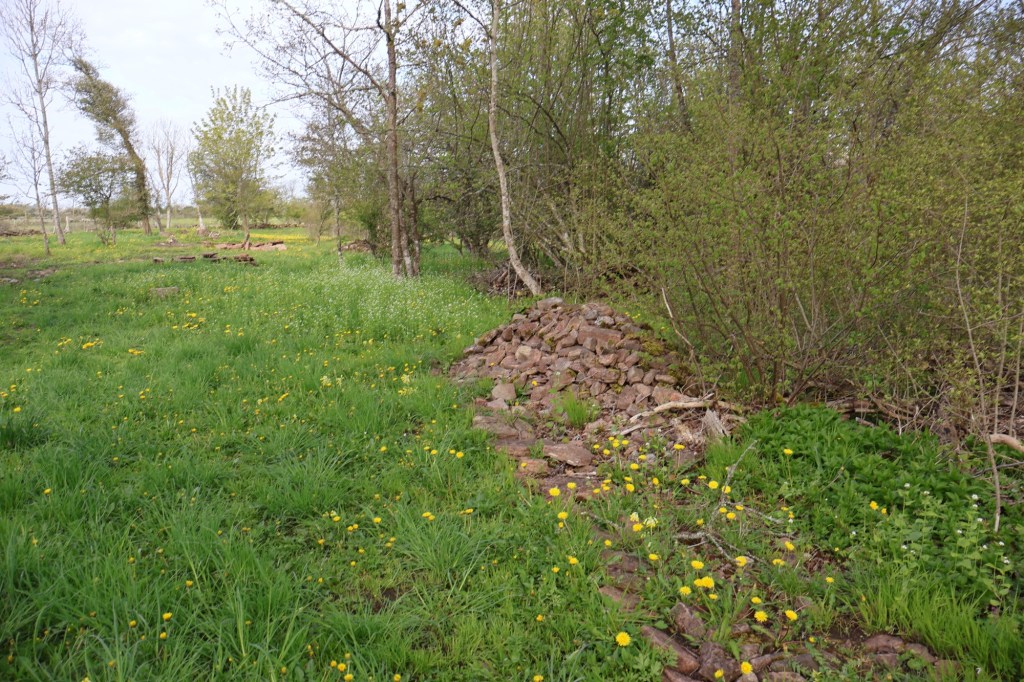
Along the path lies the foundations of a village, Gamla Skogsby. The village consisted of 15 farms over a larger area. They are dated to between year 400 to 550 CE, which is what we call the Migration Period

The largest of the buildings are a hall measuring a length of 55 meters, making it one of the largest Iron Age halls on the island.
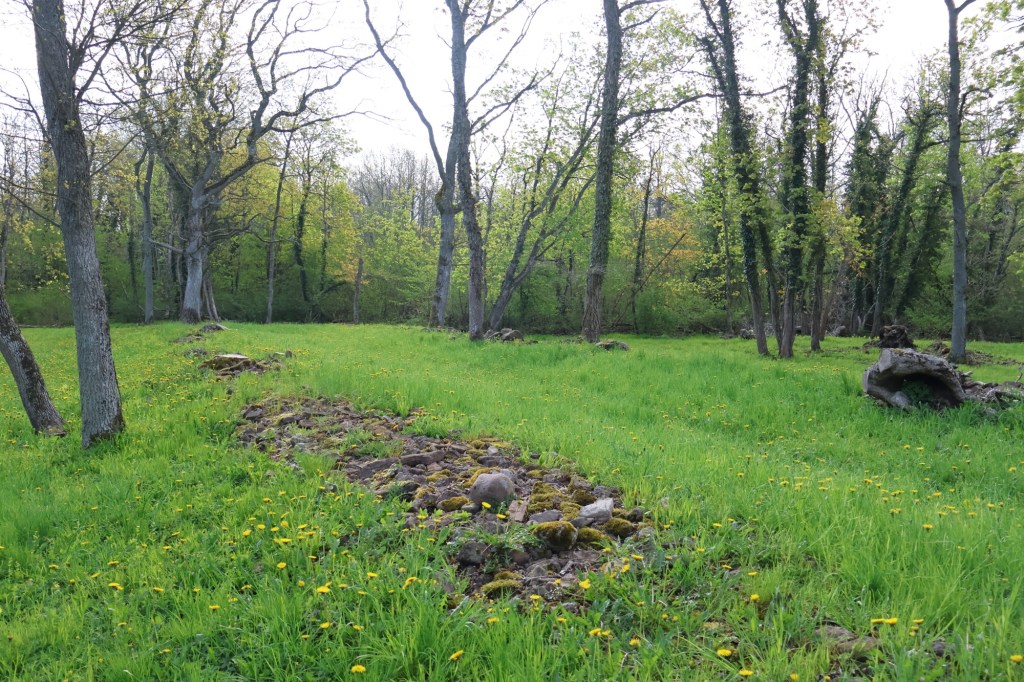
Several archaeological excavations have been carried out here in recent years and the findings are very interesting. The large hall has not yet been excavated yet, but a smaller building close to the hall measuring 25 meters has been. During the construction of the building the inhabitants deposited the bones from five sheep that was found in the post holes where they were deposited during the construction probably as a sacrifice.
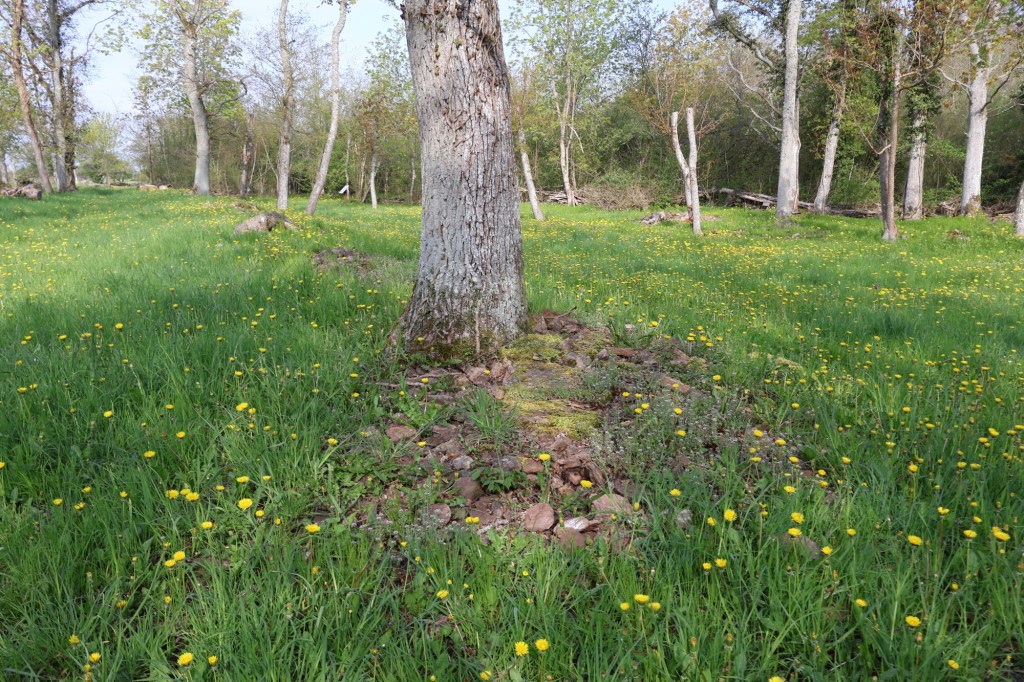
The archaeologists have also found the remains of an entire horse that seemed to have been decapitated at the abatement of the building, this was most likely a sacrifice as well.
The remains of a total of twelve different clay pots was found along the southern wall, which is quite rare for a site dating to the migration period.
Large quantities of bones have been found, a lot of it from domestic pigs that were probably eaten at feasts as they occurred in such quantities.

The excavated building was burned down at some point but it was rebuilt in the same location. The wood used in its construction was oak beams that had been squared and cut to a triangular shape.
The archeologists found many every day objects like elaborate bone combs and weaving weights, knives, bread as well as more expensive and exotic objects like glass shards and beads made from blue glass.
The size of the longhouse and the rich finds makes it obvious that this was the home of one of the most powerful people on the island.

Archaeologists believe that this was a possible home of the culprits that committed the massacre at Sandby Borg a ring fort that is dated to the same time and located on the eastern coast which is the opposite from Gamla Skogsby that is located on the west coast. They think that there might have been a conflict between the western and eastern parts of the island.
The massacre made headlines a few years ago as the archeologists found the men and children that lived there in their original positions as they were murdered. No one looted the gold and other riches that was left on the ground with the riches.

As the victims were left in their place and no one buried them it is likely that the culprits lived close by as no one dared to bury the dead out of probable fear to be punished.
Someone wanted to make a statement and the person that did was so rich that he/she could leave gold lying on the ground.
If the culprits lived at Gamla Skogsby we will probably never know unless someone makes a spectacular find in future excavations.

Walking around in this hauntingly beautiful place makes it hard to imagine that such violent people could live in such a beautiful place.


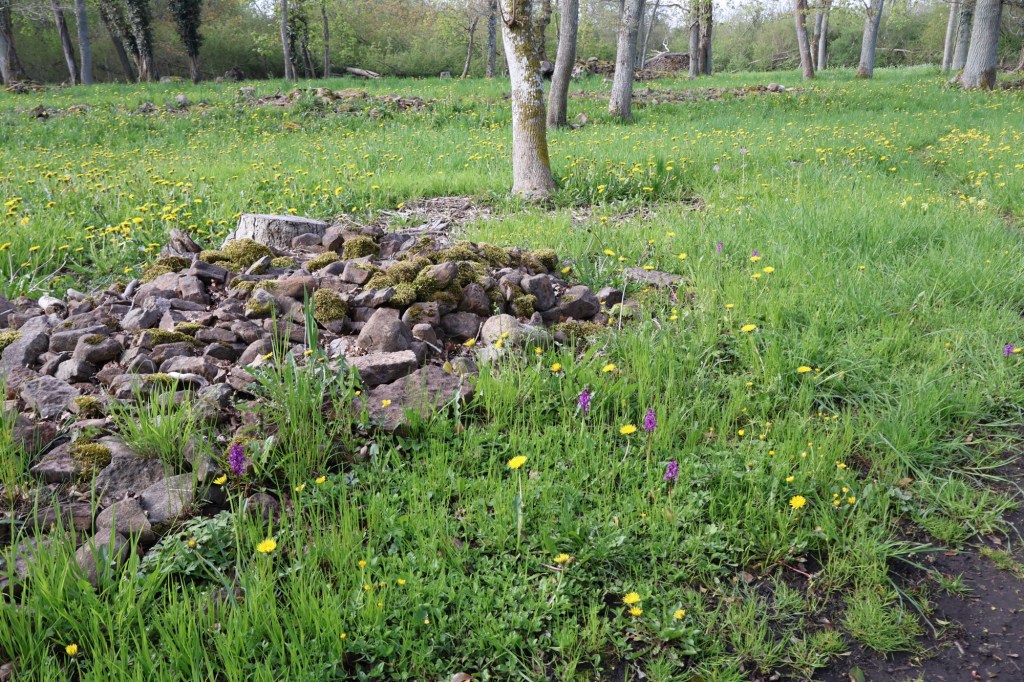

 Fornminnen
Lämna en kommentar