I was driving down a very small road in a beautiful deciduous forest with small meadows here and there. I had read that this was the location of a village that was abandoned long ago.

We are now on the island of Öland along Swedens Baltic coast. The village is located north east of the small municipality of Byxelkrok.

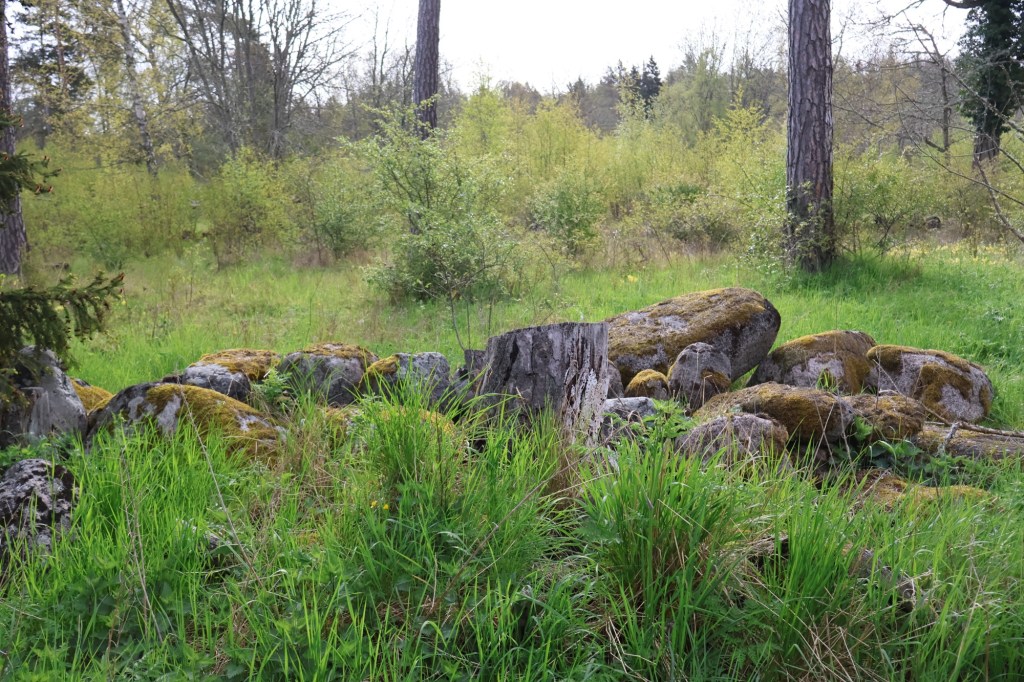
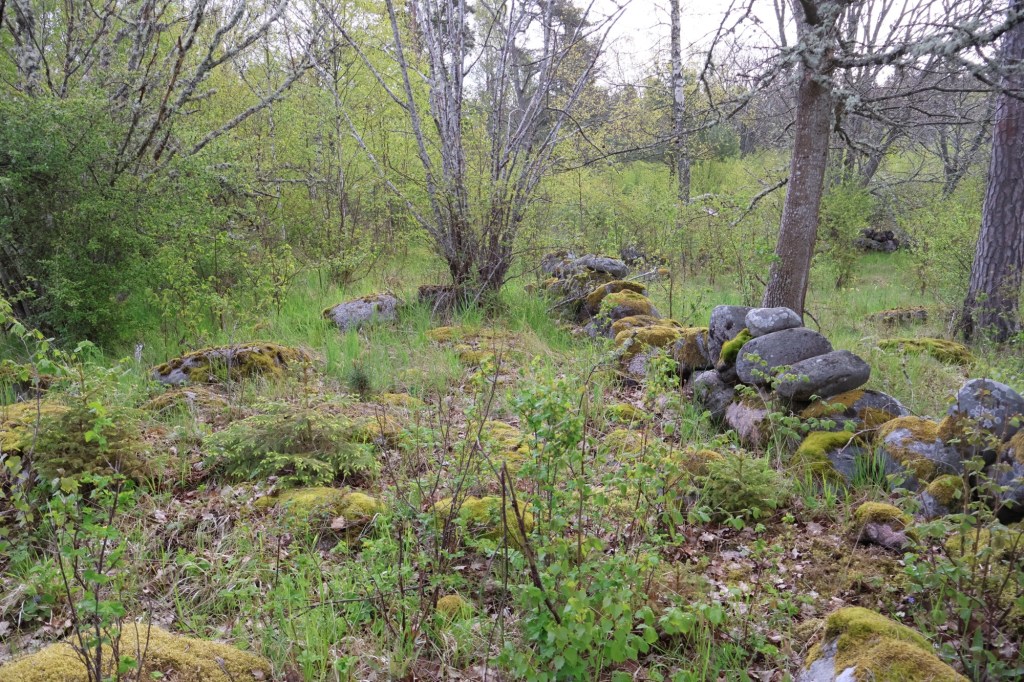
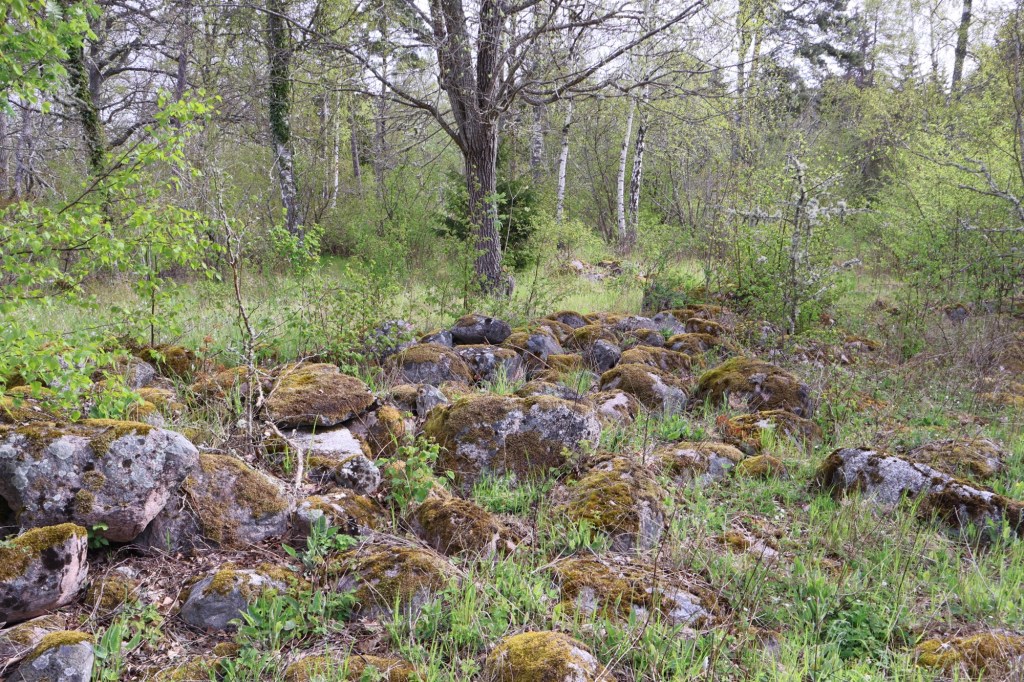
There are no houses left of the village, but there are still a lot to see here. There are 19 foundations of houses in the village. There is another village called Åker nearby where 17 more foundations can be seen.

It is also possible to study the stone walls of the pens used for the cattle and the walls of the “fägator” whitch is basically streets with walls on either side for transporting cattle are still visible. There are also piles of stones so called Röjningsrösen, these piles are the results of the farmers removing stones from their fields.
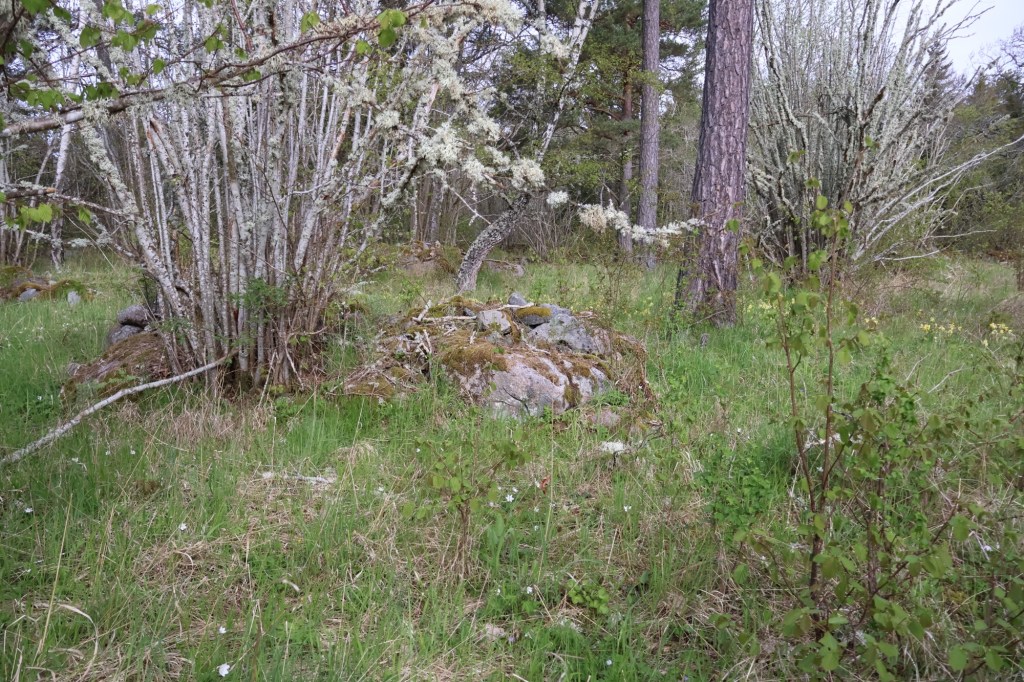
Some of the house foundations here are from the early Iron Age, but the newest ones are from the medieval period. Around year 1000 a change took place on Öland that regulate how farmland was divided according to a system called Attung. This did however never happen in this particular village.
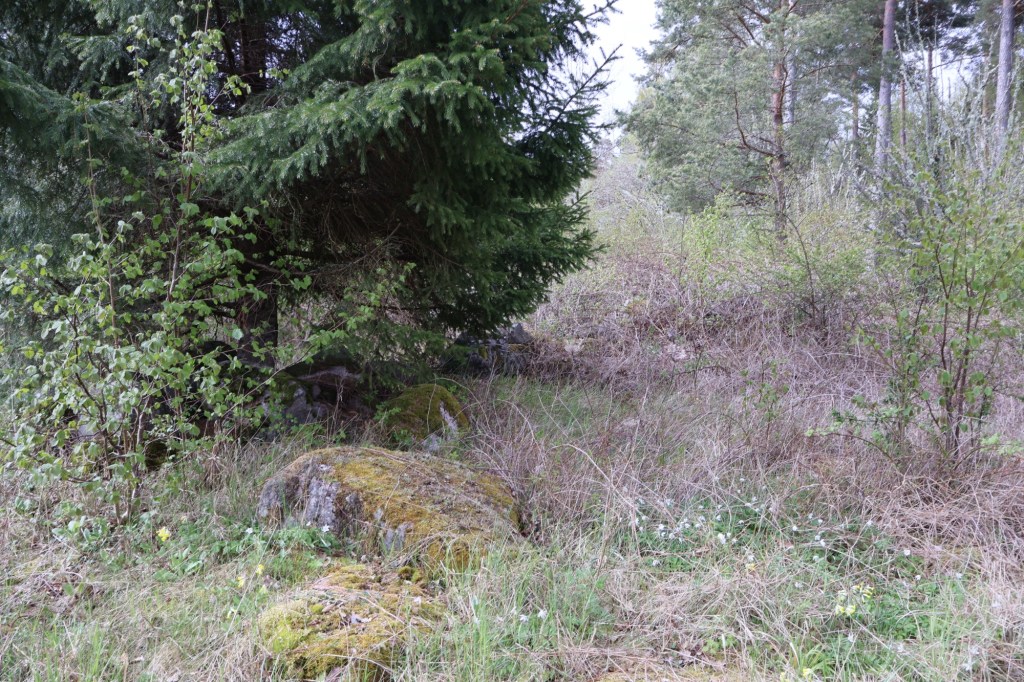
In the 13th century it was normal that land closer to the villages was divided in patches called tegar, something that didn’t happen here. This is also true for the restructuring of villages on Öland during the 14th century when the houses were normally placed along the road into radbyar (Row villages).
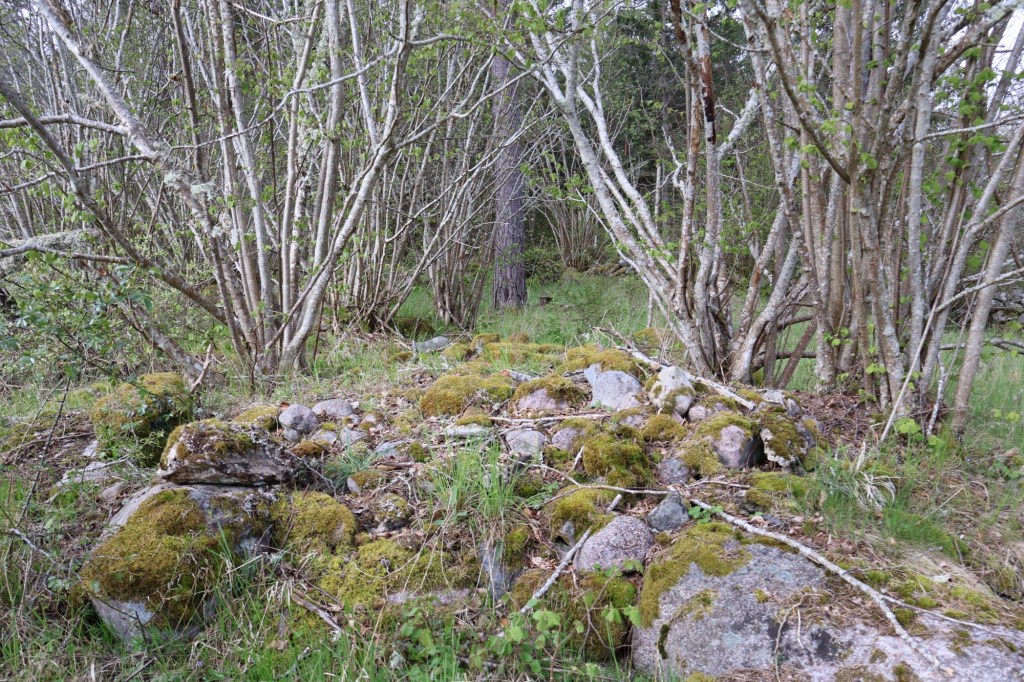
This is most likely because the village is believed to have been completely abandoned in 1206.
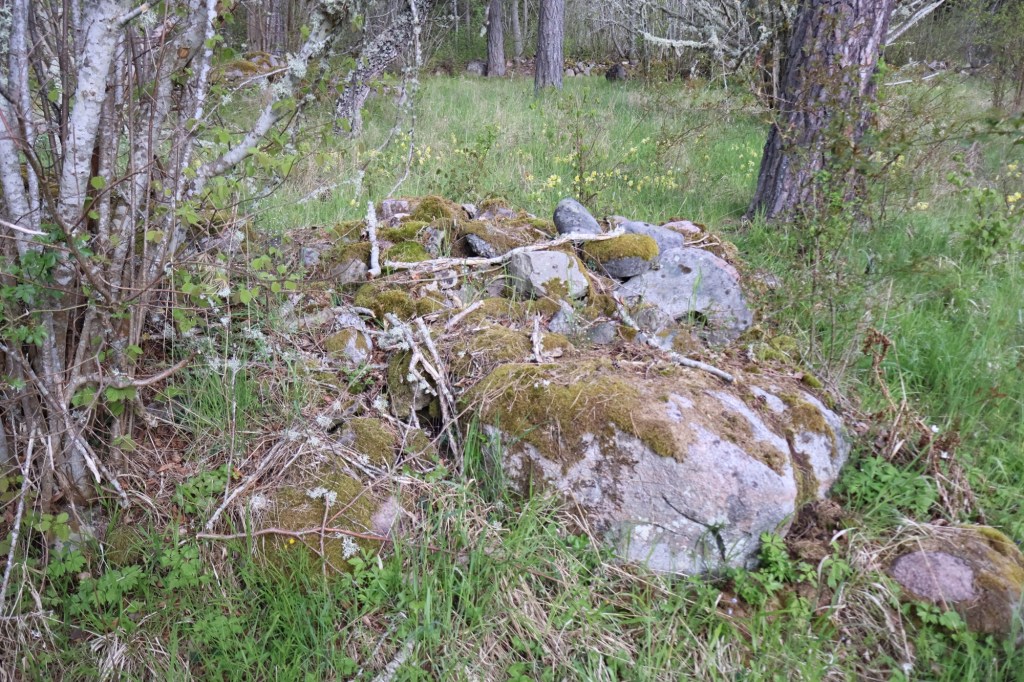
The very specific date comes from a theory put forward by an archaeologist by the name Jonathan Lindström in his book ”Biskopen och korståget 1206” (The Bishop and the Crusade 1206).
The bishop in the book title refers to the Danish Bishop of Lund, Anders Sunesen. He was waging a crusade against the pagan Estonians together with the Danish King Valdemar II Valdemarsen.

As a tactic to speed up the Christianization process on the Estonian island Ormsö or Vormsi as it is known in Estonian, the bishop would move entire villages from Öland and settle them on Vormsi.
The Swedes that he moved were already firmly Christian and gave him a head start against competing German missionaries that was active in the same area. Swedes are still a tiny minority in Estonia and the island is known as Årmse in their Swedish dialect.
It is possible to trace where the Swedes came from on Vormsi as they used a measurement for land called hake which is a word with German origin, but the measurement are exactly the same area as the measurement Attung. The Attung is only used on Öland and no where else in the world.

During the 16th century the land became crown land which has preserved the ruins here and the Iron Age landscape particularly well.
 Fornminnen
Lämna en kommentar