Swedish translation below.
This spring, I visited Forshem Church, about four kilometers east of Hällekis in Västergötland, Sweden.
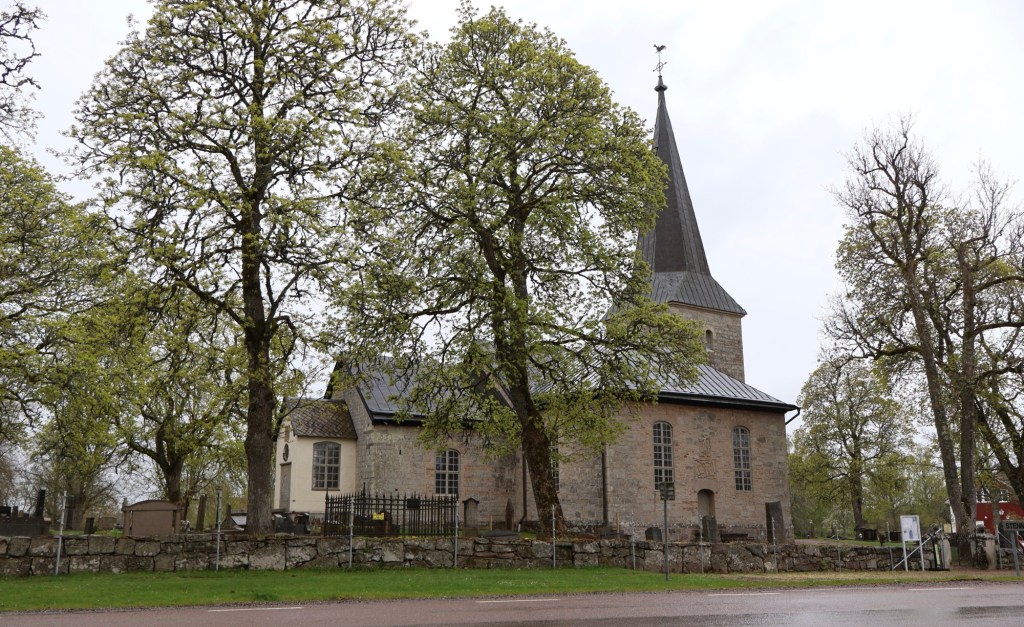
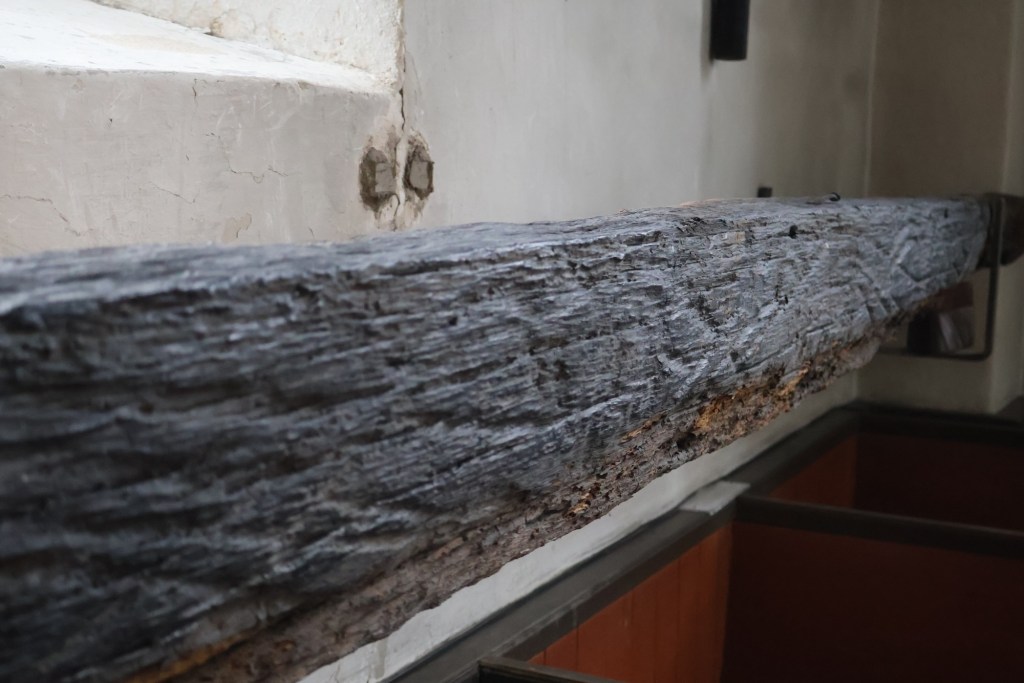
This is not my first visit to this unique medieval church, built in 1135 from sandstone. The church has been dated through dendrochronological studies of the roof trusses, which visitors can examine inside the church where they are displayed. The trusses feature simple decorations carved on the sides.

The oldest part of the church is the nave with its tower, built in the Romanesque style. There has been speculation that the tower might be older and could have been part of an earlier wooden church. However, I have not found any information to support this assumption.
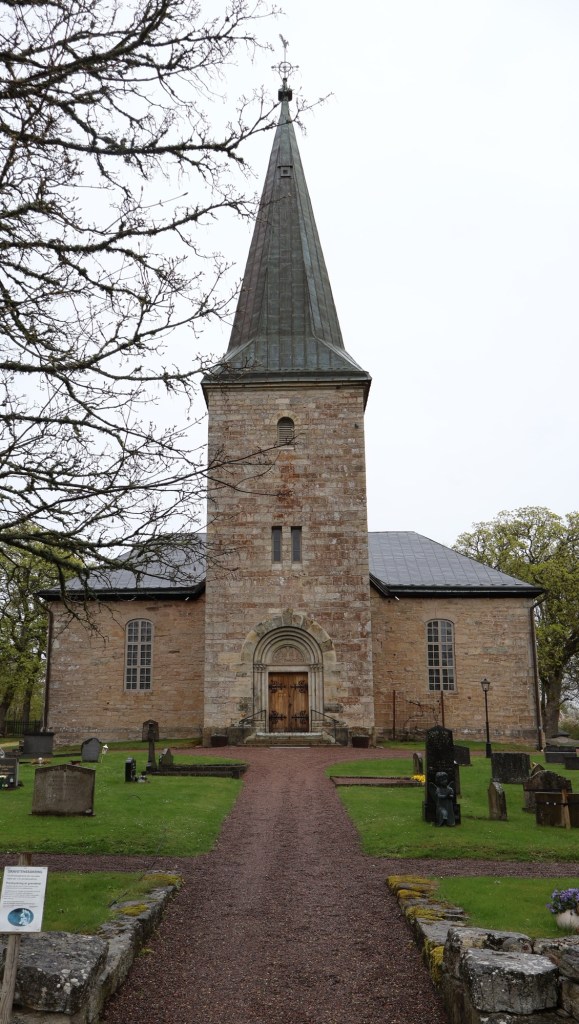

The tower is placed above the vapenhus (weapons house) a entry room in Swedish churches where visitors should leave their weapons. The tower may have served as a fortified tower in times of troubled. It was unusual to have towers on churches at this time, which makes Forshem Church unusual for its time.

As early as the end of the 13th century, the church was remodeled, and the choir was replaced with one in the Gothic style.

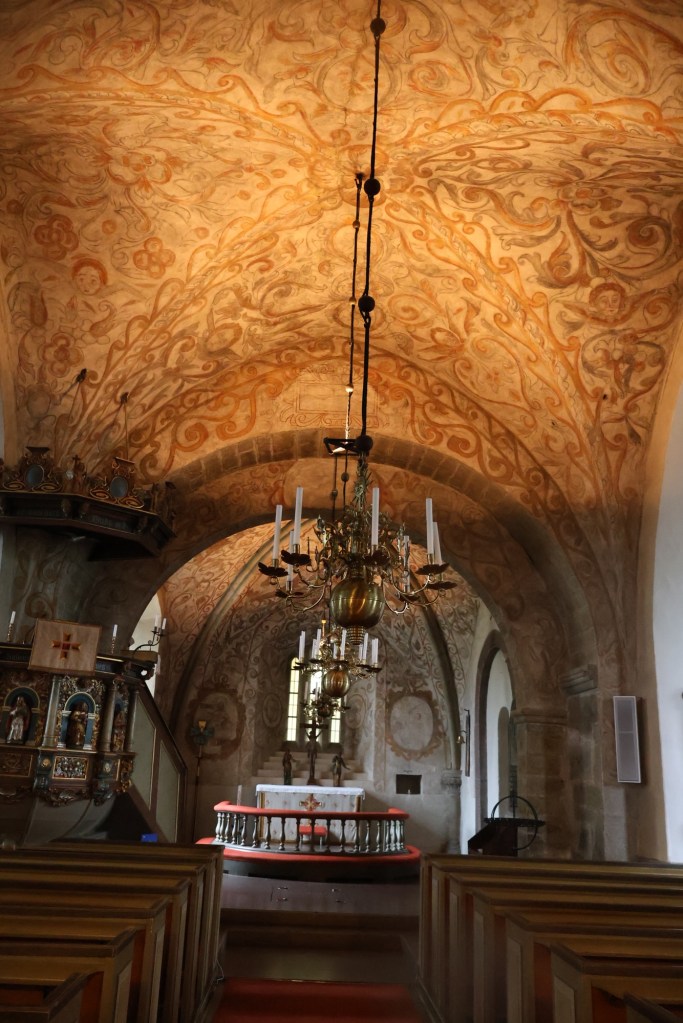
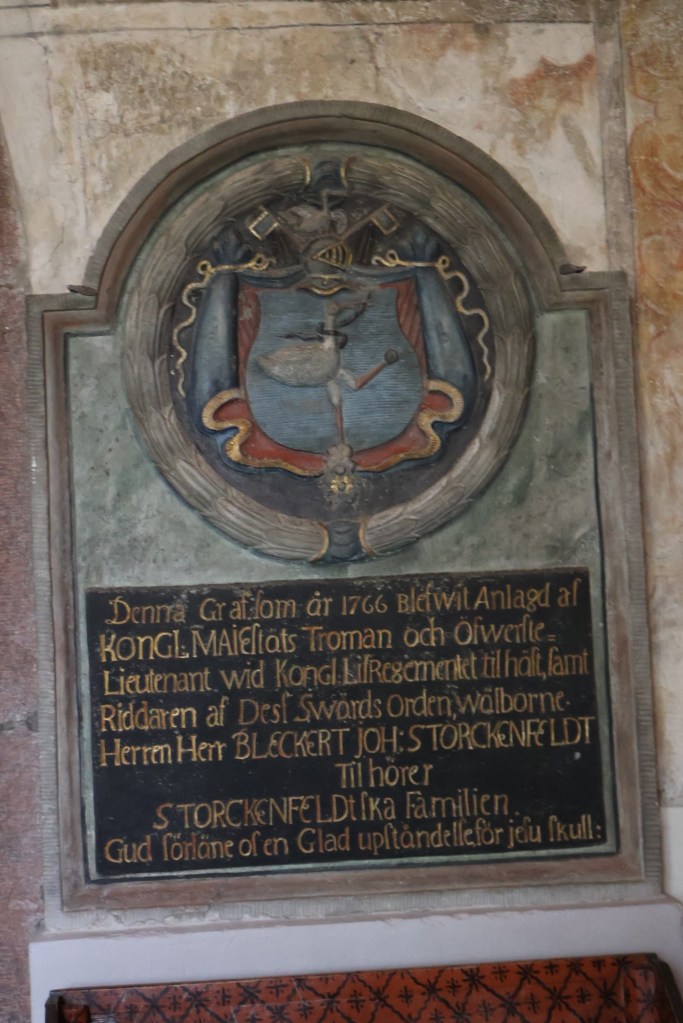
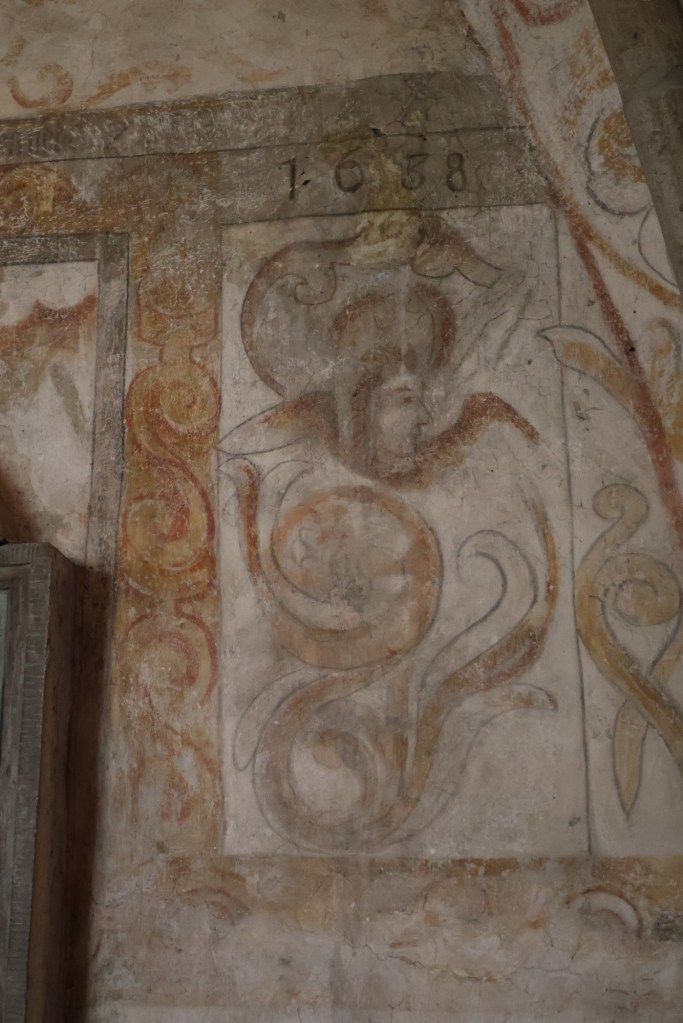
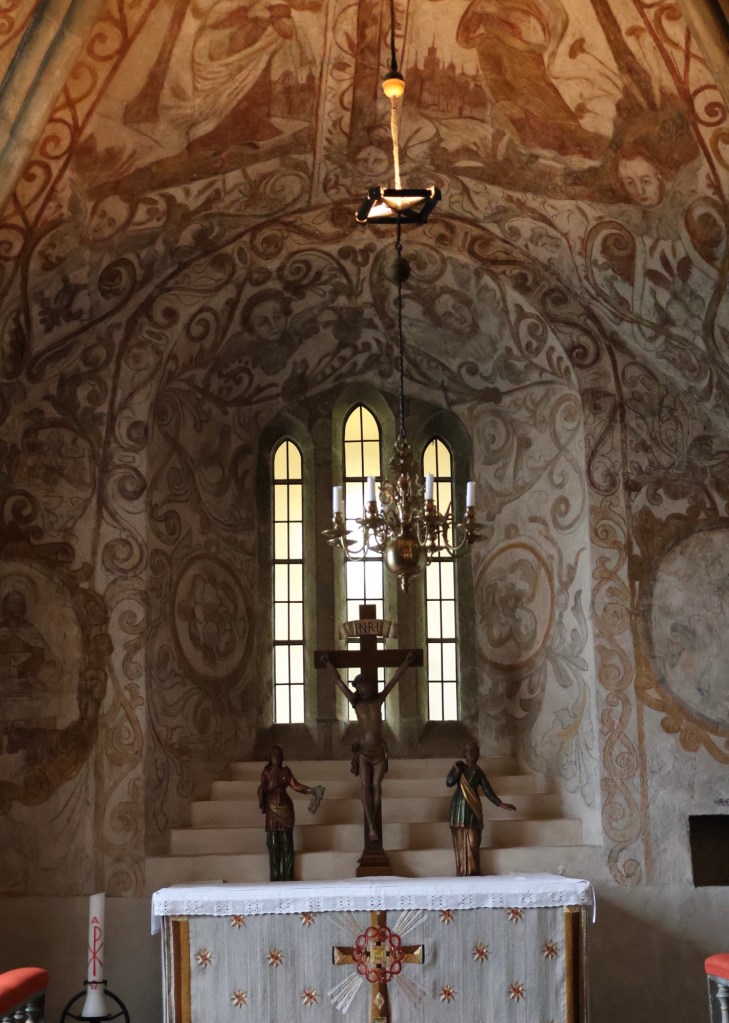
In 1648, the church received new ceiling paintings, which are still visible today. However, there were medieval paintings as well.
In 1663, a burial chapel was built on the southern side of the choir, and a hundred years later, in the 1760s, the transepts were added, giving the church its current appearance. Since then, several renovations have been carried out.

Forshem Church is unique, as I mentioned earlier. One reason for this is that it is the only church in the Nordic countries dedicated to ”the Lord Jesus Christ and The Church of the Holy Sepulchre in Jerusalem’s honor.”

The very extensive Romanesque reliefs also make the church unique. Forshem Church actually has the most extensive reliefs of this type on the Swedish mainland, with the exception of Lund Cathedral, which at that time was located in Denmark.
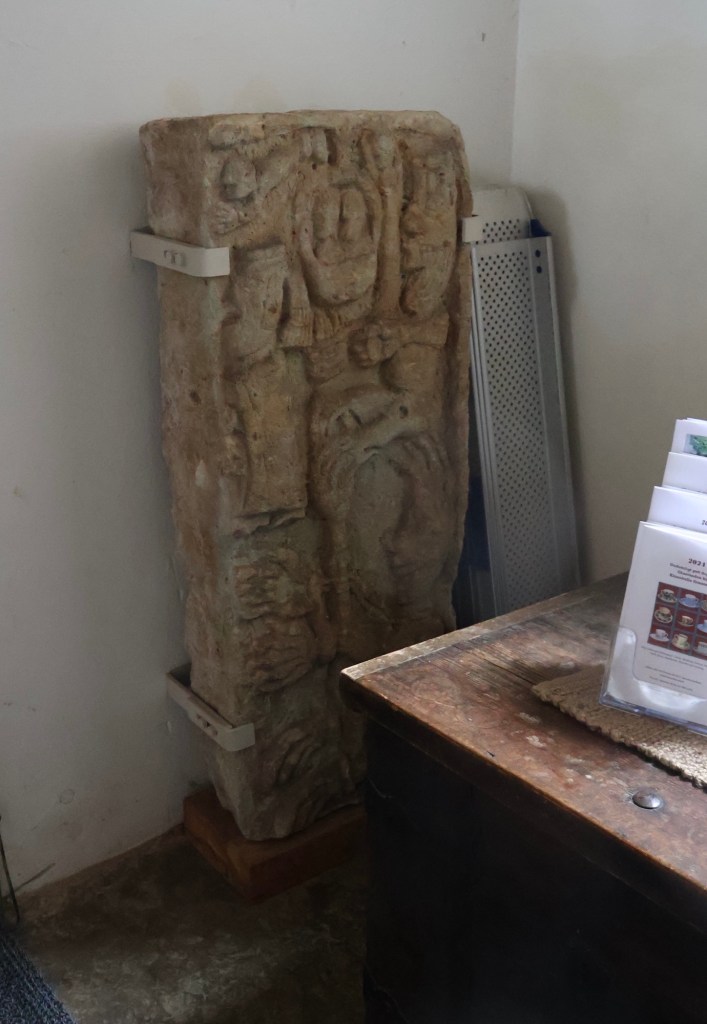
At the church, there are seven preserved reliefs, believed to be made by the same master mason who worked at Skara Cathedral. The reliefs are made from locally sourced sandstone from Kinnekulle.

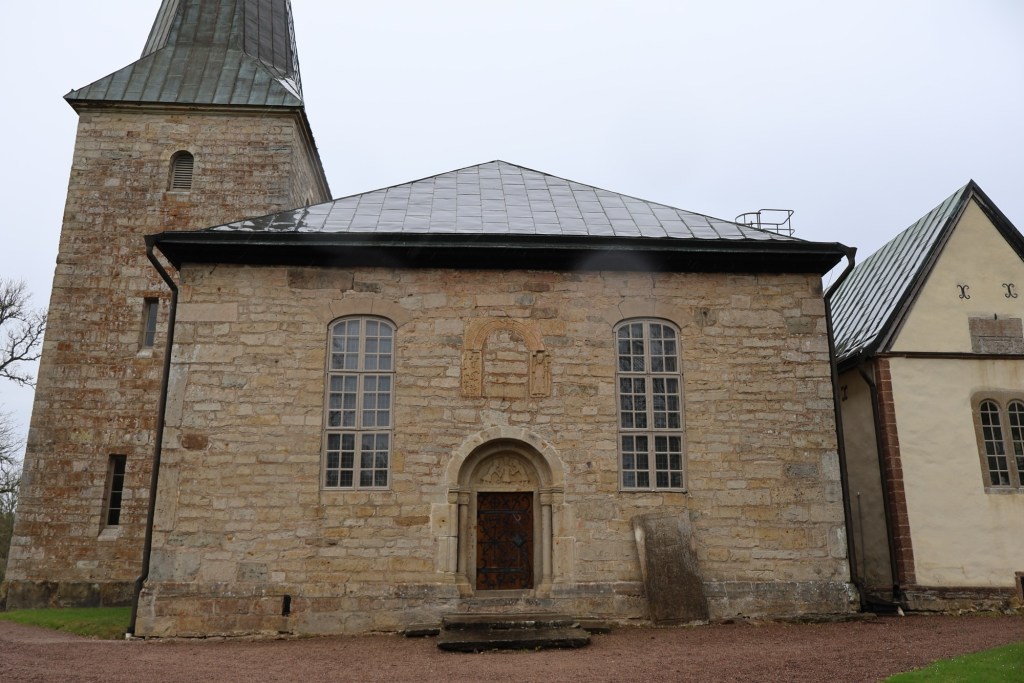
The church has two crescent-shaped stones called tympana above its doors.

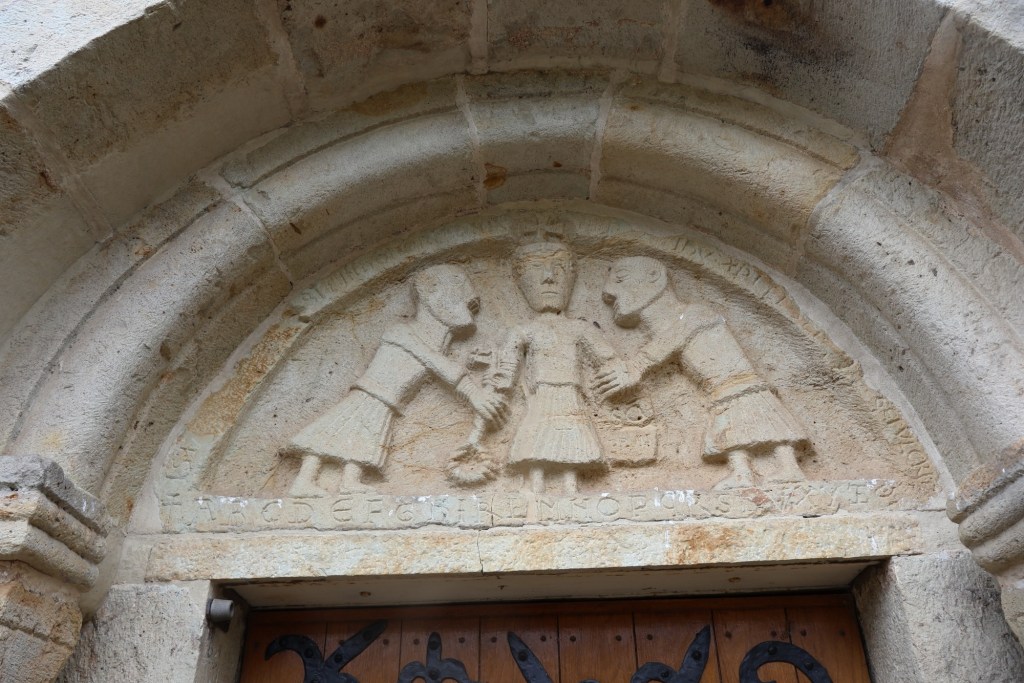
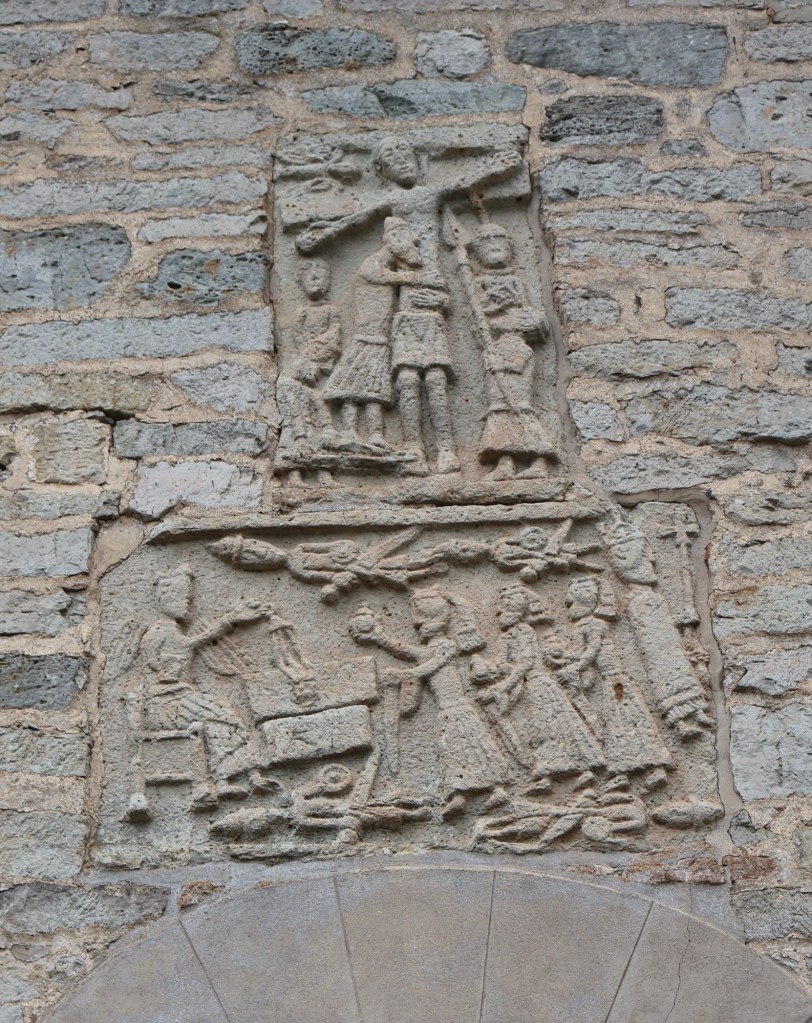
The western tympanum depicts three figures. In the center stands Jesus, crowned and robed. He blesses a church building with one hand. To the left of Jesus is a mason in a tunic and pointed hat, working with a stone for the construction.

This is believed to be the master mason responsible for the building. To the right of Jesus stands a man who is stepping on Jesus’s foot while presenting a chalice. Behind this man is a horse.
The man stepping on Jesus’s foot is interpreted as the nobleman who financed the construction of the church. His action can be seen as an attempt to be close to the Lord. It is also suggested to be an Arabic honor gesture, which is intriguing as we will get into in the theories surrounding this man. The horse behind him symbolizes his social class.

We do not know who the man was. However, the other tympanum features a Maltese cross, a symbol used by the Knights Templar. The church is also dedicated to The Church of the Holy Sepulchre in Jerusalem, which has led to a theory that he was a returning crusader who financed the church and chose to depict himself. His stepping on Jesus’s foot and the Arabic gesture might suggest that he had encountered this tradition in the Holy Land.
This theory forms the basis for author Jan Guillou’s fictional trilogy about the Templar knight Arn Magnusson, who the author believes is depicted in the church. The book series has also been adapted into films.

At the southern portal, the second tympanum again shows Jesus flanked by two figures. Here, he gives the man on the left a key, while the man on the right receives a book with the text ”SA PAVLI” (Saint Paul). What we see is Jesus giving Peter the keys to the kingdom of heaven, while Paul receives the law. The image symbolizes the divine mission of the Catholic Church.
Above the image is an inscription stating that the church is dedicated to “The Lord Jesus Christ and The Church of the Holy Sepulchre in Jerusalem’s honor.”
Several reliefs are part of the so-called Passion narrative and depict aspects of the crucifixion. These sections may have formed a sarcophagus symbolizing Jesus’s grave in the church, which was an important pilgrimage site, suggesting that the sarcophagus could have been part of the cult here.
Some reliefs depict saints, including Saint Martin with his bishop’s staff and Saint Nicholas.

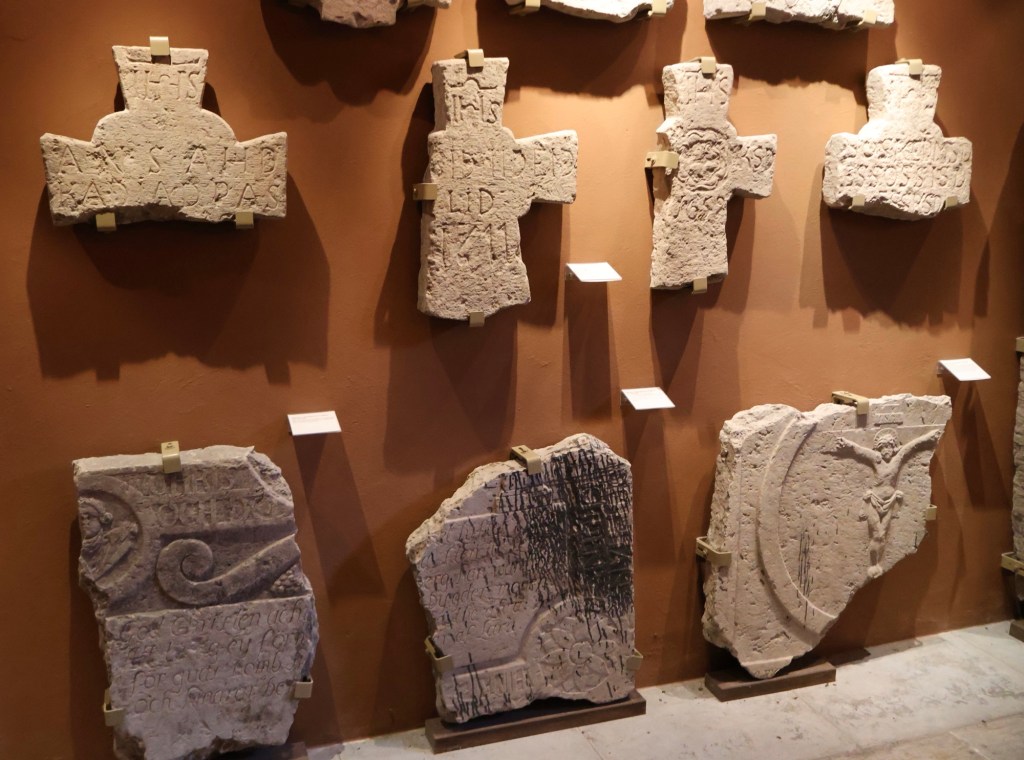
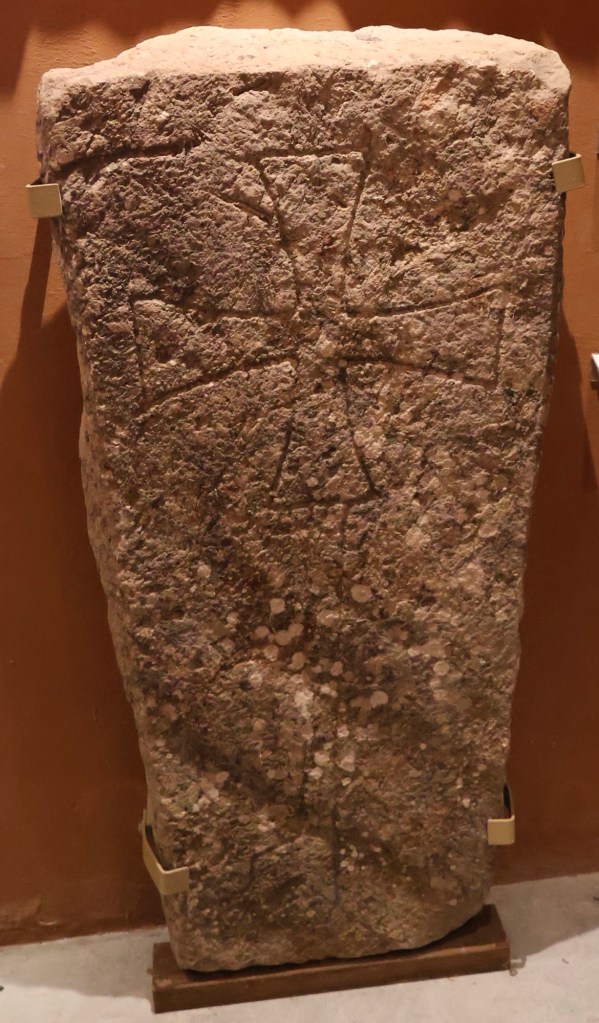
On the other side of the road, there is a small stone museum with lily stones (Liljestenar) and gravestones. There is also a lily stone in the church.
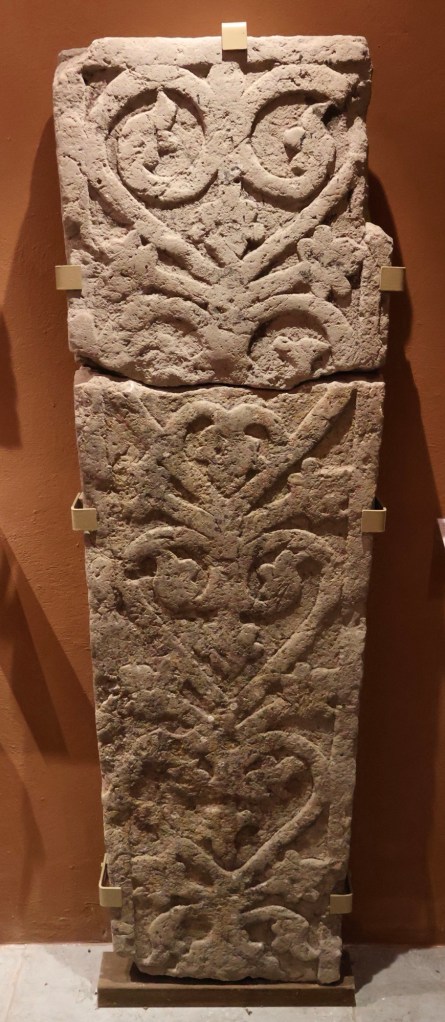
Lily stones may have been used as gravestones by early Christians, primarily in Västergötland.

Others believe these stones were used by early missionaries and depict the Tree of Life, a popular motif in Constantinople.
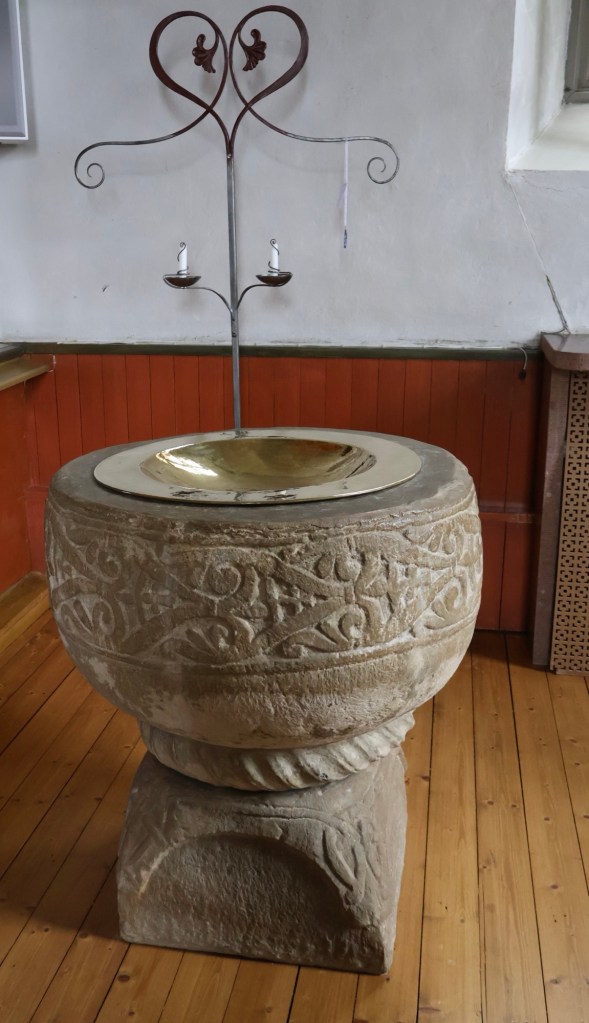
Inside the church, there is a baptismal font, but this is just a copy. The original from the 12th century is in the Historical Museum in Stockholm.
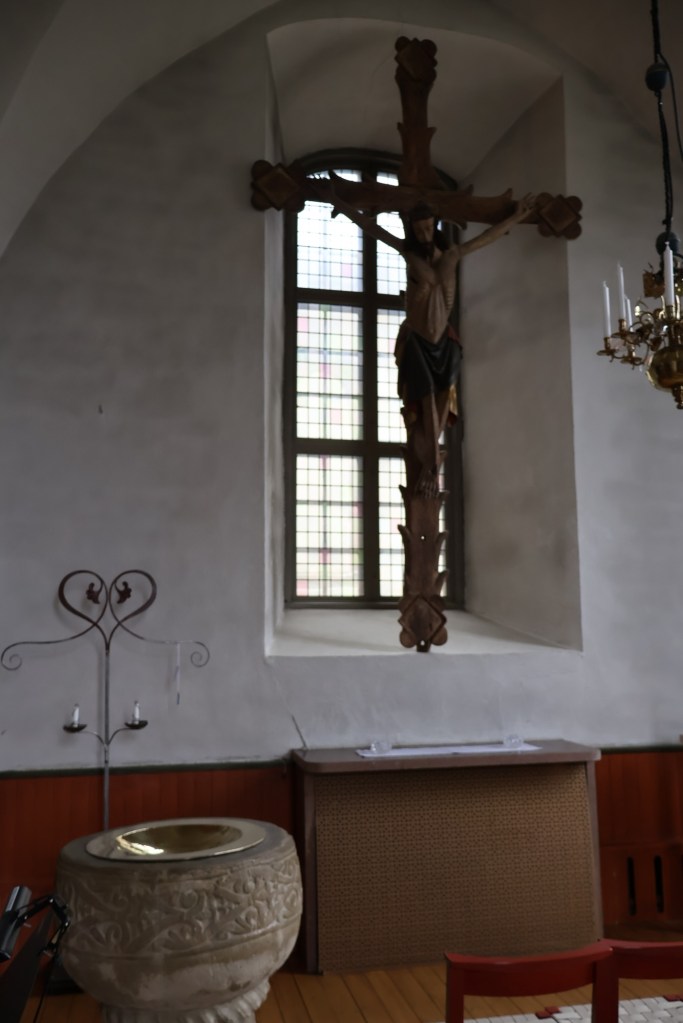
The church also features a Gothic crucifix in wood from the mid-14th century.
It is interesting that Forshem Church was built only 35-69 years after the end of the Viking Age (depending on when one considers it to have ended).
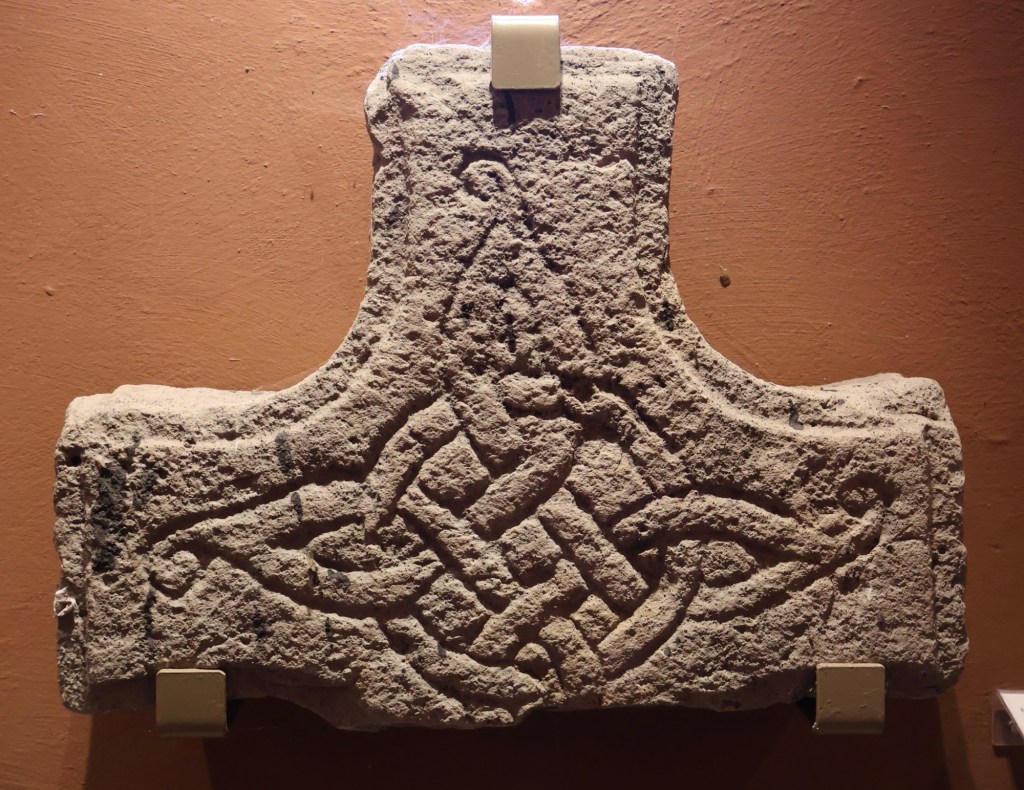
The church was constructed using knowledge from other parts of Europe, as stone building was not previously done in this way.
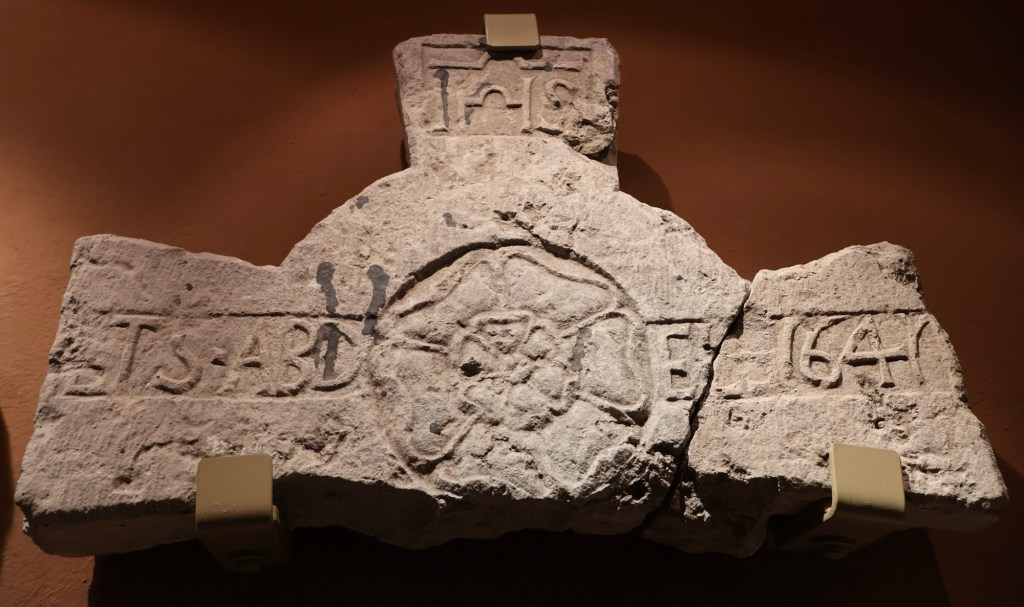
Moreover, the manner in which the nobleman depicted in the church chooses to portray himself resembles a European-style nobleman, a knight rather than a Viking chieftain, even though his grandfather or great-grandfather could chronologically speaking very well could have been involved in the Battle of Stamford Bridge in 1066.

Forshems kyrka
I våras besökte jag Forshems kyrka, ungefär fyra kilometer öster om Hällekis i Västergötland.
Det är inte första gången som jag besöker denna unika medeltida kyrka som är byggd 1135 av sandsten. Kyrkan är daterad genom dendrokronologiska undersökningar av takstolarna, som man som besökare kan studera inne i kyrkan där de ställs ut. De har en enkel dekor snidad i sidorna.
Kyrkans äldsta del är långhuset med dess torn som är byggt i romansk stil. Man har spekulerat i om tornet möjligtvis är äldre och att det varit en del i äldre träkyrka. Jag har dock inte hittat någon information som stödjer detta antagande.
Tornet är placerat ovanpå vapenhuset och kan ha fungerat som befästning i oroliga tider. Det var ovanligt med torn på kyrkor vid den här tiden, vilket bara det gör Forshems kyrka ovanlig.
Redan på 1200 talets slut så bygger man om kyrkan och man rev då koret och ersatte det med ett kor i gotisk stil.
1648 får kyrkan nya takmålningar, och det är dessa som man kan se här idag. Men det har funnits medeltida målningar.
1663 bygger man ett gravkor vid korets södra sida och hundra år senare på 1760 talet tillkom korsarmarna vilket ger kyrkan dess framtoning som den har idag. Man har sedan dess genomfört flera renoveringar.
Forshems kyrka är som jag tidigare nämnt unik. En av anledningarna till detta är att det är den enda kyrkan i Norden som är vigd till ”Herren Jesus Kristus och den heliga graven i Jerusalems ära”.
Även de mycket omfattande romanska relieferna gör Kyrkan unik. Forshems kyrka är faktiskt den romanska kyrka som på svenska fastlandet har de mest omfattande reliefer av den här typen, med undantag för Lunds Domkyrka som vid den här tiden ju låg i Danmark.
Det finns i kyrkan sju bevarade reliefer och man tror att de är gjorda av samma stenhuggar mästare som varit aktiv vid Skara Domkyrka. Relieferna är tillverkade av den lokalt förekommande sandstenen från Kinnekulle.
Kyrkan har två halvmåneformade stenar som kallas tympanon över sina portar.
Den västra typanonen föreställer tre personer. I mitten står Jesus med krona och kjortel. Han välsignar med sin ena hand en kyrkobyggnad. Till vänster om Jesus syns en stenhuggare i skjortel och toppig mössa arbetandes med en sten till bygget.
Man tror att detta är den stenhuggarmästare som varit ansvarig för bygget. Till höger om Jesus står en man som trampar denne på foten och samtidigt räcker han fram en nattvards kalk. Bakom den mannen syns en häst.
Mannen som trampar Jesus på foten tolkas som den herreman som bekostat uppförandet av kyrkan. Att han trampar Jesus på foten kan tolkas som att han vill stå nära Herren. Det ska också vara en arabisk hedersgest, vilket blir intressant med de teorier som finns runt denna man. Hästen bakom honom är en symbol för den klass han tillhörde.
Vem mannen var vet vi inte. Men vid den andra typanonen syns malteserkors vilket är en symbol som användes av Tempelherrarna. Kyrkan är ju dessutom dedikerad till den heliga graven i Jerusalem. Vilket har lett till en teori att det rör sig om en hemvändande korsfarare som bekostat kyrkan och som låtit avbilda sig själv. Att han står på Jesus fot och att detta är en arabisk sed skulle då tyda på att han kommit i kontakt med detta i Det heliga landet.
Denna teori är basen för författaren Jan Guillous fiktiva romantriologin om tempelriddaren Arn Magnusson som är den person som författaren tror avbildas i kyrkan. Bokserien har även filmatiserats.
Vid den södra portalen finns den andra typanonen syns återigen Jesus flankerad av två personer. Här ger han mannen till vänster en nyckel och mannen till höger får en bok med texten SA PAVLI (Sankt Paulus). Det vi ser är Jesus som ger Petrus nyckeln till himmelriket och Paulus får lagen.
Bilden symboliserar katolska kyrkans gudomliga uppdrag. Ovanför bilden finns en text som berättar att kyrkan vigd i ”Herren Jesus Kristus och den heliga graven i Jerusalems ära”
Flera reliefer är del av den så kallade passions berättelsen och visar bland annat delar av korsfästelsen. Dessa delar kan möjligen ha utgjort en sarkofag som symboliserar Jesus grav i kyrkan. Den var nämligen ett viktigt pilgrimsmål och då kan sarkofagen ha varit en del av kulten här.
Några reliefer visar helgon, bland annat den helige Martinus med sin biskopskräckla och den helige Nicolaus.
På andra sidan vägen finns ett litet sten museum med liljestenar och gravhällar. Det finns även en liljesten i kyrkan.
Liljestenar kan ha använts som gravhällar av de tidiga kristna i främst Västergötland.
Andra tror att dessa stenar har använts av tidiga missionärer och att de avbildar livets träd, ett populärt motiv Konstantinopel.
Inne i kyrkan finns ett dopfunt, men detta är bara en kopia. Originalet från 1100 talet finns på historiska museet i Stockholm.
I kyrkan finns även ett Gotiskt triumfkrusifix i trä från mitten av 1300 talet.
Det är intressant att Forshems kyrka är uppförd bara 35-69 år efter Vikingatidens slut (beroende på när man anser att den tog slut).
Kyrkan är uppförd med hjälp av kunskap från övriga Europa då man inte byggde i sten tidigare på det här sättet.
Men även sättet hur herremannen som avbildas på kyrkan väljer att avbildas är som en herreman av Europeisk typ. In riddare och inte en vikingatida storman, trots att hans farfar eller morfar rent tidsmässigt mycket väl hade kunnat vara med vid slaget vid Stamford Bridge 1066.
 Fornminnen
Lämna en kommentar