
A Swedish version of the text can be found below.

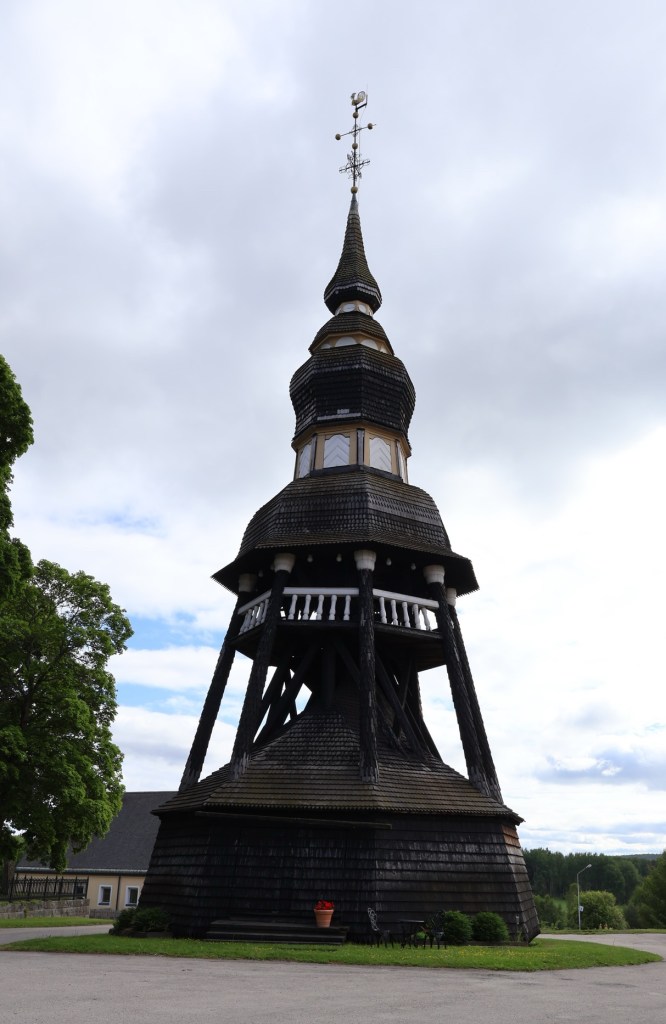
Approximately five kilometers northwest of the city Hudiksvall in Hälsingland, Sweden lies Hälsingtuna Church. The site appears to have been important early on, especially due to the runestones that are found in the churchyard. Outside the church runs the road that once led to the royal estate in Hög, which, along with its church, has two additional runestones that I will write about in the future. Hög meaning mound gets is name from the large grave mound there.
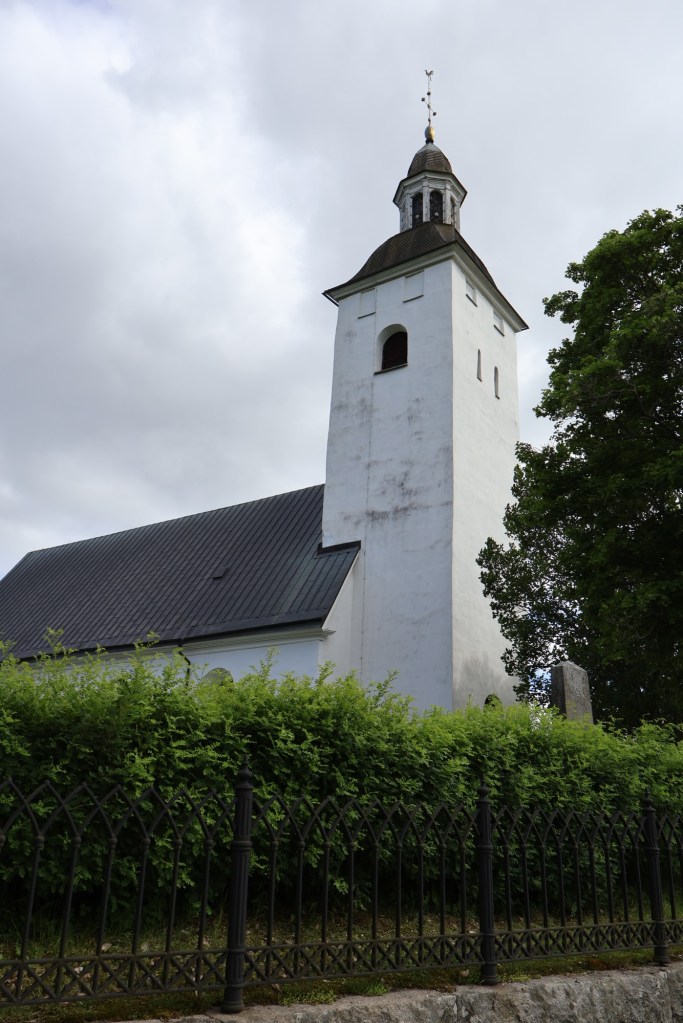
The church was originally of ”klövsadel” type, with towers in both the east and west that may have served as a fortification. However, the eastern tower was demolished around the turn of the 1500s. The church was already old by then, with the oldest parts constructed in the 1100s, although most of it was built in the 1200s.
Inside, there are supposed to be remnants of wall paintings from the 1300s. The church is believed to have functioned as a pilgrimage church.
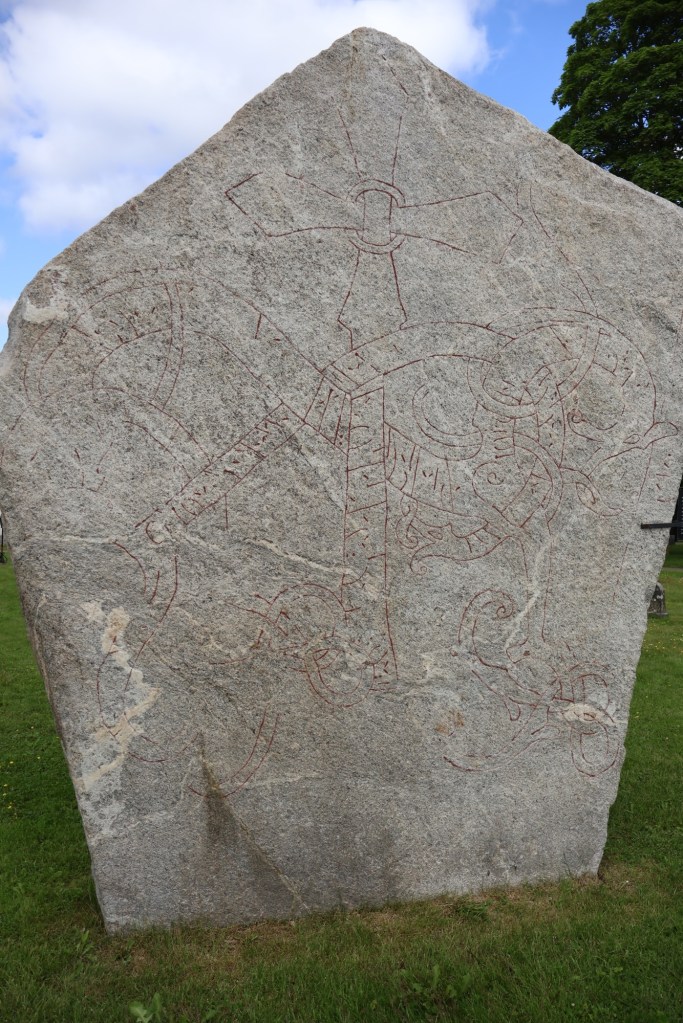
As mentioned, there are two runestones by the church. The largest of them is hard to miss and is called the Hälsingtuna Stone, with the designation HS 10.
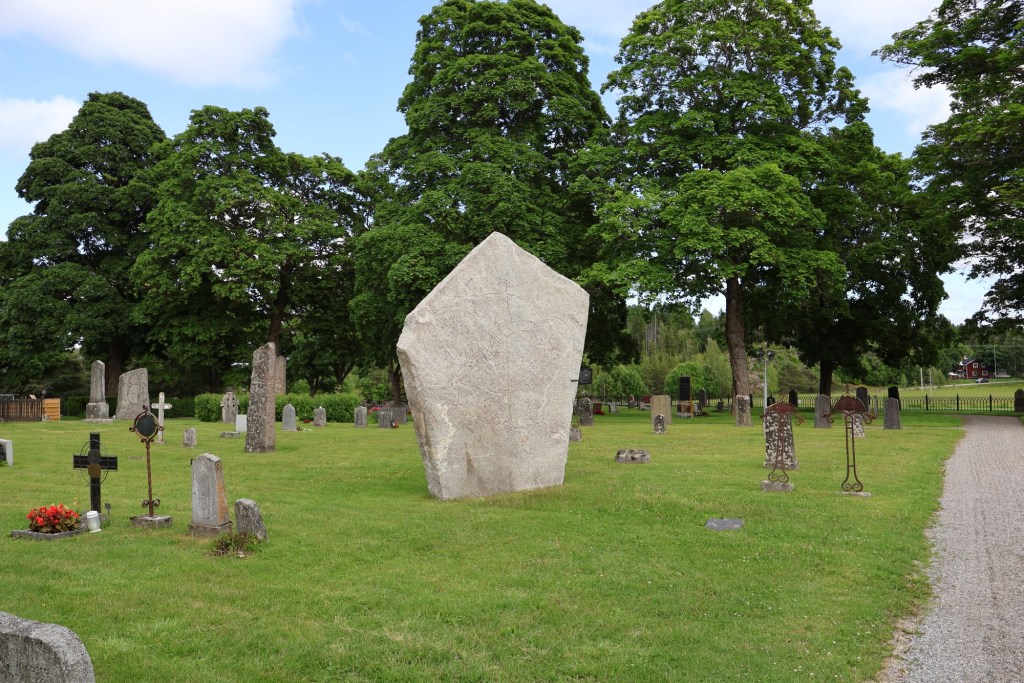
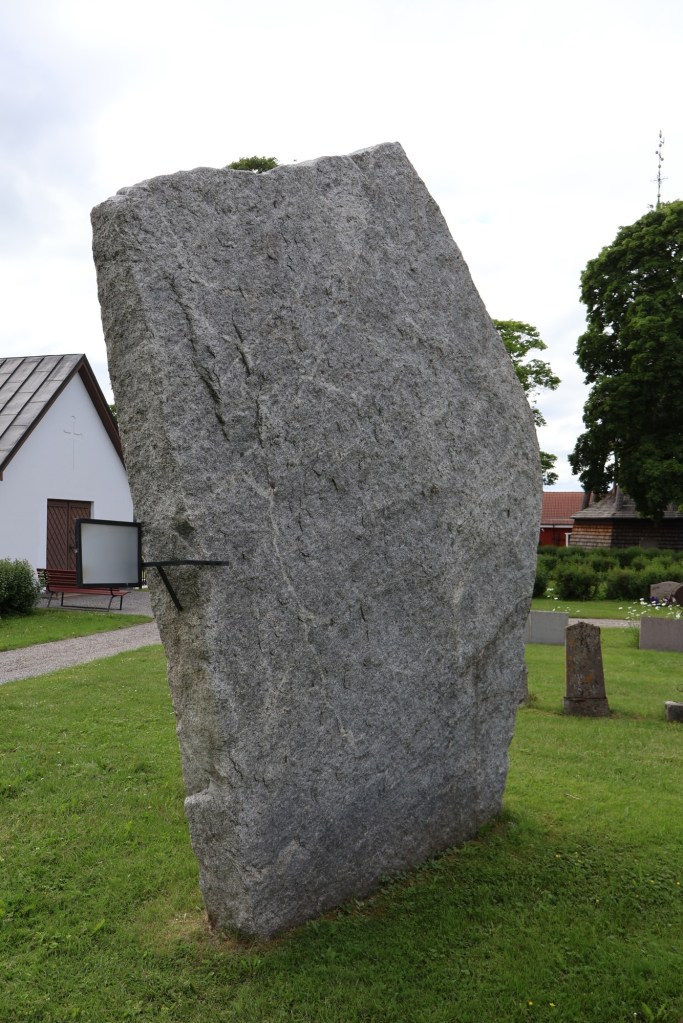
It is hard to miss due to its massive size, measuring 2.85 meters wide and 3.43 meters high, making it likely the largest runestone in Sweden. The Levene Stone in Västergötland, which I have written about previously, is taller, however.
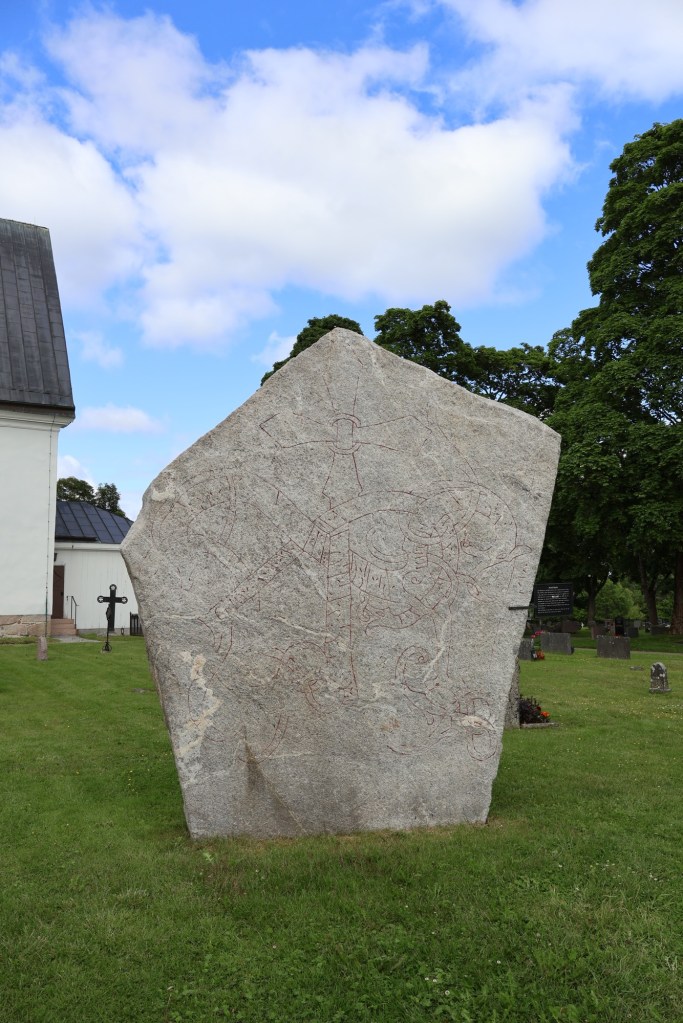
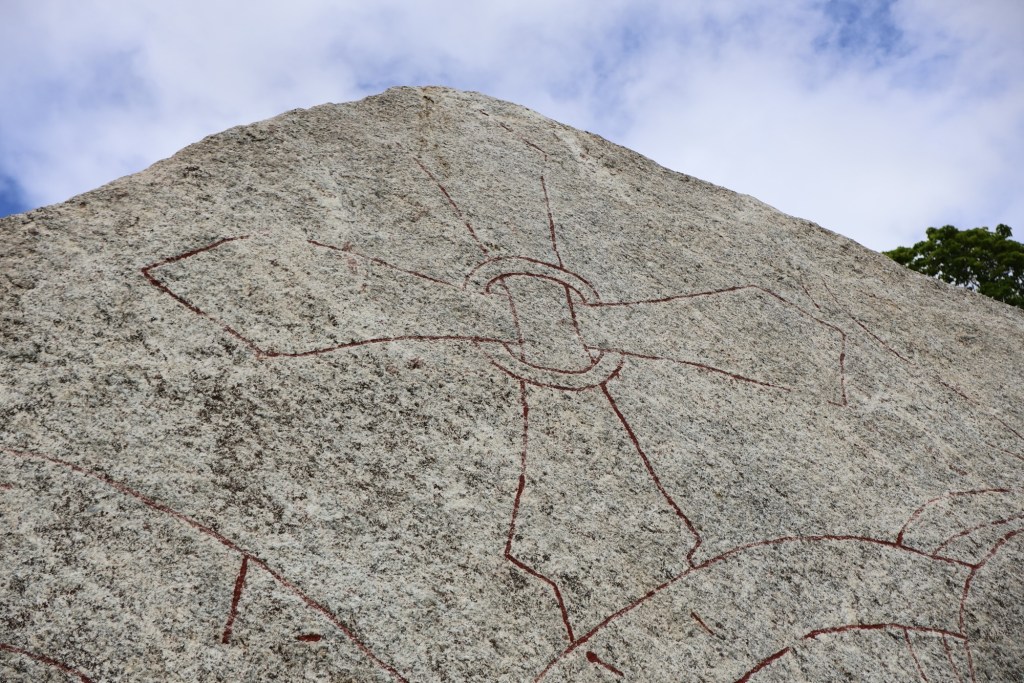
What makes the stone very special is that it is inscribed with Hälsinge runes or staveless runes, as they are also called. This is a rare variant of the runic alphabet known as the Younger Futhark, where the vertical staves of the runes have been omitted to simplify the carving for the rune carver. However, this makes it harder for the reader to decipher the runes, and it was not until 1674 that Professor Magnus Celsius managed to crack the code for how they should be read. The inscription on the Hälsingtuna Stone reads as follows:

[…-…l]f runaʀ sun lina (s)tin þina f…(þ)… sum sunan i na… fur ¶ …a…i(þ)bnu + a…t… st[in þina] aftiʀ sunu sina þria hruþmar in þ(o)…flt ‘ uma(h)l ¶ … ¶ in brusi asbiarnaʀ sun fa[þ]… : runaʀ þi… ¶ … raþa ·
…the runes / Álfrúnar(?), Lini’s son, this stone … who in the south … this stone in memory of his three sons, Hróðmarr and … And Brúsi Ásbjǫrn’s son coloured these runes. … interpret(?).

The runic inscription is not complete, and parts of it can no longer be read. This impressive stone is also decorated with a braided ring cross and two so-called ”rune animals.” The stone is dated to the 1020s-1050s and remains in the location where it was once erected.
The first depiction of the Hälsingtuna Stone occurs in 1600-1601 when Johannes Bureus makes his journey to Norrland. He writes that a giant named Trone used the stone as a footstool.
This connection to giants reappears during “rannsakningarna” investigation into ancient sites that was a royal incentive in 1684, where it is noted:
”A large high stone is inscribed with runes and stands in the churchyard, and there lies a big giant and spies against the hill.”

It is said that the giant is buried in the churchyard here. It’s perhaps not surprising that such stories such as this have arisen, given the stone’s gigantic size.

The second runestone in the churchyard is significantly smaller, measuring a modest 70 cm in width. This stone, designated HS 9, was erected during the Viking Age, and the incomplete inscription reads:
…-… : aftiʀ : þurstin : su- …
… in memory of Þorsteinn, (his) son …”
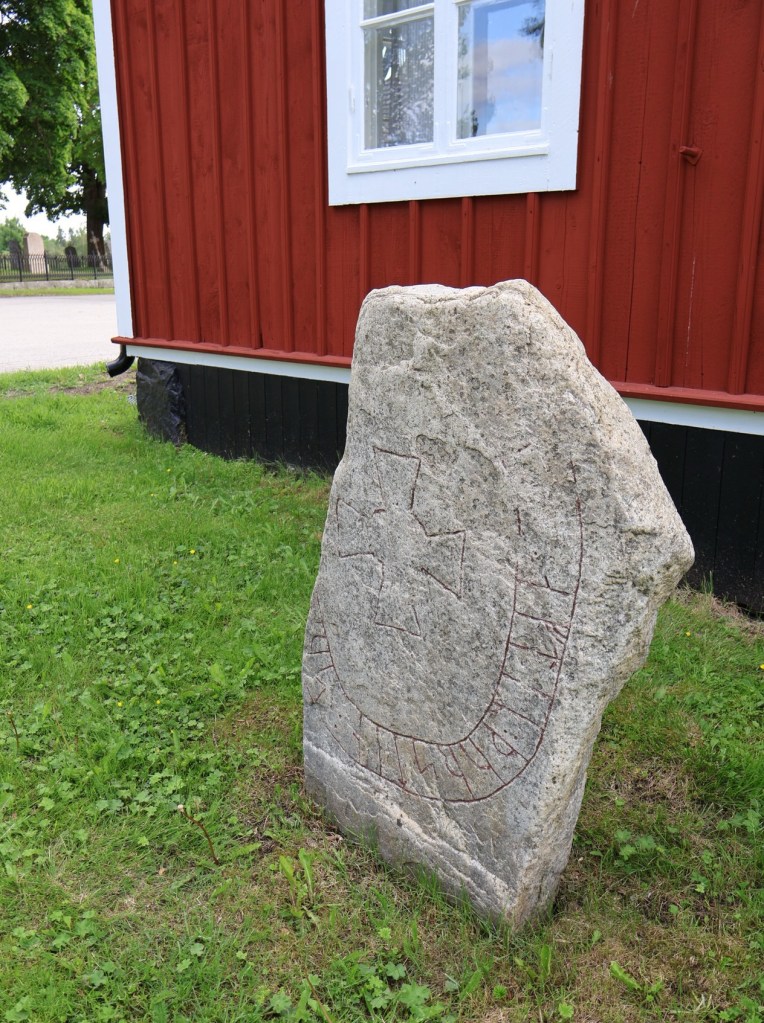
The stone is carved with runes from the Younger Futhark and is also decorated with a cross. Unlike the Hälsingtuna Stone, this stone originally stood elsewhere, likely at the farm Östermo, before being moved to the door of the parish cottage, where it lay down before finally being erected in its current location.

Swedish:
Hälsingtunastenen
Ungefär fem kilometer nordväst om Hudiksvall i Hälsingland ligger Hälsingtuna kyrka. Platsen verkar tidigt ha varit viktig, inte minst på grund av sina runstenar som finns på kyrkogården. Utanför kyrkan går vägen som en gång ledde till kungsgården i Hög som med sin kyrka har ytterligare två runstenar som jag kommer att skriva om i framtiden.
Kyrkan var ursprungligen en Klövsadelkyrka med torn i i både öster och väster som kan ha fungerat som en befästnings anläggning. Det östra tornet revs dock vid sekelskiftet 1500. Kyrkan var redan då gammal och de äldsta delarna uppfördes på 1100 talet, även om det mesta byggdes på 1200 talet.
PÅ insidan ska det finnas rester av kalkmålningar från 1300 talet. Kyrkan ska ha fungerat som pilgrimskyrka.
Vid kyrkan finns som sagt två stycken runstenar. Den största av dem är svår att missa och kallas Hälsingtunastenen med signum HS 10.
Att den är svår att missa beror på att den med sina massiva 2,85 meter i bredd och 3,43 meter i höjd troligtvis är Sveriges största runsten. Levenestenen i Västergötland som jag skrivit om tidigare är dock högre.
Något som gör stenen mycket speciell är att den är ristad med Hälsingerunor eller stavlösa runor som de också kallas. Det är en ovanlig variant av runalfabetet den yngre Futharken där man har uteslutit de vertikala stavarna på runorna. Detta för att förenkla för runristaren. Det blir dock svårare för läsaren att tyda runorna och det var först 1674 som professor Magnus Celsius lyckade knäcka koden för hur de ska läsas. På Hälsingtunastenen står följande:
[…-…l]f runaʀ sun lina (s)tin þina f…(þ)… sum sunan i na… fur ¶ …a…i(þ)bnu + a…t… st[in þina] aftiʀ sunu sina þria hruþmar in þ(o)…flt ‘ uma(h)l ¶ … ¶ in brusi asbiarnaʀ sun fa[þ]… : runaʀ þi… ¶ … raþa ·
… runaʀ, sunn Lina, stæin þenna … sum sunnan i … … … … stæin þenna æftiʀ sunu sina þria Hroðmar en … … … En Brusi Asbiarnaʀ sunn fað[i] runaʀ þe[ssaʀ]. … raða(?).
… runorna, Linis son, denna sten … som i söder … denna sten efter sina tre söner, Frodmar [Hrodmar ?] och … och Bruse Åsbjörnsson gjorde runorna … läsa
Runristningen är inte komplett och delar av den går inte längre att läsa. Denna imponerande sten är utöver inskriptionen även dekorerad med ett flätat ringkors och två så kallade rundjur. Stenen är daterad till 1020-1050 talen och står fortfarande på den plats där den en gång restes.
Första gången som Hälsingtunastenen avbildas är 1600-1601 när Johannes Bureus gör sin norrlandsresa. Han skriver då att en jätte vid namn Trone ska haft stenen som fotstöd.
Denna koppling till jättar dyker återigen upp under rannsakningen 1684 och man skriver:
”En stor höögh häll ähr skrifwan medh Runska bockstäwer på och ähr ståendes i kiykio Gården uprester, och der ligger en stoor Jätte och Spiäner Emot hellän.”
Det sägs att jätten ligger begravd på kyrkogården här. Det är kanske inte så konstigt att sådana historier har uppståt då stenen är så stor.
Den andra runstenen på kyrkogården är betydligt mer blygsam i sin storlek med sina nätta 70 cm i bredd. Stenen som har signum HS 9 är uppförd på vikingatiden och den inkompletta inskriften lyder:
…-… : aftiʀ : þurstin : su- …
… æftiʀ Þorstæin, su[n] …
… efter Torsten, so[n] …
Stenen är ristad med runor ur den yngre futharken och även dekorerad med ett kors. Till skillnad från Hälsingtunastenen så har denna sten ursprungligen stått någon annanstans. Troligtvis vid gården Östermo för att sedan flyttas till sockenstugans dörr där den låg ner för att slutligen resas på sin nuvarande plats.
 Fornminnen
Lämna en kommentar