
Flap 2
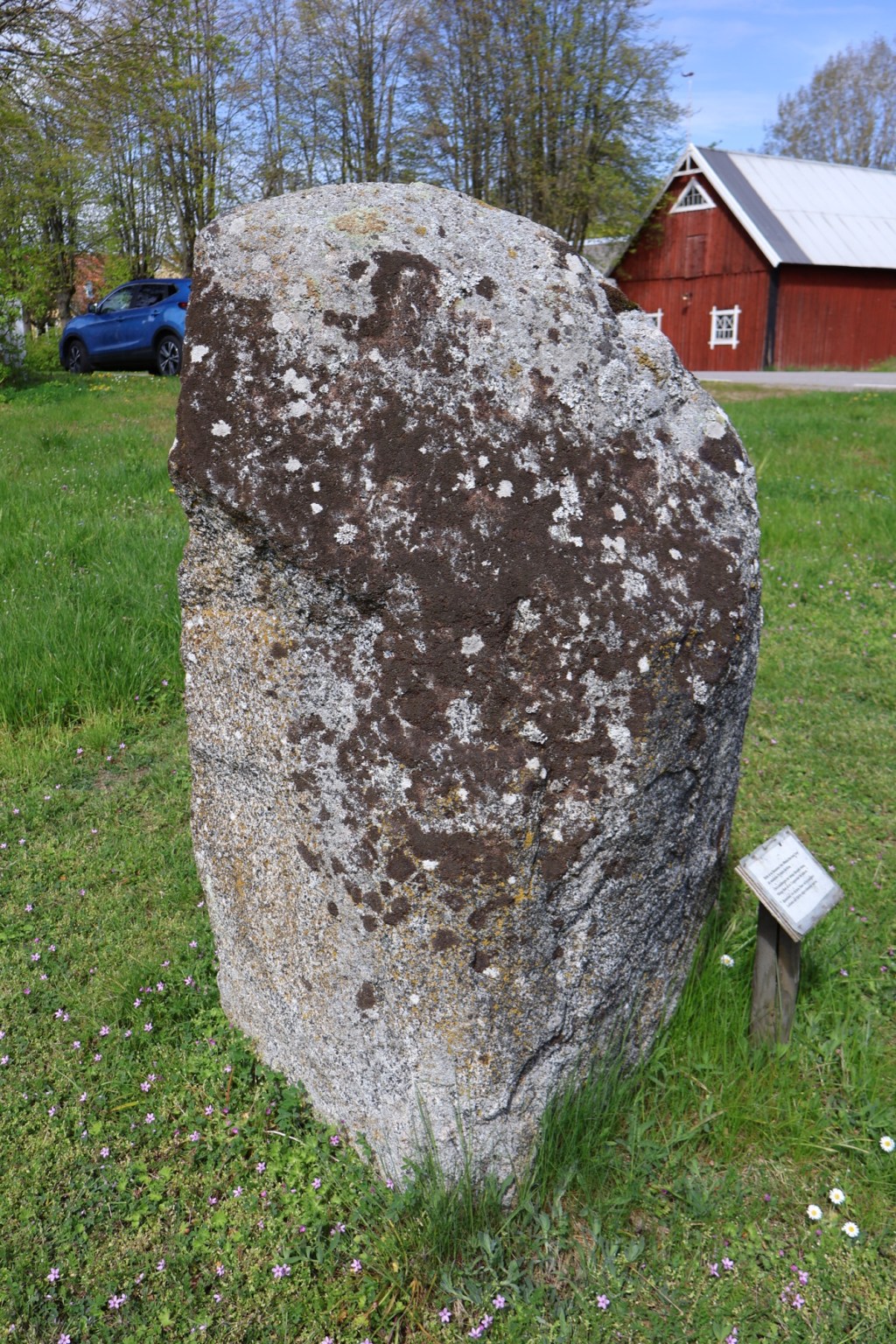
Behind flap number two in the Advent calendar hides the Bautasten in Runsten on the island of Öland. A bautasten is a type of standing stone that is known in other parts of Europe as a menhir. The word bautasten comes from the Old Norse bautarsteinn or bautasteinn. Bauta meant “to strike,” perhaps referring to the fact that some of these stones were inscribed with runes or petroglyphs. In modern Swedish the meaning of the word has shifted, and most people today associate it more with size than with striking. According to written sources, these stones were erected to honour deceased individuals.

This particular bautasten, which stands in the small village of Runsten—despite the village’s name (Runestone), the stone bears no runic inscriptions—is believed to have been raised in the 6th century. It was discovered when a small schoolhouse was moved from the site.
The village is recorded as Runasteen in 1283, and in this context runi means “to run” or “to flow.” The name therefore most likely refers to a stone by a stream. Could it have been this bautasten they meant?
—————————————————
Lucka 2
Bakom luckan två i Adventskalendern döljer sig Bautastenen i Runsten på Öland. En bautasten är en typ av rest sten som i andra delar av Europa kallas för Menhir. Ordet Bautasten kommer från fornnordiskans bautarsteinn eller bautasteinn. Bauta betydde att slå och syftar kanske på att vissa av dessa stenar fick text inknappat i form av runor eller hällristningar. I modern svenska har ordet förändrats och de flesta associerar det nog snarare med stor. Stenarna restes enligt de skriftliga källorna för att hedra avlidna personer.
Denna bautasten som står rest i den lilla byn Runsten som trots ortens namn inte har några runor på sig anses vara rest på 500 talet. Stenen hittades när en småskola flyttades från platsen.
Byn omnämns Runasteen 1283 och i den här kontexten betyder runi, rinna. Så namnet syftar troligtvis på en sten vid en bäck. Kan det vara bautastenen som man syftade på?
 Fornminnen
Lämna en kommentar