Flap 5
Behind flap 5 in the Advent calendar we find the Hedeby Mask. This mask was discovered during excavations at the Viking Age trading town of Hedeby/Haithabu. According to archaeologists, it had been reused as caulking in the hull of a Viking ship.
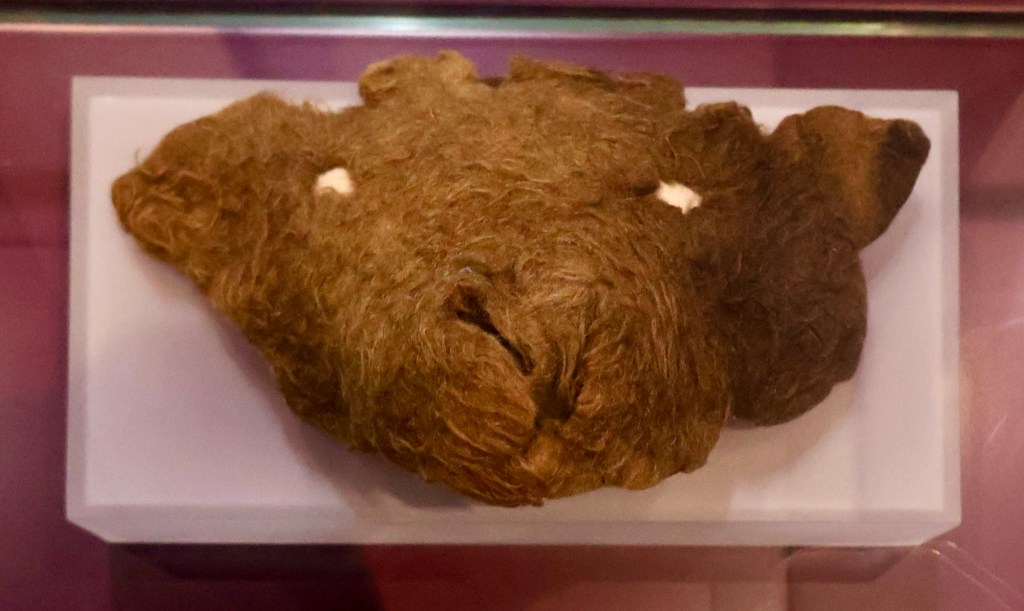
The mask is felted from wool and shaped like an animal. Exactly which animal it represents is impossible to say. One theory is that it is a bear mask, possibly used by a berserker.
Exactly how and for what it was used is something we will probably never know for certain. However, it has been suggested that the mask may have been used in the dance described by the Byzantine emperor Constantine Porphyrogenitus in his book on ceremonies. He writes about a dance performed by members of his Varangian Guard, which he calls the “Gothic Dance,” where the participants wear animal masks and animal hides.
But it could just as well have been a mask used by children at play.
The mask is part of the permanent exhibition at the Viking Museum Haithabu.
—————————————————
Lucka 5
Bakom lucka 5 i adventskalendern hittar vi Hedeby masken. Denna mask hittades vid utgrävningar av den Vikingatida handelsplatsen Hedeby. Den hade enligt arkeologerna återbrukats som tätning i skrovet på ett vikingaskepp.
Masken är filtad av ull i formen av ett djur. Exakt vilket djur det rör sig om är omöjligt att säga. En teori är att det är en björnmask och att det skulle ha varit en bärsärkarmask.
Exakt hur och till vad den har använts kommer vi aldrig att veta säkert. Men det har föreslagits att masken har använts vid den dans som den bysantinske kejsaren Constantine Porphyrogenitus beskriver i sin bok om ceremonier. Han berättar nämligen om en dans som medlemmar av hans Väringagarde ska ha utfört och som han kallar ”Gotisk Dans” där deltagarna bär djurmasker och djurhudar.
Men det kan lika gärna röra sig om en mask som barn har använt vid lekar.
Masken är en del av den permanenta utställningen vid Hedeby Vikingamuseum.
 Fornminnen
Lämna en kommentar