
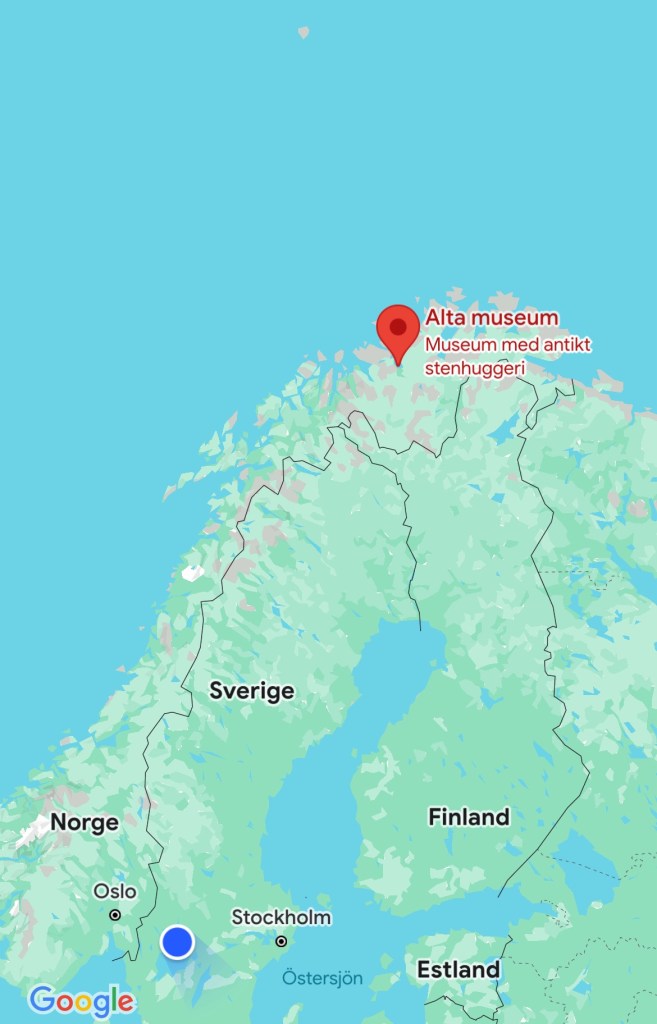
This summer i visited the UNESCO world heritage site of Hjemmeluft in Alta, Nothern Norway. The wider area of Alta made it on the list in 1985 and the rock carvings or petroglyphs here was by then fairly newly discovered.
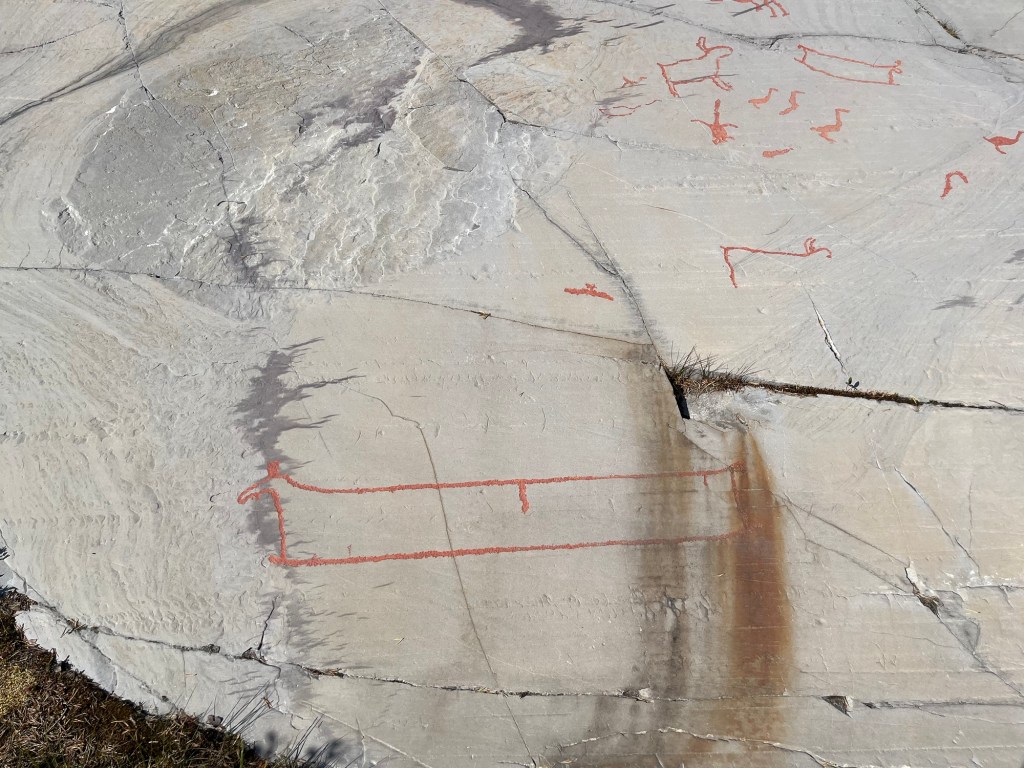
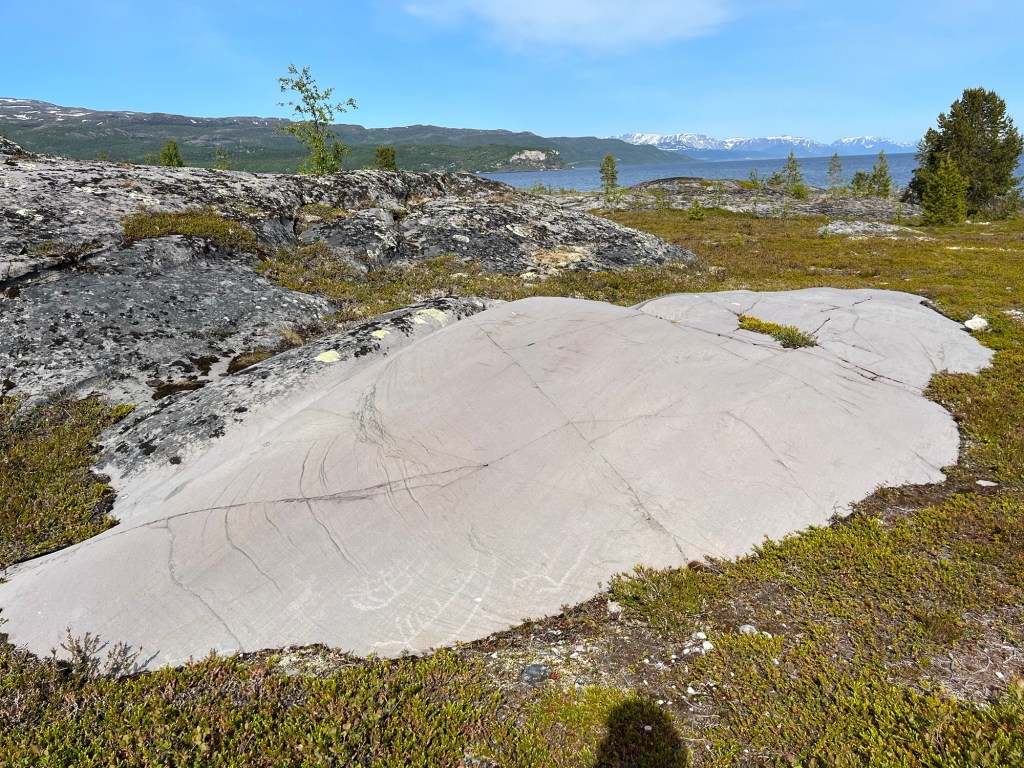
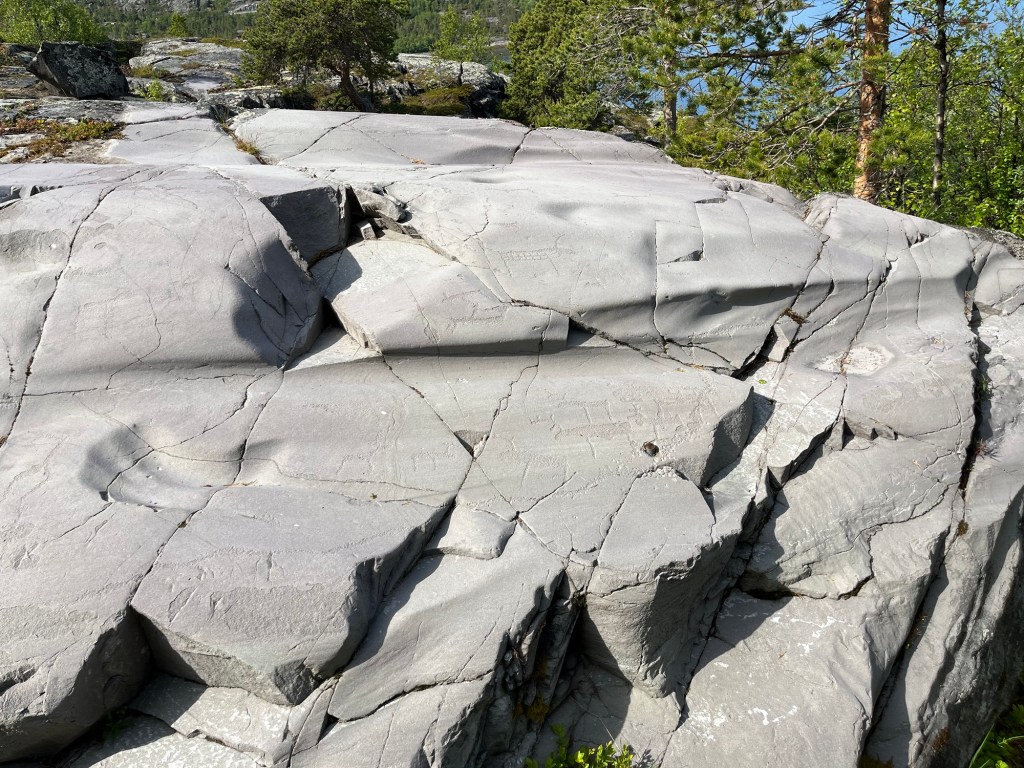
The first ones were discovered in 1973. There are a total of around 6000 different carvings in the wider area and new ones are still being discovered. Around 3000 of them are found at Hjemmeluft. Alta has the largest concentration of petroglyphs in Northern Europe. They are mostly dated to between 4200 to 500 BCE.
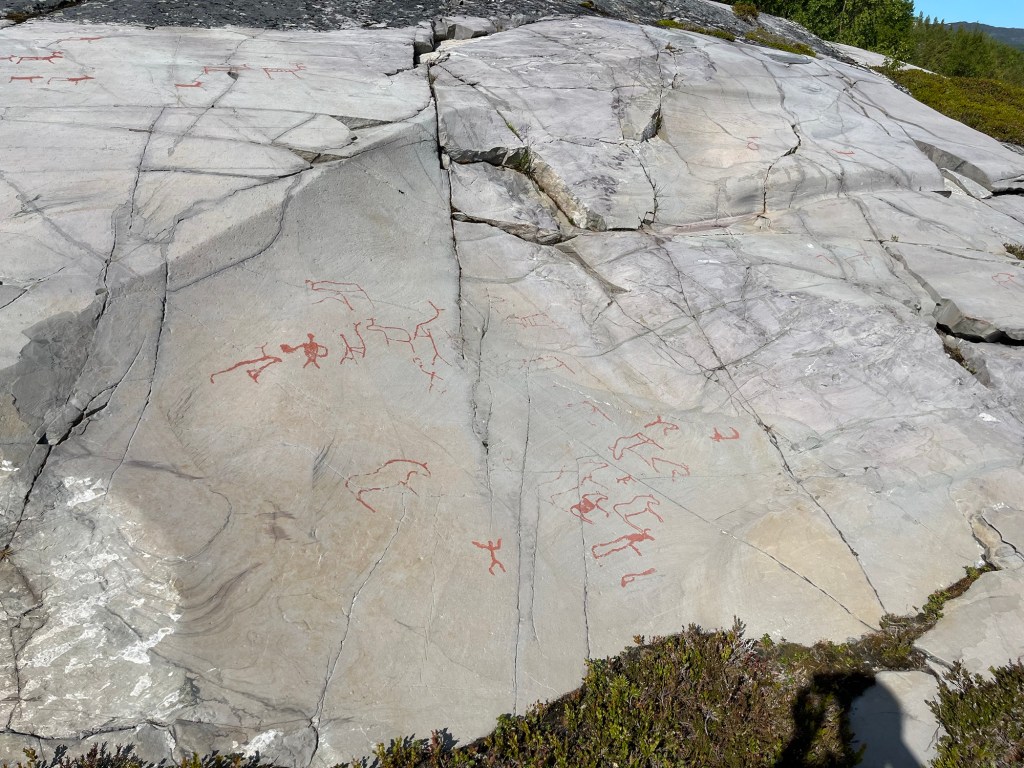
There are two main groups or types of rock carvings in Scandinavia. The most well known type are made by farmers mainly during the Bronze Age.
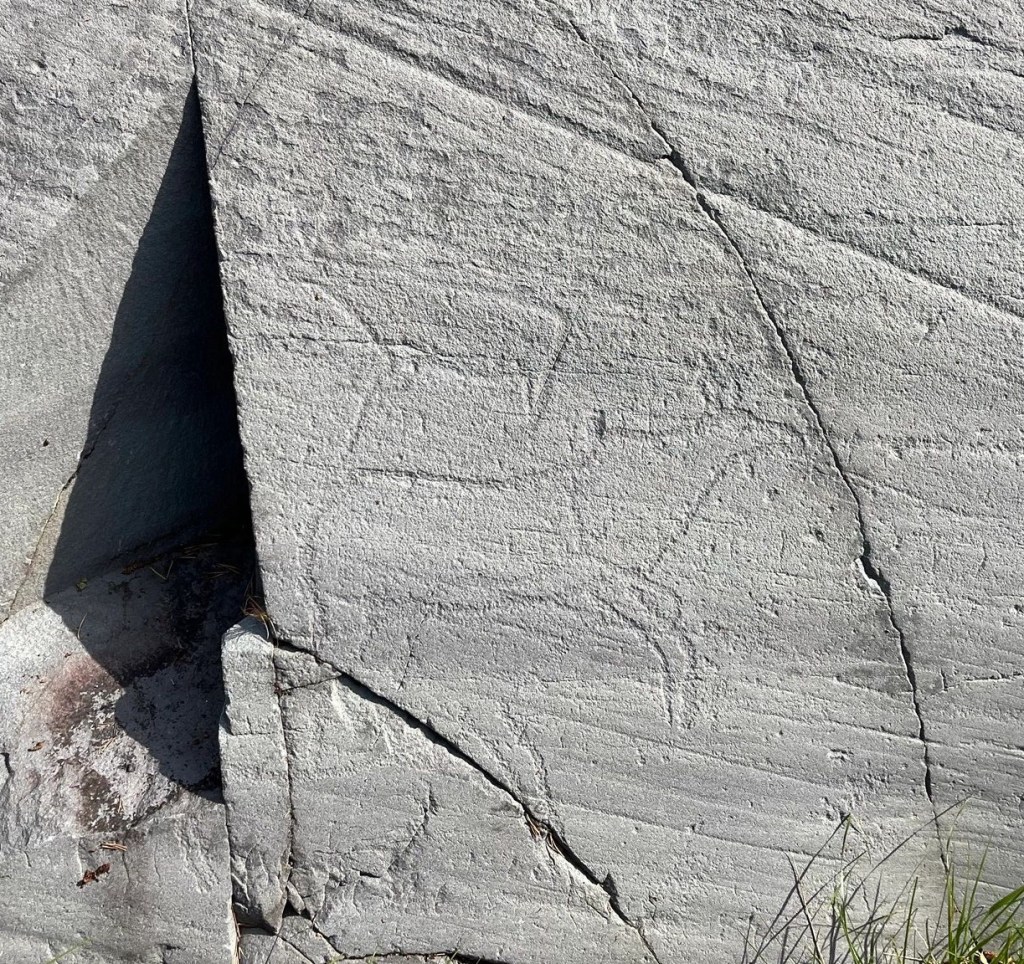
The UNESCO World Heritage Site Tanum in Swedish Bohuslän are a great place to see thousands of them. The other type of rock carvings are made by hunters and gatherers mainly during the Stone Age, but also during the Bronze Age and even after that. The rock carvings here at Alta are of that type.
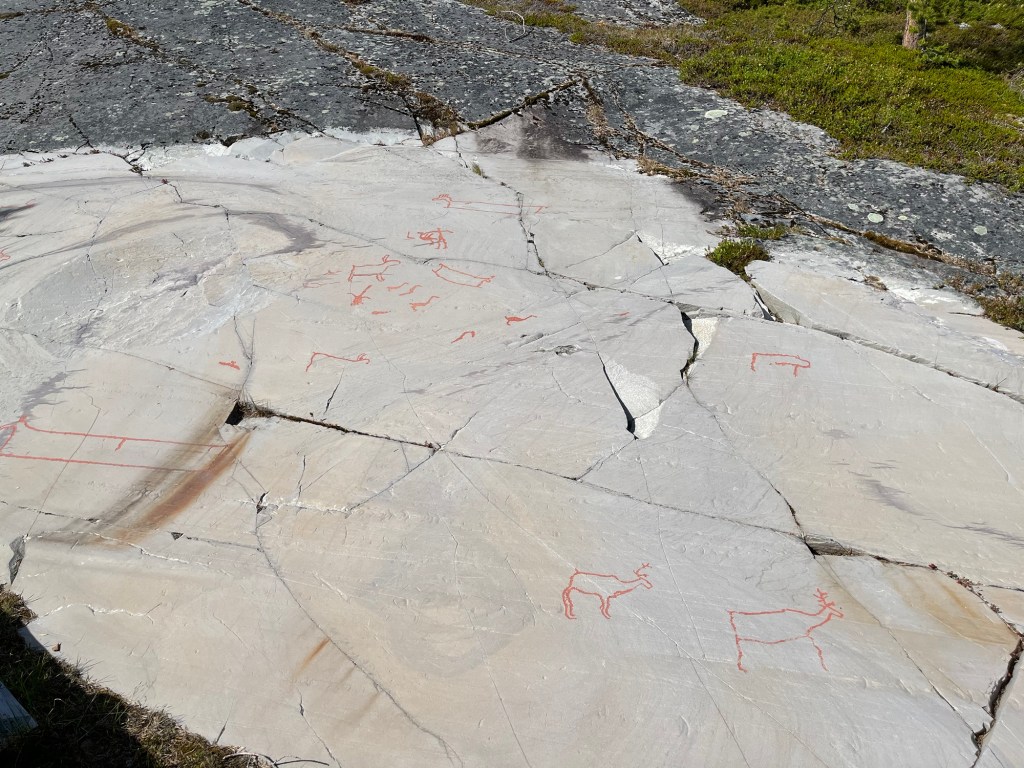
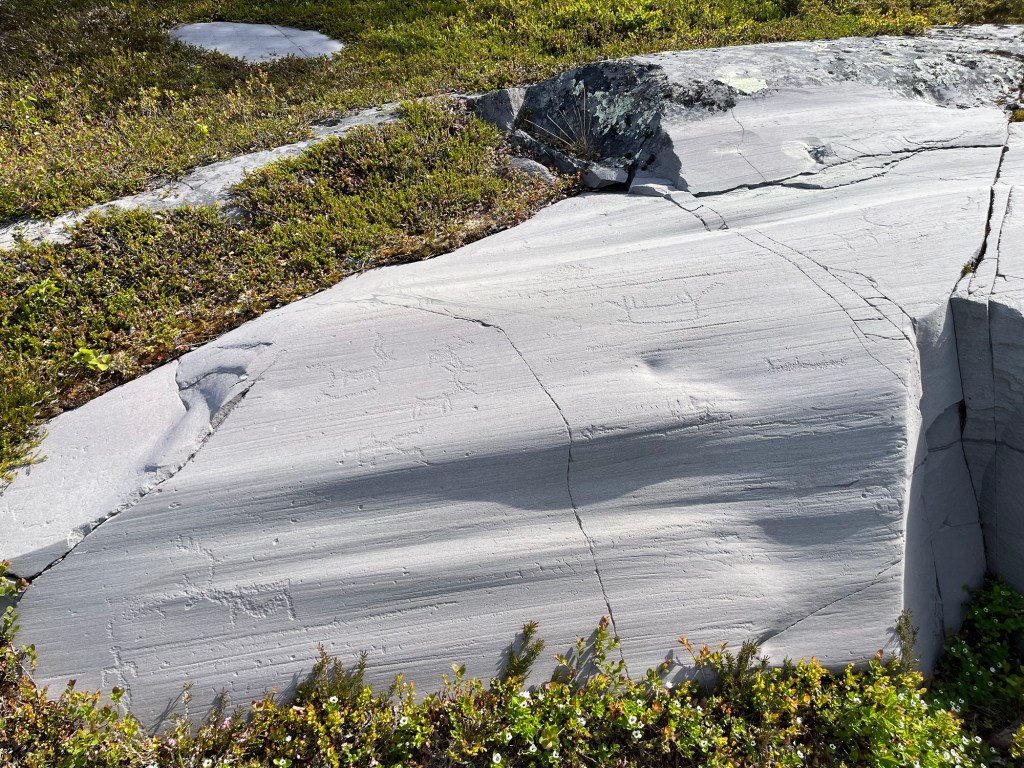
Some popular motifs here are animals like reindeer, moose, swans, ducks, hares, bears, salmon, halibut, geese, fox, whales and dogs or wolves There are also humans, gear, geometric shapes and boats.

There is no way of really know what these people wanted to show with these pictures. But we can understand that they depicted things that they thought was important to them. Their prey of course but also their beliefs. Some rock faces seem to be telling a story like a hunting scene.
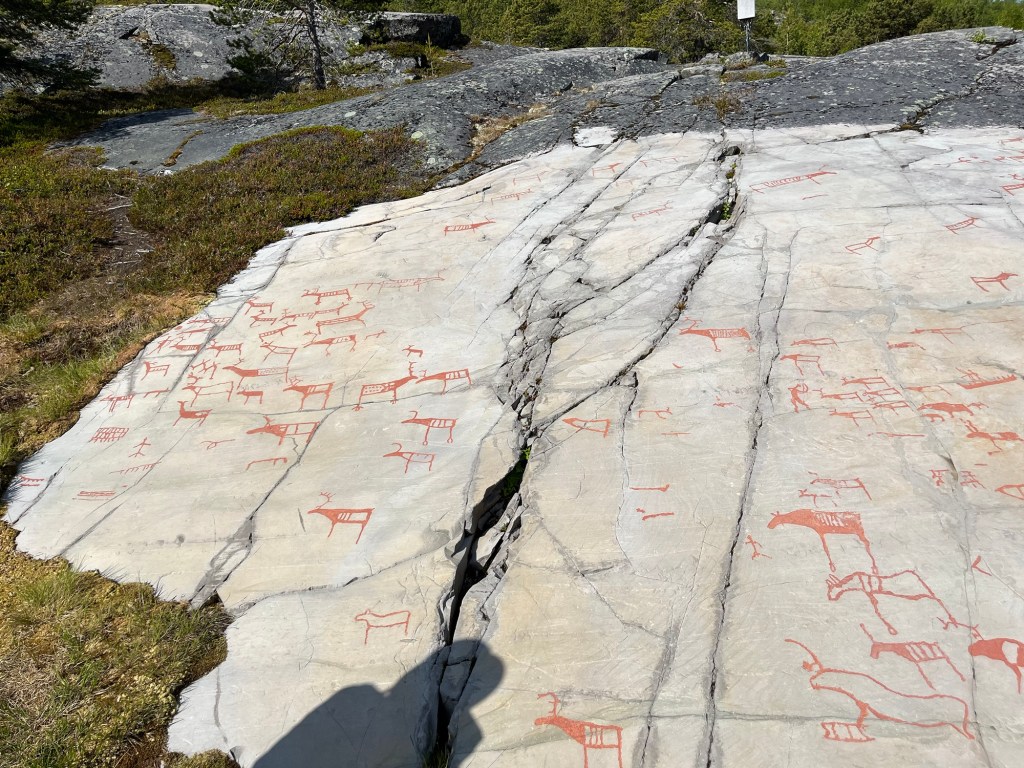
A theory is that the carvings were used by the shamans. Either as notes like we today use keywords or PowerPoint presentations help them remember to help them tell a story.

It might also be instructions for the shamans how to travel to the spirit world and how to enter or communicate with the different spirit animals.
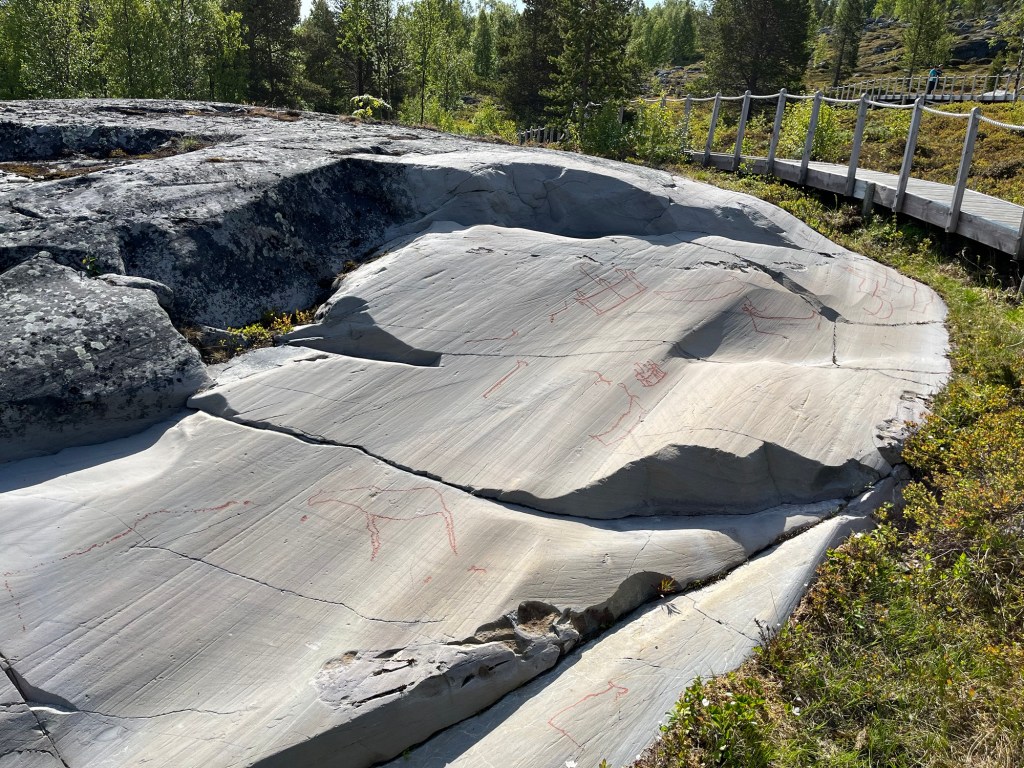
Some rock carvings seem to relate to natural formation in the rock. There is for example one figure that seems to face a crack in the rock that has been interpreted as someone who tries to pass through the vail between our world and the spirit world

Another common interpretations are that the hunters honored the spirit of the animal by depicting them and by doing so ensuring good hunting in the future by not angering the prey.

What ever they actually meant we will never know. But it is truly amazing to get a glimpse of what these people believed in thousands of years ago.

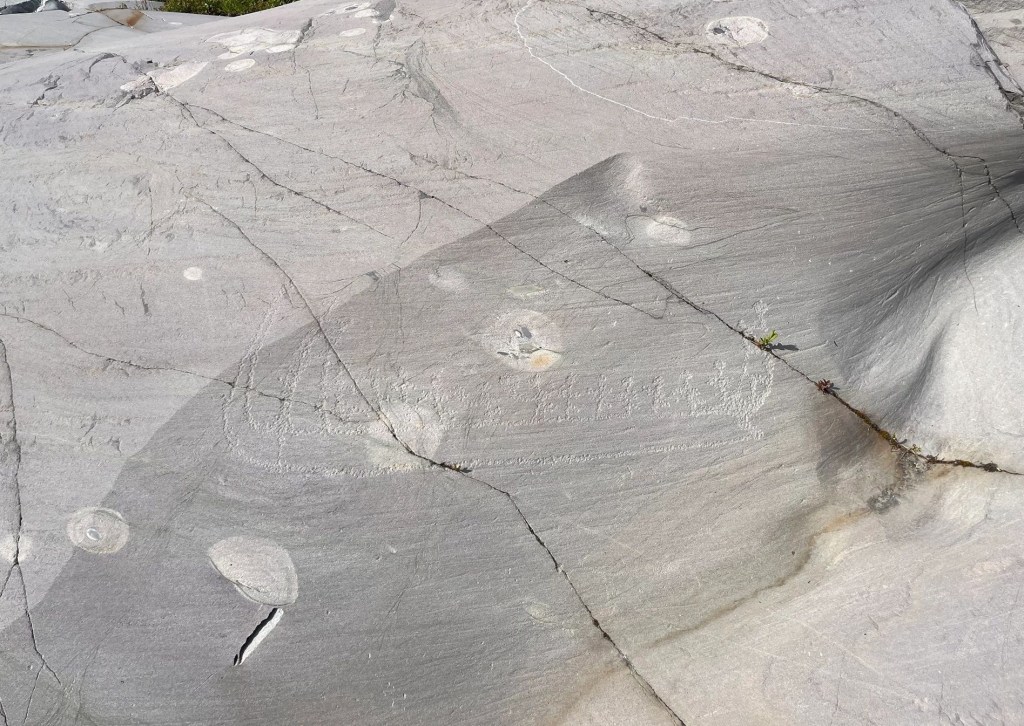
At my visit only a few of the carvings were actually filled in with red paint making many of them hard to see and even harder to photograph. I was later told in a facebook discussion that it was because someone had vandalized the rocks by spray painting them.
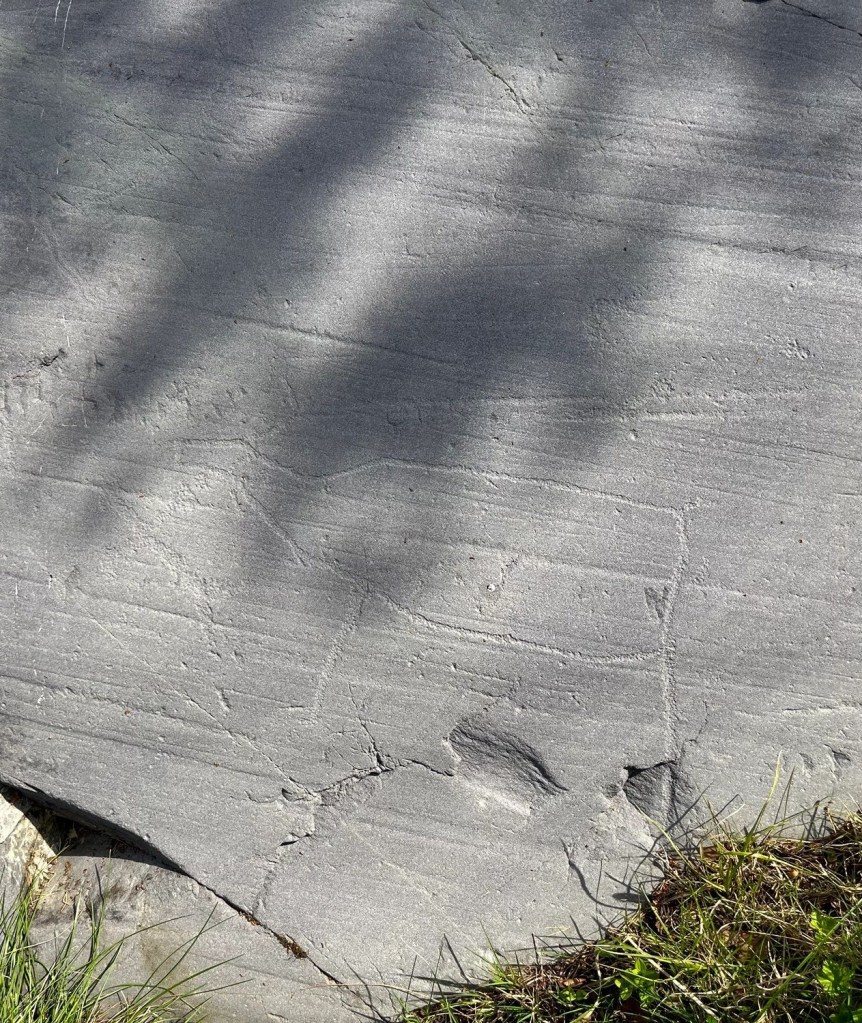
I haven’t found any articles about this, so that I can be certain. But the rocks do look like they have been cleaned with some kind of chemical removing all type of growth from the rock surface.

Hjemmliuft is also home to a really nice museum, Alta Museum World Heritage Rock Art Centre. It is dedicated to the rock art, geology and local history.
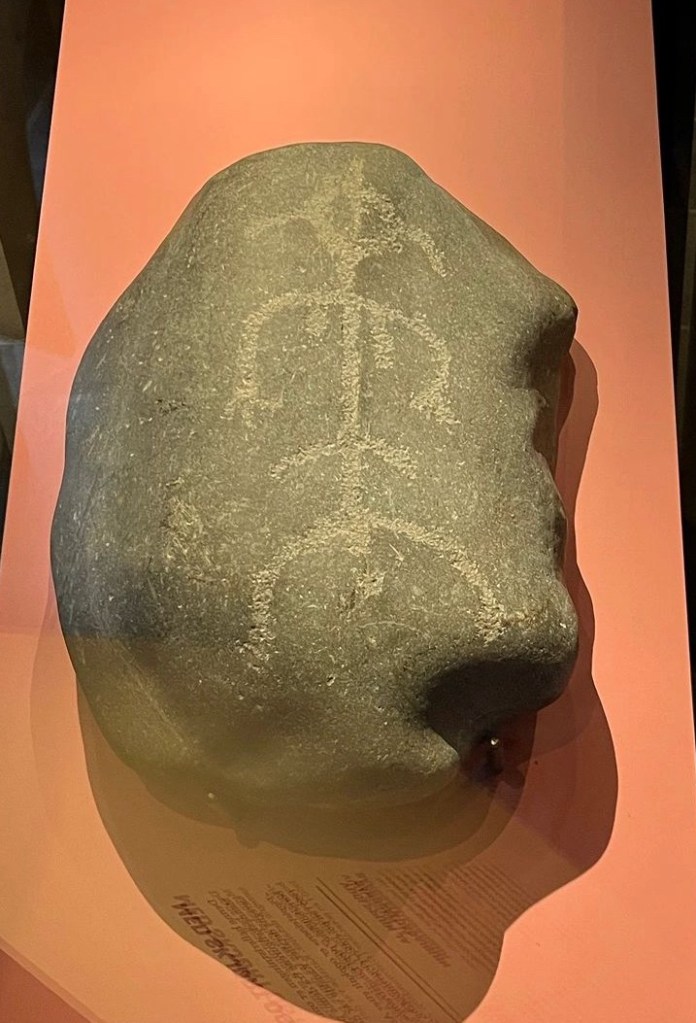
Just outside the museum there used to be a Stone Age settlement overlooking the site. The area is very accessible even though it is quite hilly.


 Fornminnen
Lämna ett svar till The Rock Paintings at Tumlehed – Fornminnen Avbryt svar