Jelling is mostly famous for the rune stone with the same name, the Jelling stone. But this place is more than just a stone, it is in some ways the place where the kingdom of Denmark was born.

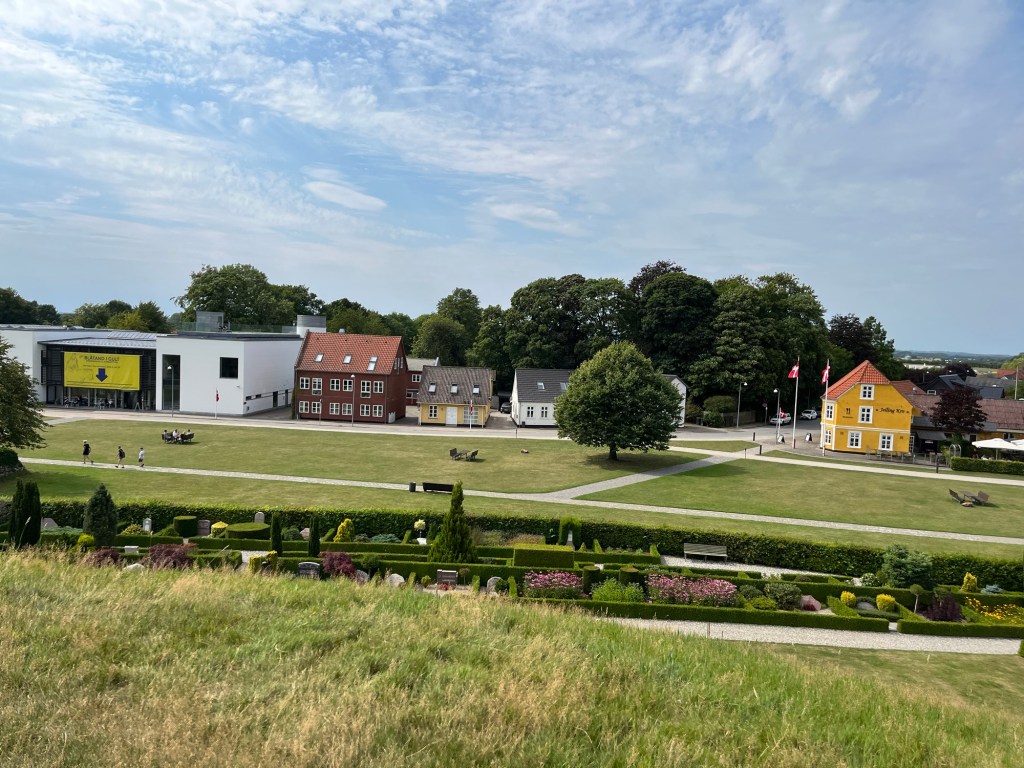
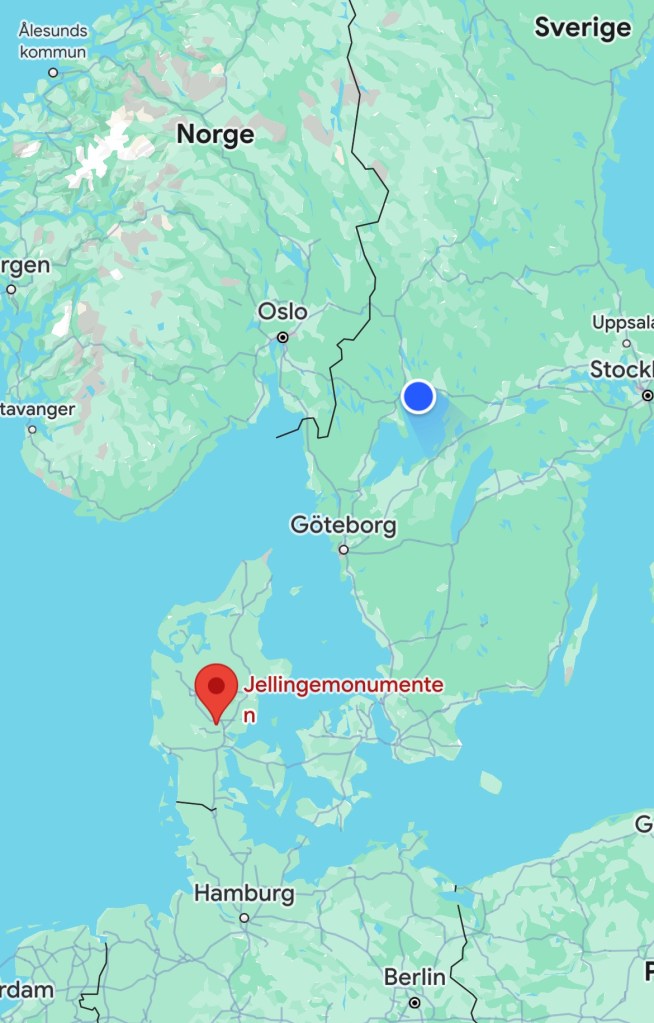
Jelling is located on central Jutland, in Denmark and the site is a UNESCO World Heritage Site. There are two great grave mounds and between them a church flanked by two rune stones. The mounds and the church were once partly inside a gigantic 320 meter long stone ship that is no longer visible, and around that a larger wooden palisade. Nowadays both the stone ship and the palisade have been marked out in the landscape making it visible to the visitors. Some believe that it was actually two stone ships in front of each other, similar to Anunds hög in Sweden. The site also contained at least three houses.
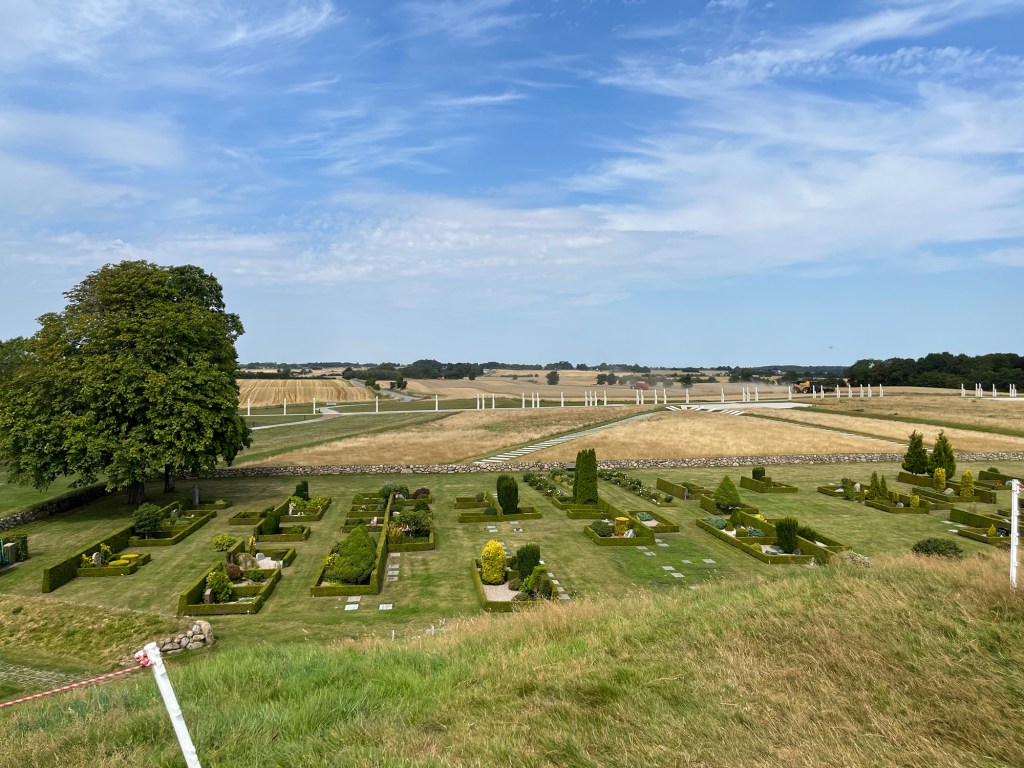
This place must have been a true statement of power for the people that created it. Luckily we know who they were because they were not shy to tell us themselves.
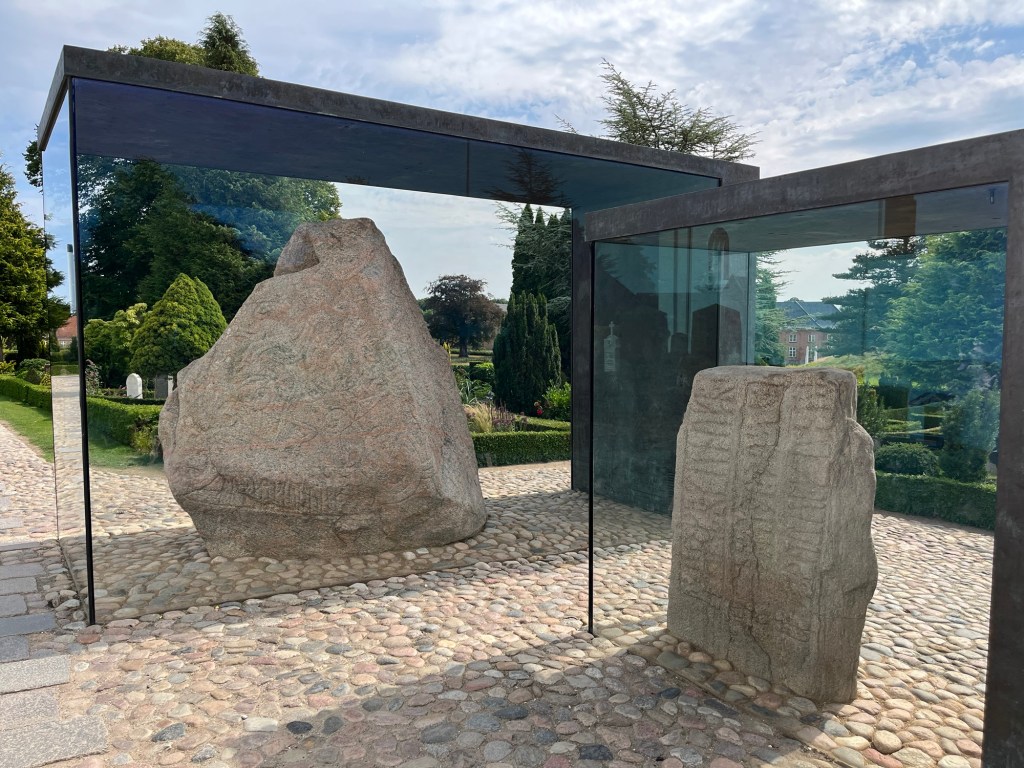
The Viking Age rulers here erected the so called Jelling Sones as a statement of their claims and they made themselves known over a thousand years later. The first smaller stone has the inscription on one side:
᛬ ᚴᚢᚱᛘᛦ ᛬ᚴᚢᚾᚢᚴᛦ ᛬
᛬ ᚴ(ᛅᚱ)ᚦᛁ ᛬ ᚴᚢᛒᛚ ᛬ ᚦᚢᛋᛁ ᛬
᛬ ᛅ(ᚠᛏ) ᛬ ᚦᚢᚱᚢᛁ ᛬ ᚴᚢᚾᚢ
: kurmʀ : kunukʀ :
: k(ar)þi : kubl : þusi :
: a(ft) : þurui : kunu
On the other side:
᛬ ᛋᛁᚾᛅ ᛬ ᛏᛅᚾᛘᛅᚱᚴᛅᛦ ᛬ ᛒᚢᛏ ᛬
: sina : tanmarkaʀ : but :
The inscription translated to English:
”King Gormr made this monument in memory of Thyrvé, his wife, Denmark’s adornment.”
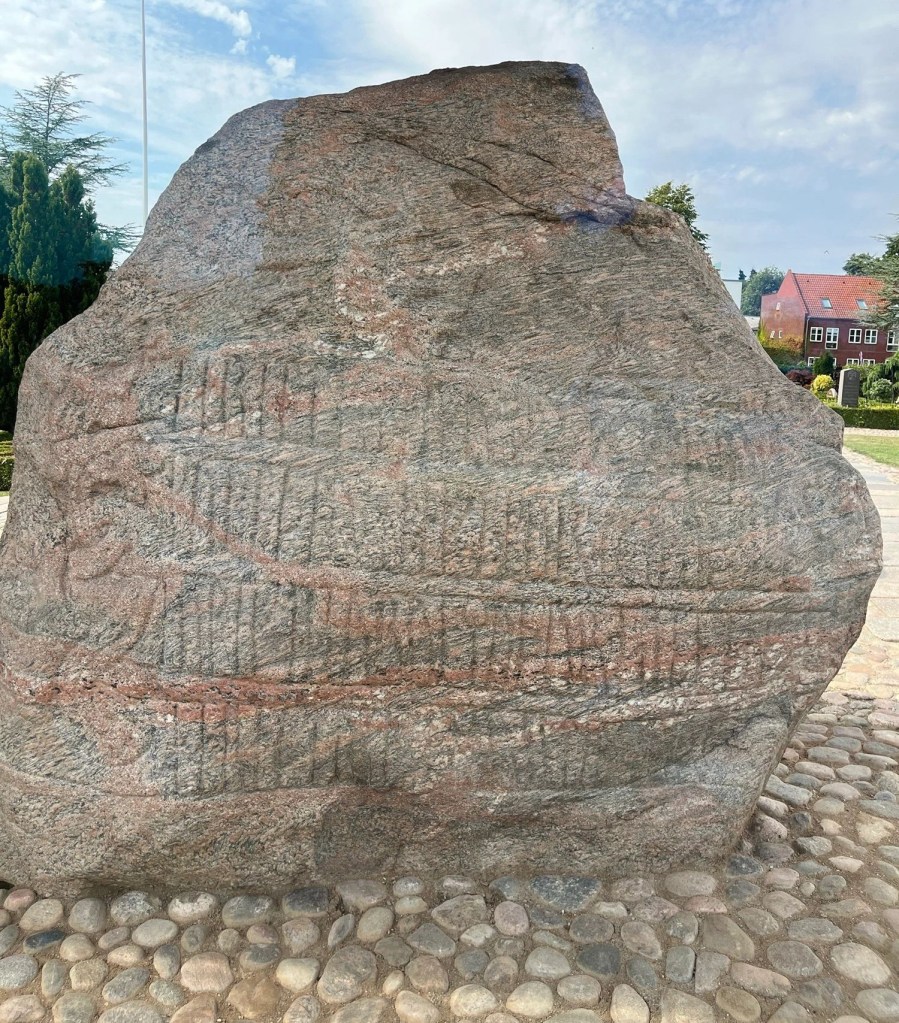
We get more information on the larger stone:
ᚼᛅᚱᛅᛚᛏᚱ ᛬ ᚴᚢᚾᚢᚴᛦ ᛬ ᛒᛅᚦ ᛬ ᚴᛅᚢᚱᚢᛅ
ᚴᚢᛒᛚ ᛬ ᚦᛅᚢᛋᛁ ᛬ ᛅᚠᛏ ᛬ ᚴᚢᚱᛘ ᚠᛅᚦᚢᚱ ᛋᛁᚾ
ᛅᚢᚴ ᛅᚠᛏ ᛬ ᚦᚭᚢᚱᚢᛁ ᛬ ᛘᚢᚦᚢᚱ ᛬ ᛋᛁᚾᛅ ᛬ ᛋᛅ
ᚼᛅᚱᛅᛚᛏᚱ (᛬) ᛁᛅᛋ ᛬ ᛋᚭᛦ ᛫ ᚢᛅᚾ ᛫ ᛏᛅᚾᛘᛅᚢᚱᚴ
haraltr : kunukʀ : baþ : kaurua
kubl : þausi : aft : kurm faþur sin
auk aft : þąurui : muþur : sina : sa
haraltr (:) ias : sąʀ * uan * tanmaurk
On the second side:
ᛅᛚᛅ ᛫ ᛅᚢᚴ ᛫ ᚾᚢᚱᚢᛁᛅᚴ
ala * auk * nuruiak
On the third side:
᛫ ᛅᚢᚴ ᛫ ᛏ(ᛅ)ᚾᛁ (᛫ ᚴᛅᚱᚦᛁ ᛫) ᚴᚱᛁᛋᛏᚾᚭ
* auk * t(a)ni (* karþi *) kristną
The inscription translated to English:
“King Haraldr ordered this monument made in memory of Gormr, his father, and in memory of Thyrvé, his mother; that Haraldr who won for himself all of Denmark and Norway and made the Danes Christian”.
So the first stone mentions a King Gormr, he is better known to us as Gormr Gamli or Gorm the Old. He was supposedly the son of The semi legendary Harthacnut. He was born sometime before year 900 and probably died in year 958 or 963. From 936 to 958 he was the King of Denmark ruling from Jelling.
The other person mentioned on the stone was his wife Thyrvé, better known as Queen Thyra. She is a well known person from many different rune stones and she was responsible for the construction of the great fortification Dannevirke, that might get a post in the future. There are evidence however that parts of this fortification is much older.
The translation of the stone refers to her as Denmarks adornment, but it might also mean remedy, strength or remedy. Some believe that the last part doesn’t refer to her at all but Gorm. There are many claims about her origin but most sources say that she is from England and that her father was a King there.
Together they had a son that are mentioned on the other much larger stone. King Haraldr Gormson is much better known as King Harald Bluetooth. He is the first Christian king of Denmark and this stone is the testament of this.
He ruled Denmark between 958 and 986. He was also the king of Norway for a short while, probably only a few years.
He was first a pagan and it was during this time that he erected the two great mounds at Jelling whit the intent to bury his mother and father in the mounds. Mounds of this type was very old fashioned and was mostly a thing of the past. But Harald created a fashion in Scandinavia to build large mounds again.
There are several different accounts on why and how he converted to Christianity. Many mentions Otto II, the Holy Roman Emperor that supposedly defeated Harald and forcibly converted him. Other accounts say that it was voluntarily. It is impossible for us to know, but we can be sure that he converted. It was probably beneficial for him to do so because Christianity made it easier for him to centralize power as a king.

After his conversion Harald built a wooden church between the two mounds. During archaeological excavations at Jelling it was discovered that someone had removed the human remains from Gorms mound and that there was a crypt under the church where the remains of a man was found. Many believe that Harald moved his father’s remains into the church. A practice that seems to have been common among Anglo-Saxons in England after their earlier conversion.

Harald lost his throne when he was driven away by his son Sweyn Forkbeard. This is why he is not buried himself at Jelling. Many claim that he rests at Wollin in modern day Poland.
In recent years a new supposed source for information about Haralds life have surfaced, the so called Gesta Wulinensis. It was claimed to have been found in Poland. It is handwritten in polish and translated from Latin in the 1960s supposedly copied from an older version. The text claims to be the written account of Haralds own priest. I am however still very skeptical about the validity of this document.
Today the Jelling stones is very famous, not least because of Haralds rune stone and its unusually complex decorations whit Jesus entangled instead of being on a cross. This is not your typical depiction of Jesus. This looks almost like the hanging of Odin in the world tree Yggdrasil, that might have been an inspiration for the maker. The stone was most likely painted as well to make the motif easier to see. I had a hard time seeing it at my visit.
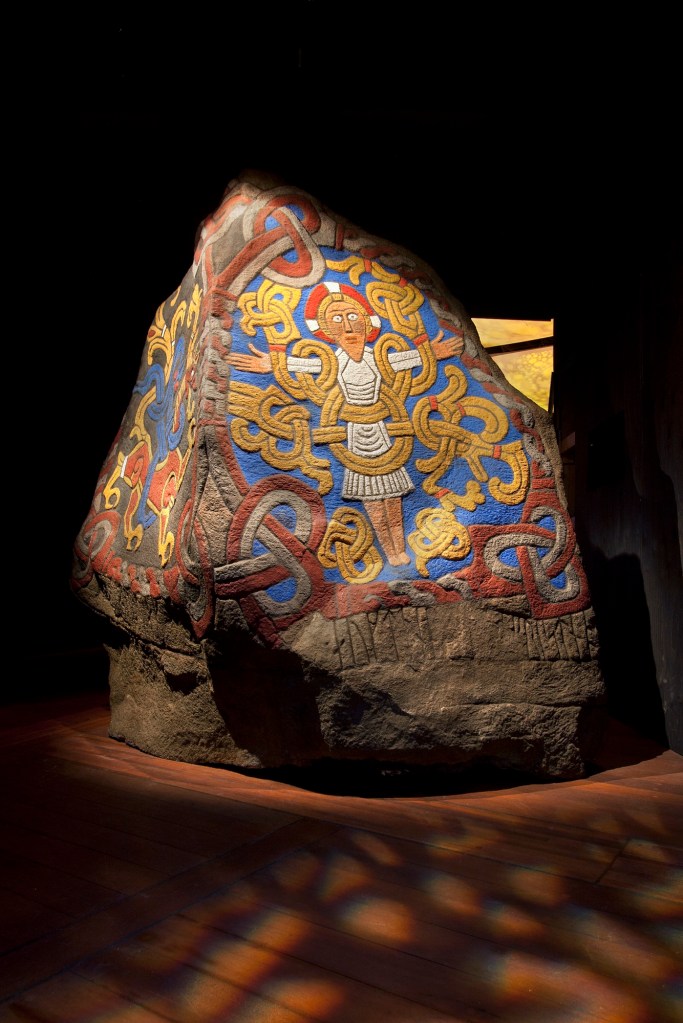
https://commons.m.wikimedia.org/wiki/File:The_Jelling_Stone_-VIKING_exhibition_at_the_National_Museum_of_Denmark–Photo_The_National_Museum_of_Denmark(9084035770).jpg#mw-jump-to-license
Few rune stones are as well protected from vandalism and the elements as these, with their glass casings. It further underscores their importance as national monuments for the Danish people. The larger of the stones are sometimes referred to as Denmarks Birth Certificate after all.

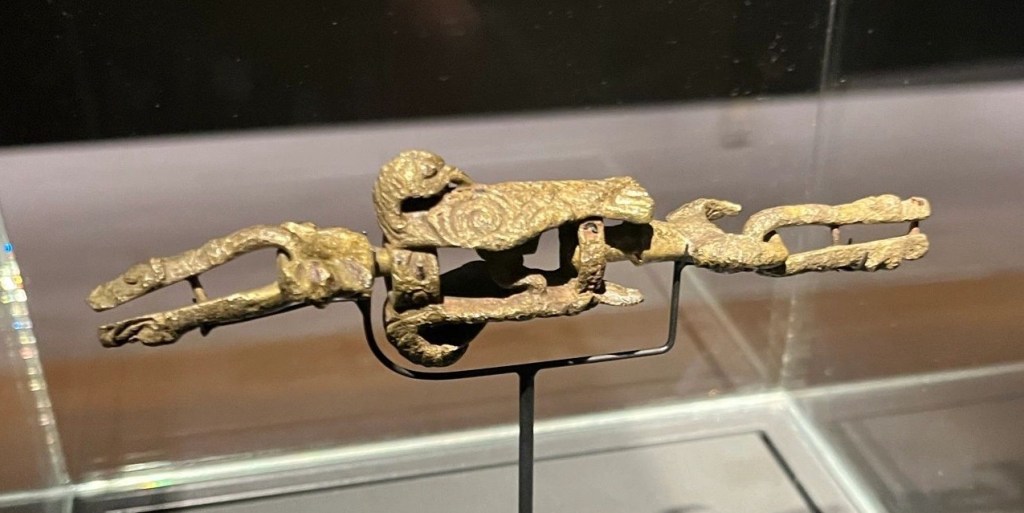
Next to the site there are a museum where one can learn a lot about the site and also see some of the finds from the excavations. Also don’t miss the delicious Smørrebrød served at Jelling Kro that have a great view of the mound’s from their garden.

 Fornminnen
Lämna ett svar till Olsbrostenen – Fornminnen Avbryt svar