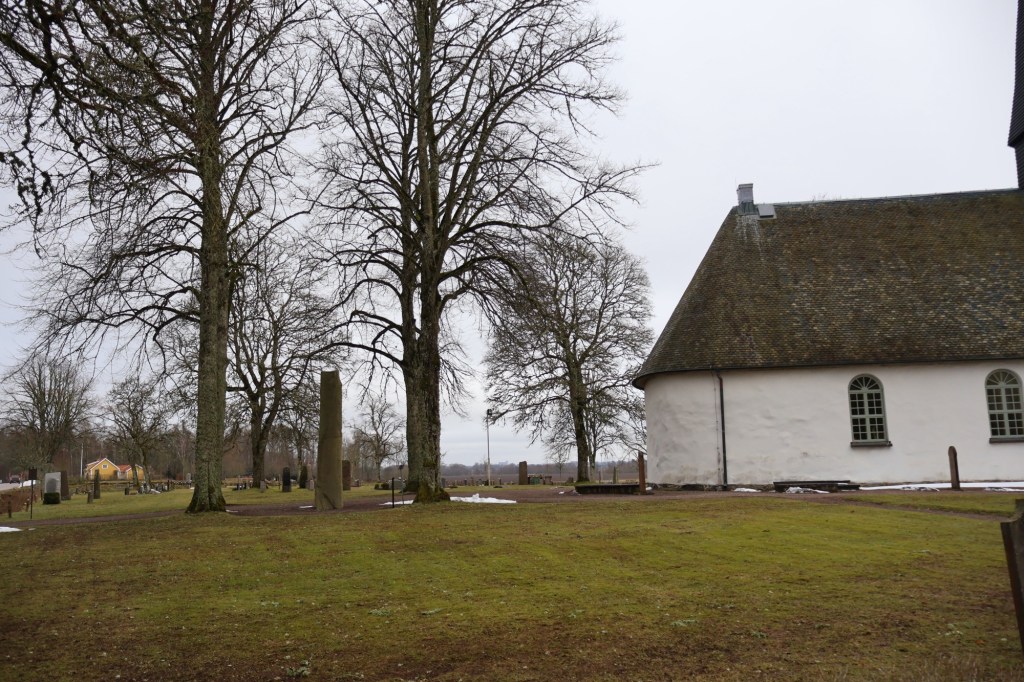
The charming church of Levene is located just outside of the village Stora Levene in the province of Västergötland, Sweden.

One tradition says that the church was founded by the Swedish king Håkan Röde (Håkan the Red) who was king of Sweden between 1070 and 1079. This is noted in Västgötalagens Regentlängd (The West Gothland Laws list of regents) who was written in the 1280s. He is also mentioned in the texts of Adam of Bremen and possibly in a few other sources. The tradition states that Håkan Röde was born in Levene and that he was also buried here.
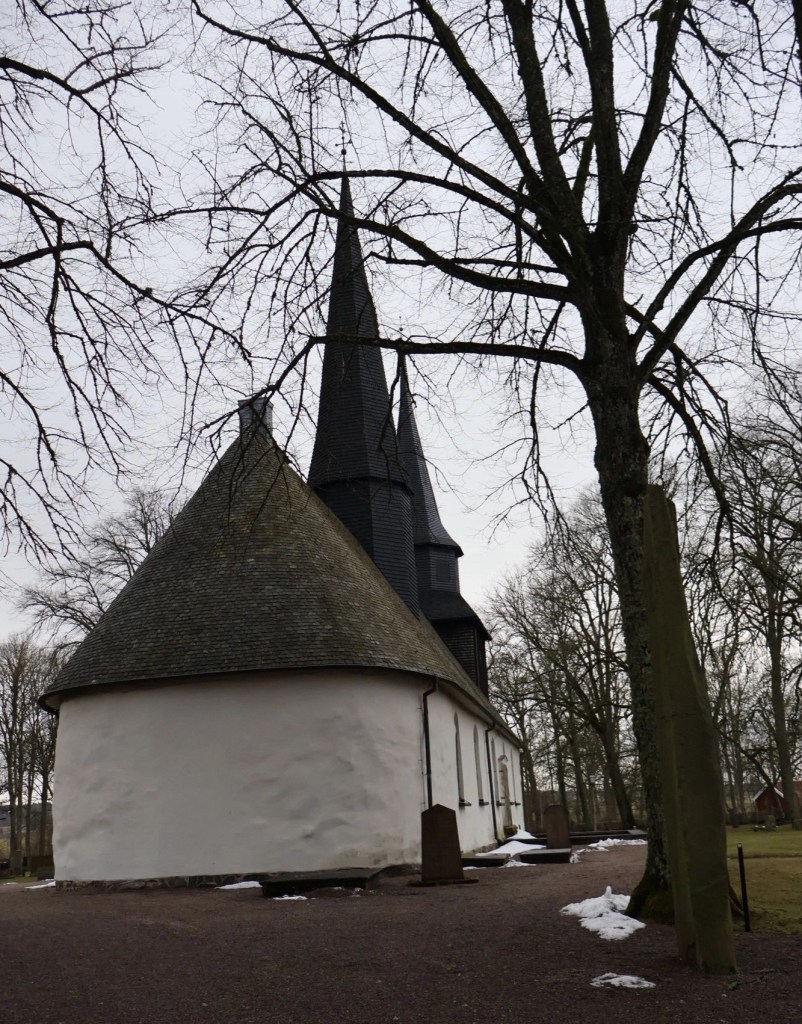
The current church was constructed in large parts during the 13th century but there is always a possibility that there was an older church in the same place built by Håkan. The church was constructed in the by then popular Romanesque architectural style. During the 17th century the church was expanded by noble man Johan Henriksson Reuter who took the noble name Rytter after he was knighted.
He was a notable military man that took part in the battle of Kircholm 1605 (the Swedish-Polish war) and swam over the river Daugava where he managed to create a bridge during the siege of Riga, Latvia 1621. In 1615 he married Catharina Hand the granddaughter of the Swedish King Erik XIV.
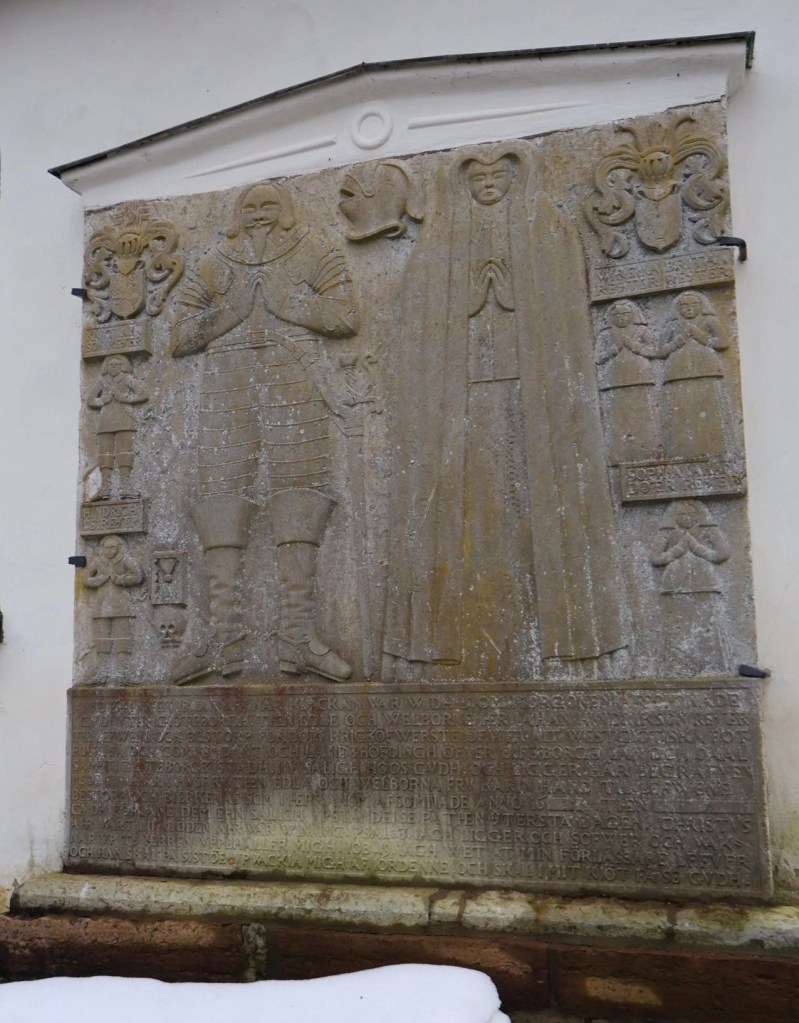
Johan added to the church and built a family burial vault along the side of the wall where he is buried together with his wife. This vault was however demolished in 1887, but the large stone with Johan and his wife Catharina are still there in the wall. He also constructed the wooden towers. The rounded choir was added in 1791.
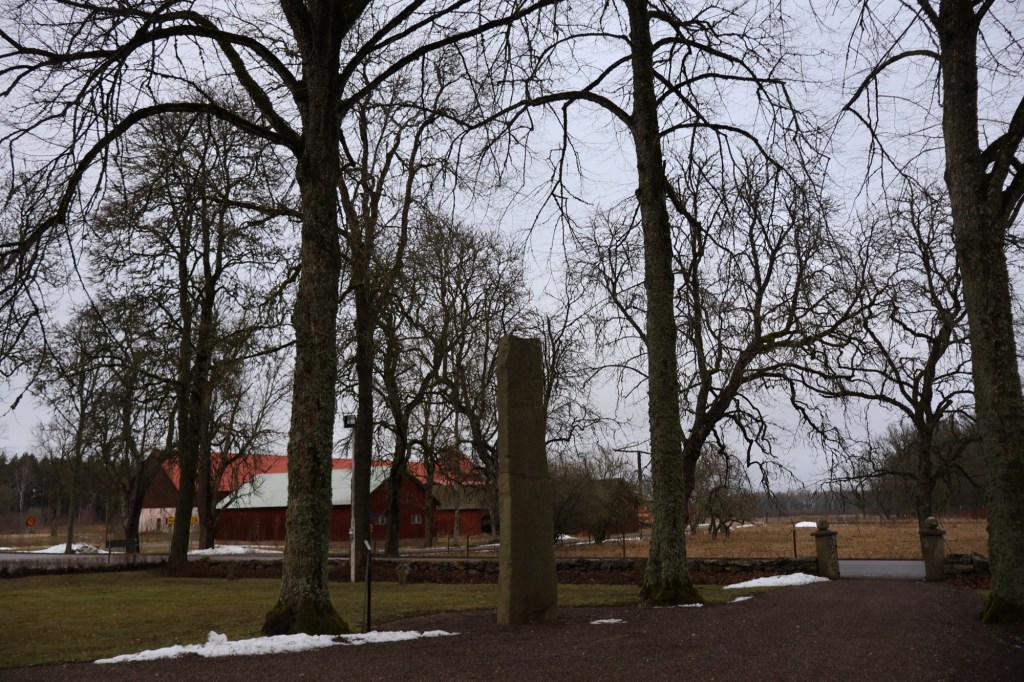
In the church yard stands the tallest rune stone in Sweden. The so called Levenestenen or Vg117 as it is also known measures 4,6 meters tall. It was found 1927 as a part of the church wall and was then broken into two parts and used as a portal in the opening in the church. The stone was removed from the wall and erected in its current position outside of the church.
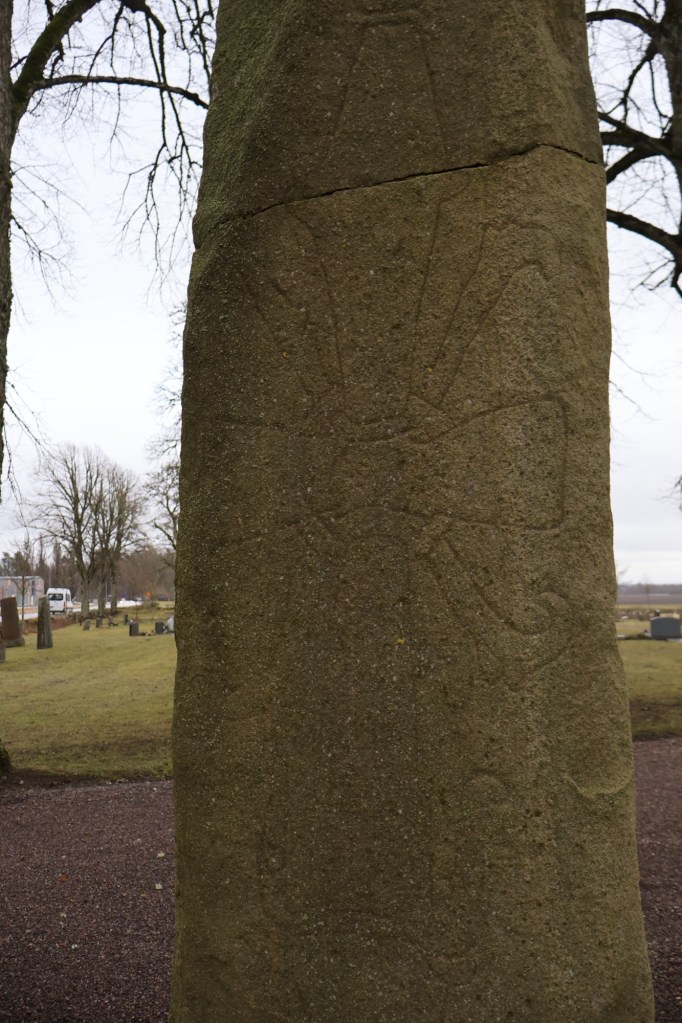
The backside of the stone has a cross in Ringerike style popular around year 1000 and the front side has the runes written in the shape of a Romanesque arch.
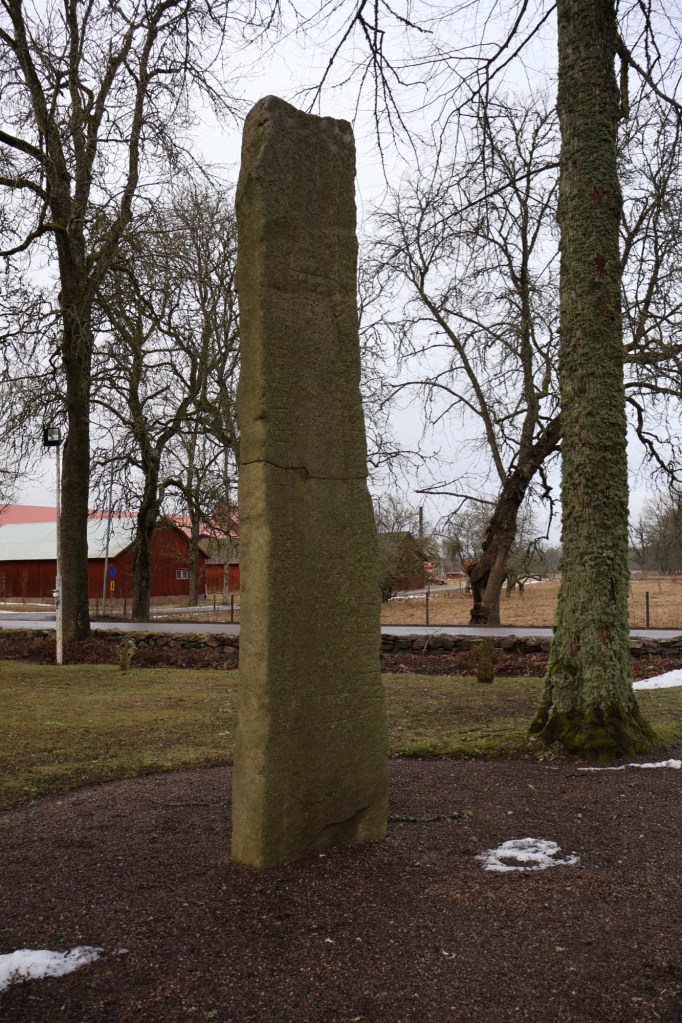
The inscription reads:
• he(r)lfR • risþi • stin : eftiR • sunu • sina • uar • auk • þurgut • kuþ • halbi • selu • þiRa • uel þi…
Herulfr raised the stone in memory of his sons Varr(?)/Vǫrr(?) and Þorgautr. May God well help their souls. They …
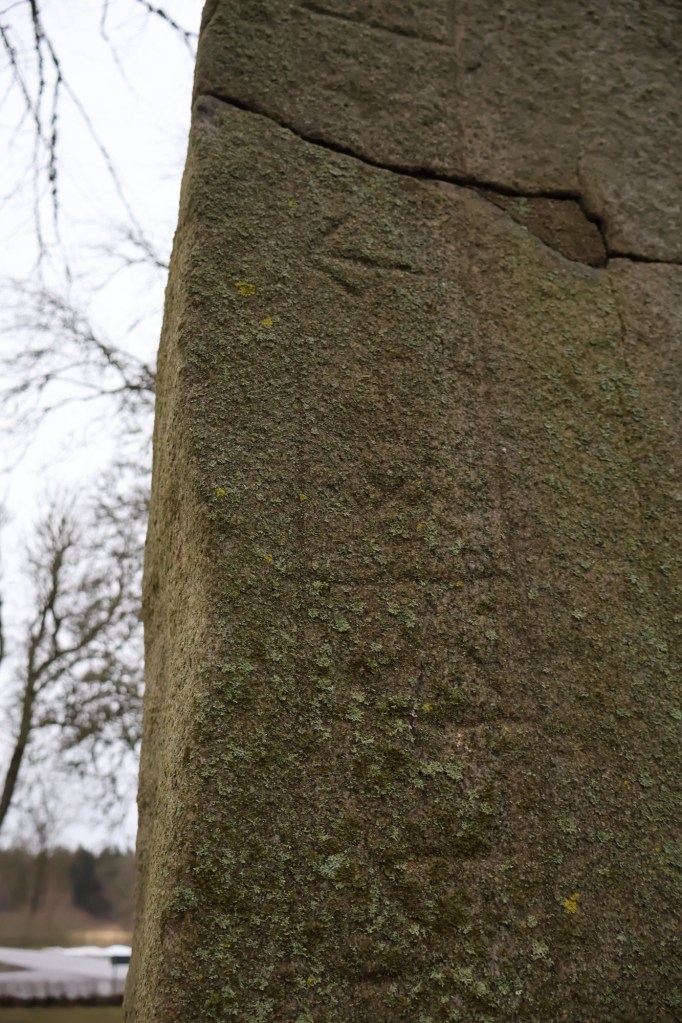
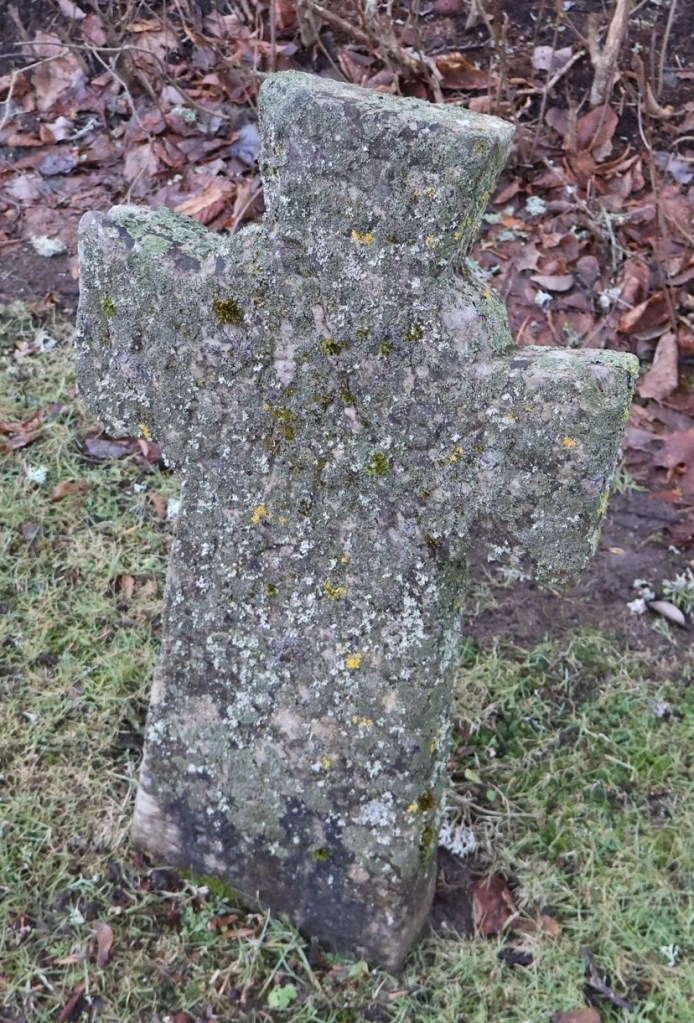
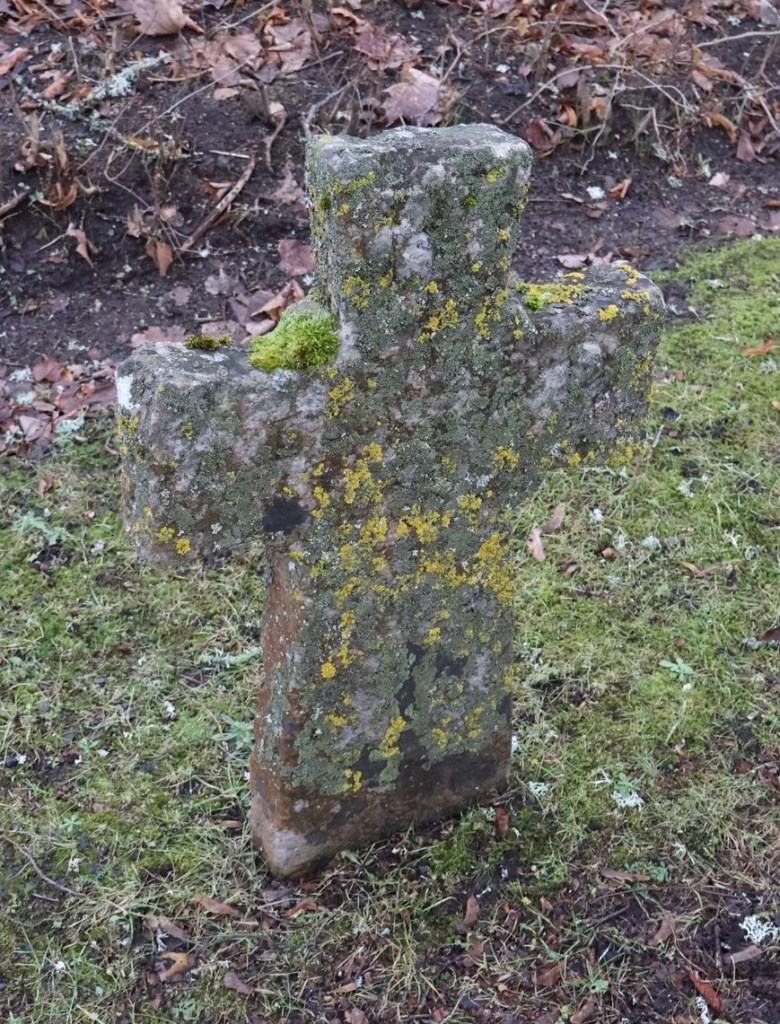
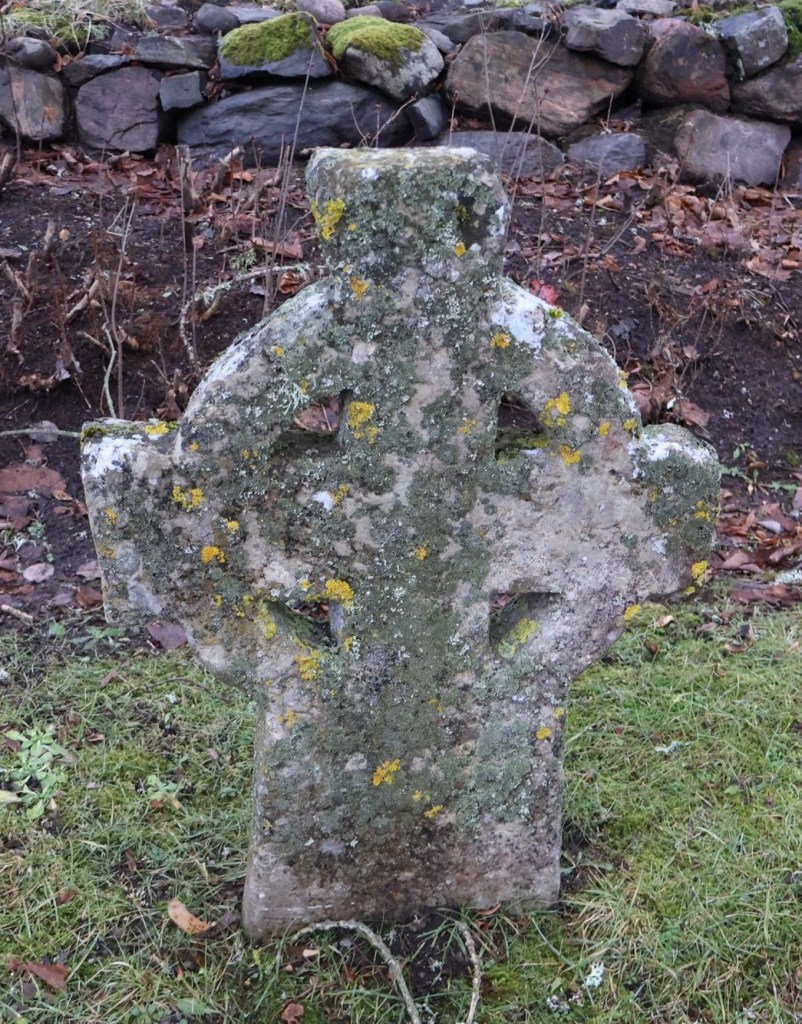
Around the church there are also several stone crucifixes, three of them are dated to the 12th century, two from the 14th century and three from the 15th century. There is also one cross erected by the Götiska Förbundet (The Geatish Society) that was founded in 1811 by Swedish poets and authors that glorified the Viking Age as an early form of nationalism. Their ideas about the Vikings influence the Nazis and even our society today.
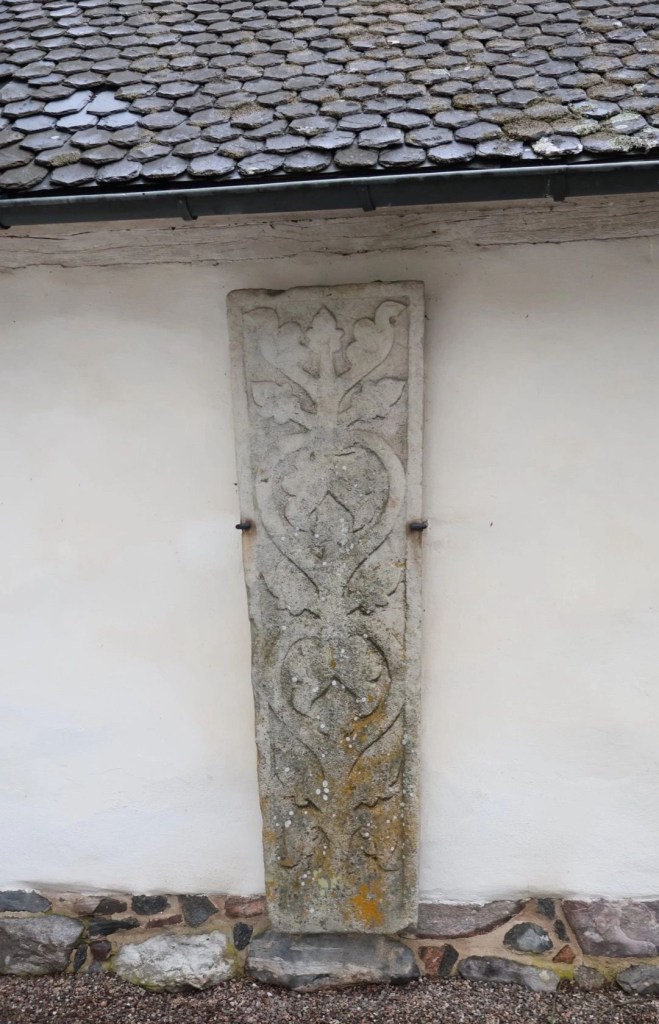
Along the church wall there is a so called liljesten (Lilly Stone). These stones are believed to have been covers of graves. This type of stones are more or less unique to the Swedish provinces of Västergötland and Värmland, even if there are examples in a few other areas. There are so many theories concerning these stones that it could warrant several posts by themselves.
The name comes from the plant ornamentation that is so typical. Some believe it is the tree of life that are depicted. There has been great debate about the dating and where the inspiration for these stones came from. One theory was that the inspiration came from the Byzantine empire. But that would date them to the Viking Age which doesn’t make any sense.
The stones are almost always found in or near a church in Romanesque style built in the 12th century. This would likely mean that the stones are of the same date. It is also likely that the inspiration for them came from Western Europe, possibly England. I am sure that this type of stones will make several reappearances in the blog in the future as they are so interesting and beautiful. There are more of them inside the church that was closed during my visit.
Levene Church was the place were the so called Hagasessorna (the Haga Princesse’s) had their confirmation in the 1950s. They were the daughters of Prince Gustaf Adolf and Sibylla of Sachsen-Coburg-Gotha and sisters of the current king of Sweden Carl XVI Gustaf. They were hugely popular among the Swedish people as children and this is the reason why they got a nickname. I own a cookbook that is named after them as it was published by their teacher in 1929. In it is the original recipe for Princesstårta (princess cake) a cake with green marzipan that is a must at any kind of celebration in Sweden today.

 Fornminnen
Lämna en kommentar