Just next to a country side road that winds its way through a field stands Kanes rune stone. We are now in Eggvena which lies in the province of Västergötland, Sweden.
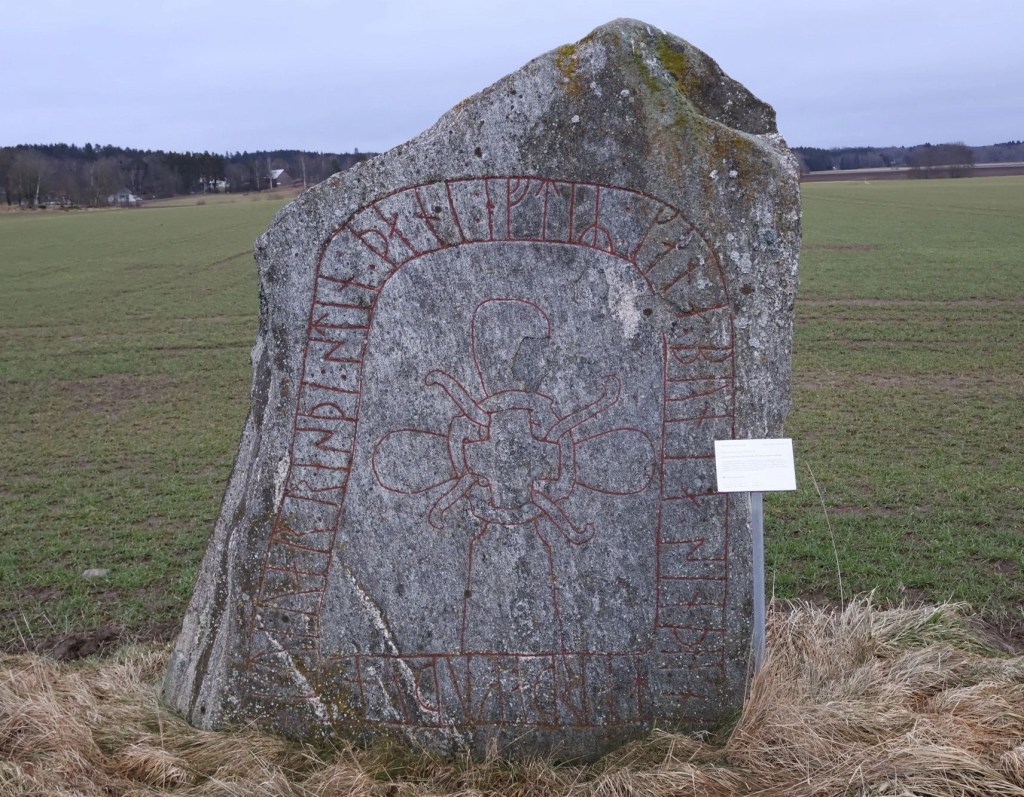
The stone is made from gneiss and measures 2,25 meters tall and 2 meters wide. The thickness is 25 centimeters. The stone was moved from its original location 5 meters away in 1993.
The front has a big cross in the form of a ring cross. The style dates the rune stone to around year 1000. This stone also goes under the name Vg152 and it is very similar in its style to another rune stone that goes by the name Vg151. This stone was found 600 meters away and is so similar that it was most likely made by the same person.
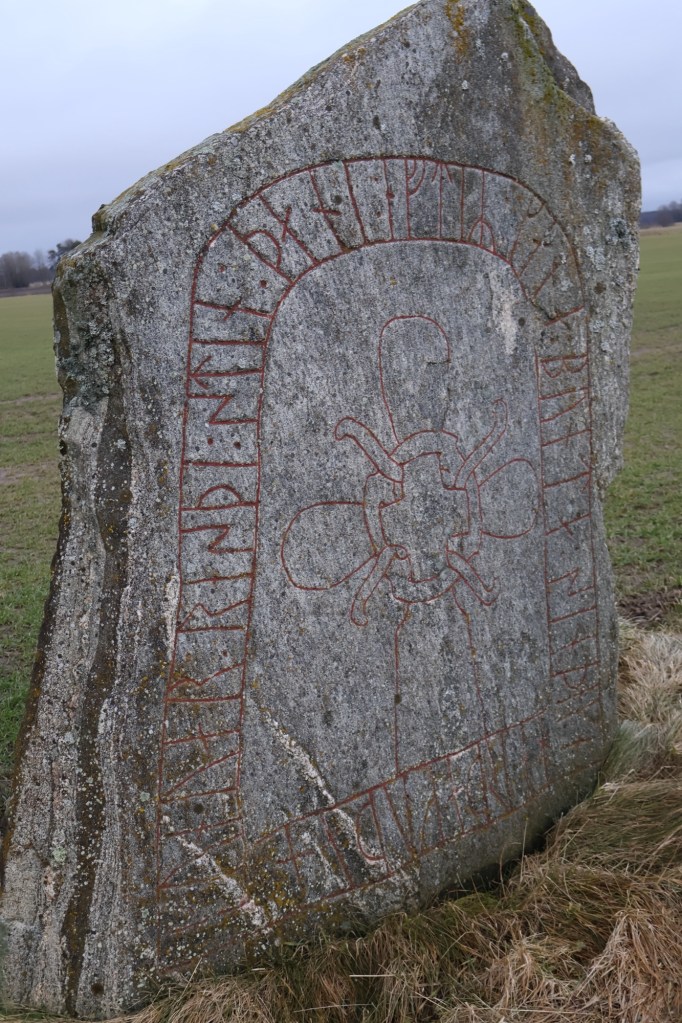
The inscription reads as follows:
kunuar : resþi : stin : þani : eftiʀ : kana : bunta : sin : þegn harþa kuþan
Gunnvar raised this stone after Kane, her husband, a very good thegn.
So this rune stone was commissioned by a woman in the memory of her husband. The husband Kane are as we just read described as a very good thegn or þegn to be more precise. This is obviously a title, what type of title it is are however greatly debated.
One idea is that it means a free landowning farmer.

It could also be the title of a warrior that is in service of the King.
The word þegn is particularly common on rune stones in Västergötland. This probably means that it was an important part of the structure of society among the Geats.
The title occurs on rune stones in Denmark as well and there it seems to mean that the person was close to the king.
The title also exists among Anglo-Saxons in England and are preserved there in written documents. There it is used for a class of people that are just beneath the Earls in status.
What ever the meaning it is possible that it actually meant many different things. What is certain is that the people that used the title belonged to an elite in society because they had relatives and family that erected rune stones in their honor.

 Fornminnen
Lämna ett svar till The Velanda Runestone – Fornminnen Avbryt svar