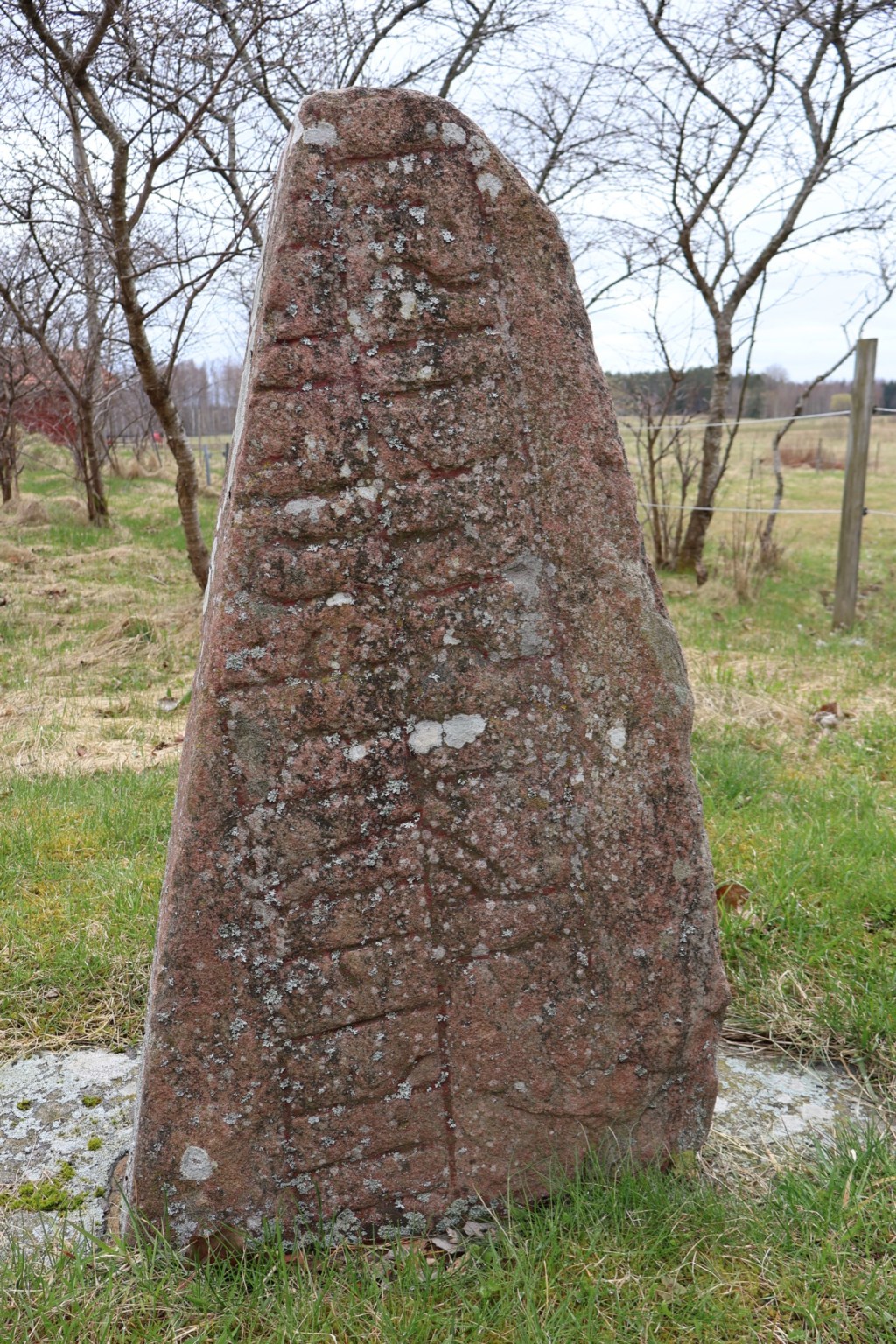
The time has come to write about my local rune stone Hovlandastenen. I have been saving it for some reason even if it is located just a short walk from my place of work.
We are now on the island Hammarön in the province of Värmland, Sweden. Hammarön is the third largest island in lake Vänern and it is located just outside Karlstad the largest town in Värmland and the location where the river Klarälven meets the lake in a delta. Hammarö is cutoff from the mainland by the river delta. Hammarö is its own municipality and where I happen to live.

The rune stone is erected in a place called Hovlanda, a name with significance because the word hov is old Norse and Proto Norse for a building where people worshiped the Norse Gods what we would call a temple.
Hovlandastenen or VR3 as it is also known is one of only two Viking Age rune stones in Värmland, the other one is called Väsestenen. There is also two older rune stones Järsbergsstenen and Skramlestenen. Hovlandastenen is as I mentioned a Viking Age rune stone but to be more precise it is dated to the years around 1025 CE.
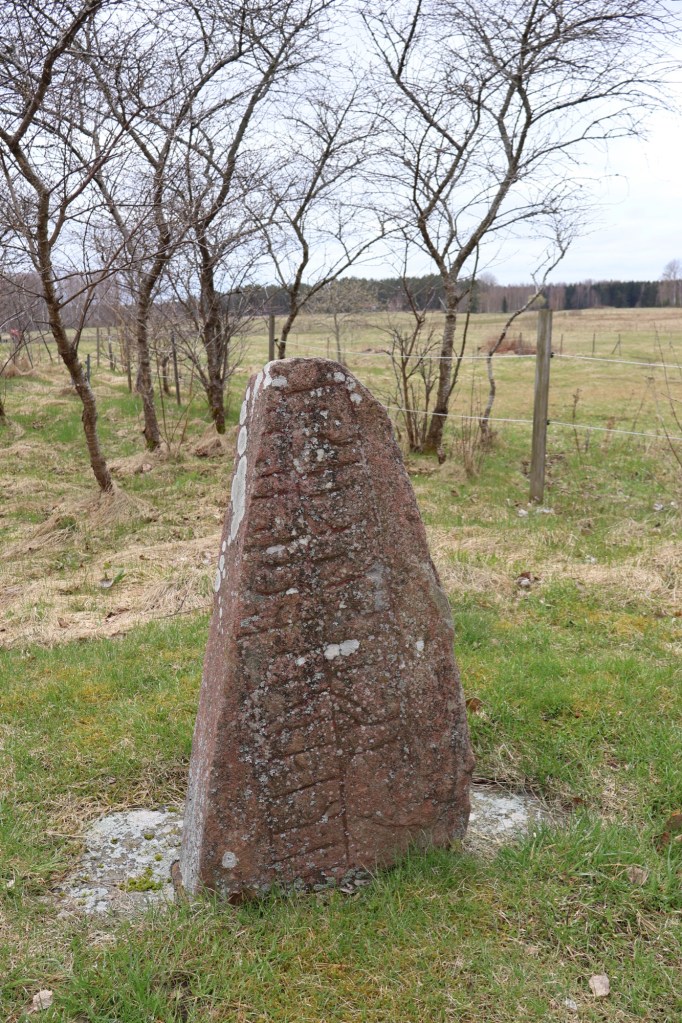
It is considered to belong to the Norwegian rune stone tradition. Which isn’t strange as Värmland is a border area with influences from Norway, Västergötland, Svealand and what is now northern sweden. All these influences met here and it is visible in the archeological material.
Even if the stone has no other decoration than the inscription it is quite beautiful in its simplicity. The inscription reads as follows:
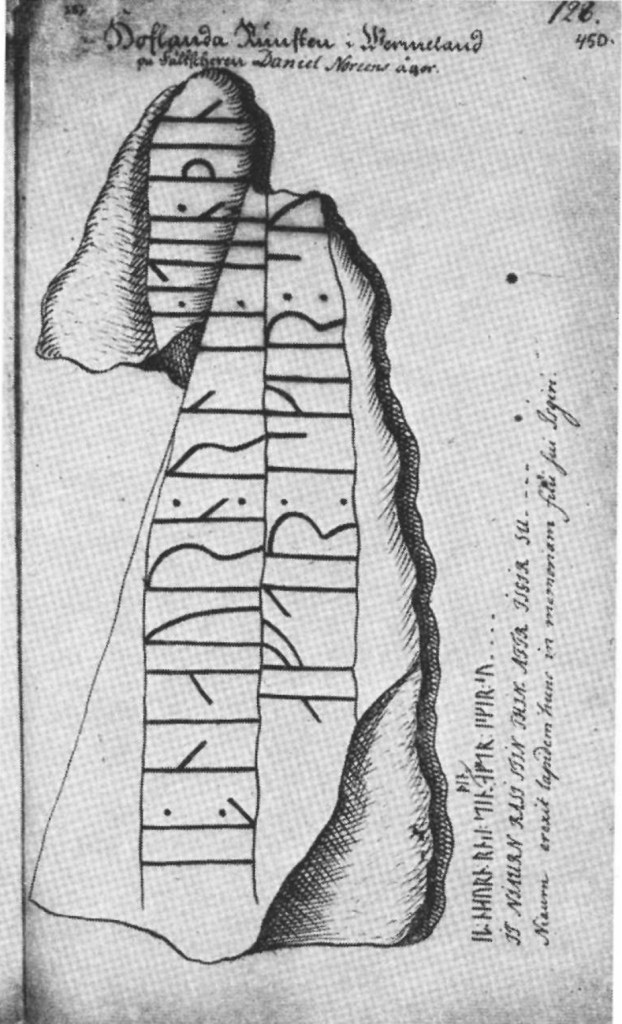
: (b)iaurn : ri(s)– [: stin : þin… ]iftr : iskir : si… …
ræis[ti] stæin þenn[a] æftiR ÆsgæiR, si[nn] …
Björn raised this stone after Esger, his…
The stone is made of red gneiss and measures 86 centimeters high and 48 centimeters at the base.

The first mention of the stone is from 1683 when it was brought to the attention of the Antikvitetsarkivet (Archive of Antiquities). In 1728 the Regimental Barber-Surgeon at Värmland Regiment Daniel Noreen made a drawing of the stone. It is fractured and when Daniel made the drawing more pieces were precent so that we thanks to him know more of the inscription than it is readable now. Even so other pieces were missing even then making it impossible to know the relation between Björn and Esger. Maybe Björn was the father that raised the stone over a son that died in some other place. Whe will never know unless someone finds the missing piece. Since the drawing was made the fragments pictured are also lost. Several unsuccessfully attempts at finding the has been made over the years.
From 1867 there is a story written down that a local blacksmith supposedly took the stone to use it in his blacksmiths hearth, but he came to regret this as his nights became plagued by nightmares. This ended when he returned the stone to where he found it. Interesting enough we do know that the stone was missing for a while but it was found by the Länsman (Sheriff) Sandelin and returned to its place.
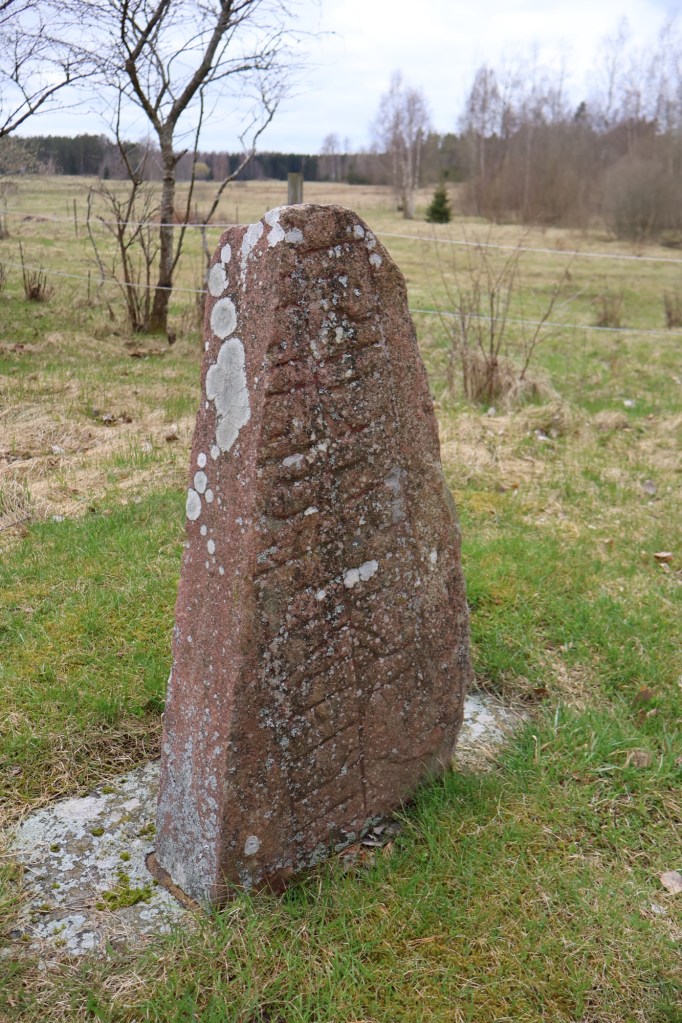
The stone was originally found 200 meters southwest of its current location by the road. In 1958 a truck hit the stone and turned it over. So it was moved a few meters to its current location.
According to a local legend the son of a king lived at the farm of Hovlanda and the farm was named after him and that the stone was erected after him. If this has any truth to it we can’t know but we do know that his name was not Hov.

We do know that the farm of Hovlanda has been a important place for a long time, not only because of what is previously mentioned but also because this was according to the tradition the site for the the first church on the island, that was probably constructed in wood around the time when Christian missionaries was active in the area. This would probably place the construction of that church around the same time as the rune stone.
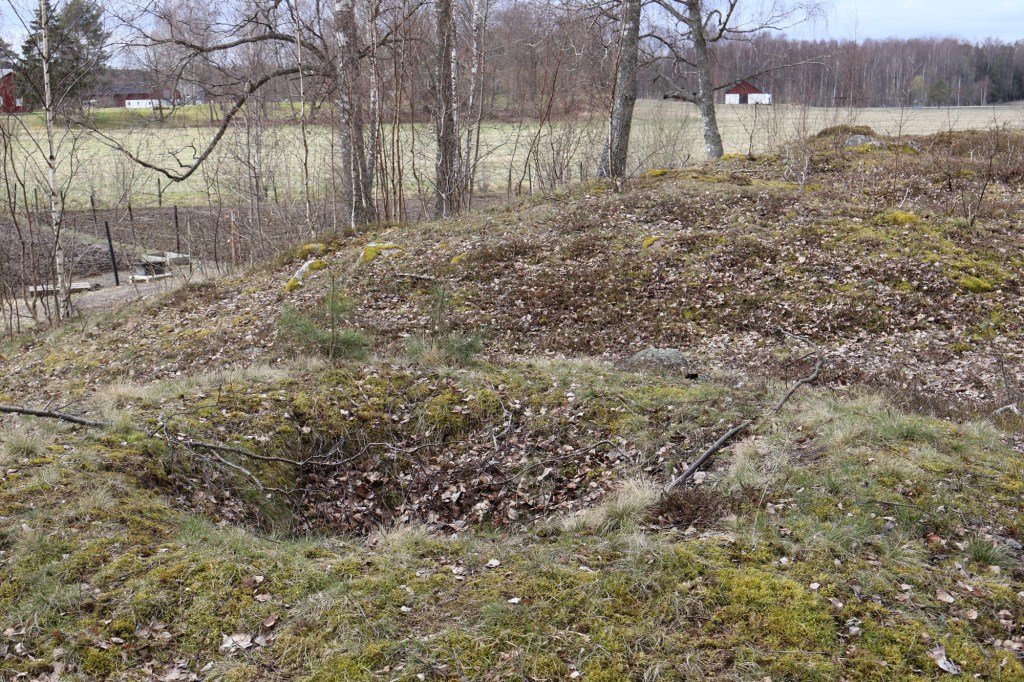
Not far from the rune stone lies the small grave field Spjällkullen that was probably where the inhabitants of Hovlanda buried their dead during the Iron Age making it a very old farm indeed, especially as it still exists. The grave field consists of five grave mounds. According to an older source a Dr. Kjellmark made an excavation of the mounds but he found only burned bones and coal. I assume that Dr. Kjellmark is the archeologist Knut Kjellmark 1866-1944 and that for some time lived in Värmland.

It seems that the people at Hovlanda stopped using this grave field before the Viking Age. It is likely that they used the close by grave field at Hammars Udde instead as it had become very prominent and it is the second largest in Värmland. But this I will be writing more about in a future blog post.

 Fornminnen
Lämna ett svar till The Grave Field on Hammars Udde – Fornminnen Avbryt svar