Today I spent most of the day preparing my camper van for a new season of traveling and exploring. I am specifically preparing for a trip to the island of Öland that is well known for the many interesting ancient sites, especially the many ring forts dating to the Iron Age.
When I was finished cleaning the car my mother suggested that we go for a walk at a local “Fornborg” a Swedish term for ring forts and hill-forts that are older than the medieval period.

So we took a short drive to Hökberget fornborg also known as Nor 8:1, it is located just outside of Edsvalla in Värmland, Sweden.
To get there one can drive most of the way by car towards the top off the hill. It is possible to park where the road ends. From there it is a short walk through the woods to the top. The wood here, near the top is dominated by scots pine, Pinus sylvestris that because of the exposed conditions up here grows in interesting shapes.

It’s easy to miss when you enter the hill-fort because what is left of the walls aren’t that easy to spot. But the path enters the fort through the original gate opening that measures between 2-3 meters. This is the part of the hill where it is easiest to scale the hill so it is the natural point of entry.
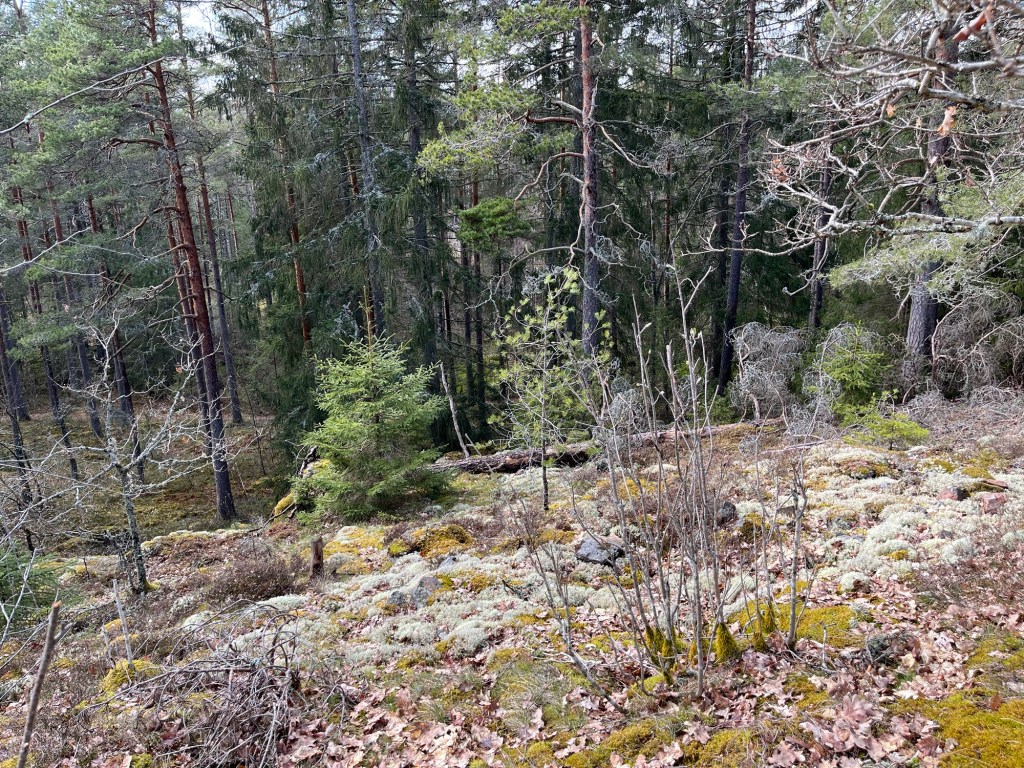
The hill-fort measures 35 x 100 meters and the walls are now 1,5 – 3 meters high from the outside and 0,6 meters from the inside. They are between 2-4 meters thick and constructed using rocks of a size between 0,1-0,4 meters.

The people that built this hill-fort used the natural terrain to their advantage. Because only the northern, western and the southwestern parts have a wall. The northeastern, eastern and southern parts don’t have walls because these parts of the hill is steep enough to prevent any potential attackers from effectively entering the fort.
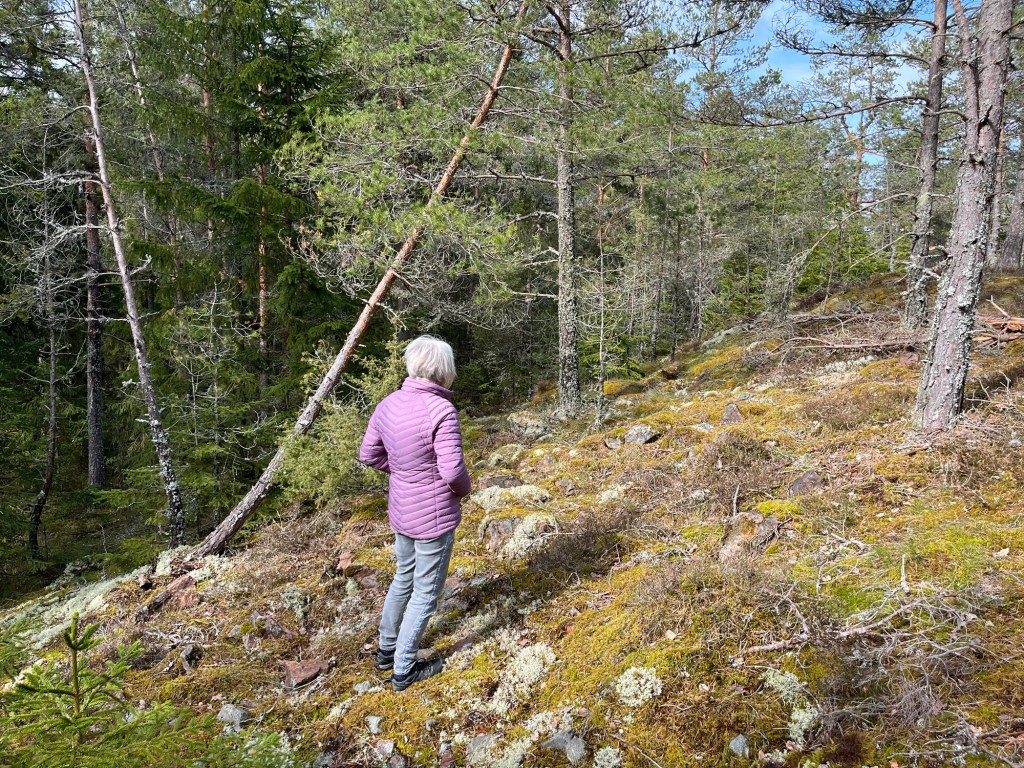
In the center of the hill-fort there’s a 3 x 3 meters wide hole that is wet, so it would have been a source of water for the people that used the fort.

It is possible to exit the hill-fort by following the path and exit on the opposite side of the gate. The path then returns to the parking area by the foot of the slope that runs up to the walls so that they can be viewed from below. The woods here is of a different character than above with tall norway spruce dominating the forest.

This hill-fort has never been excavated by archaeologists, very few hill-forts in Värmland have. Of 37 confirmed hill-forts in the province only one has been partially excavated. At that excavation it was discovered that the hill-fort had been burned down sometime between the 5th and 7th centuries.

It is likely that Hökbergets fornborg also was burned down as a examination by archeologists showed that the stones in the walls look sintered which means that the walls originally had a wooden palisade that was burned down. It would be very interesting if archaeologists would do a excavation here as there has been debated what the purpose of the hill-forts are if its defensive structures or had other functions. One idea is that they were places to which the local population could escape in case of conflict. It is likely that it had at least a few buildings on the inside as this seems to be common in many such hill-forts.
Not far from this hill-fort there is another hill-fort and they are both relatively close to the current village of Vålberg in which a Iron Age grave field is located and mysterious mound dated to the 5th century that I will be writing about in the future.
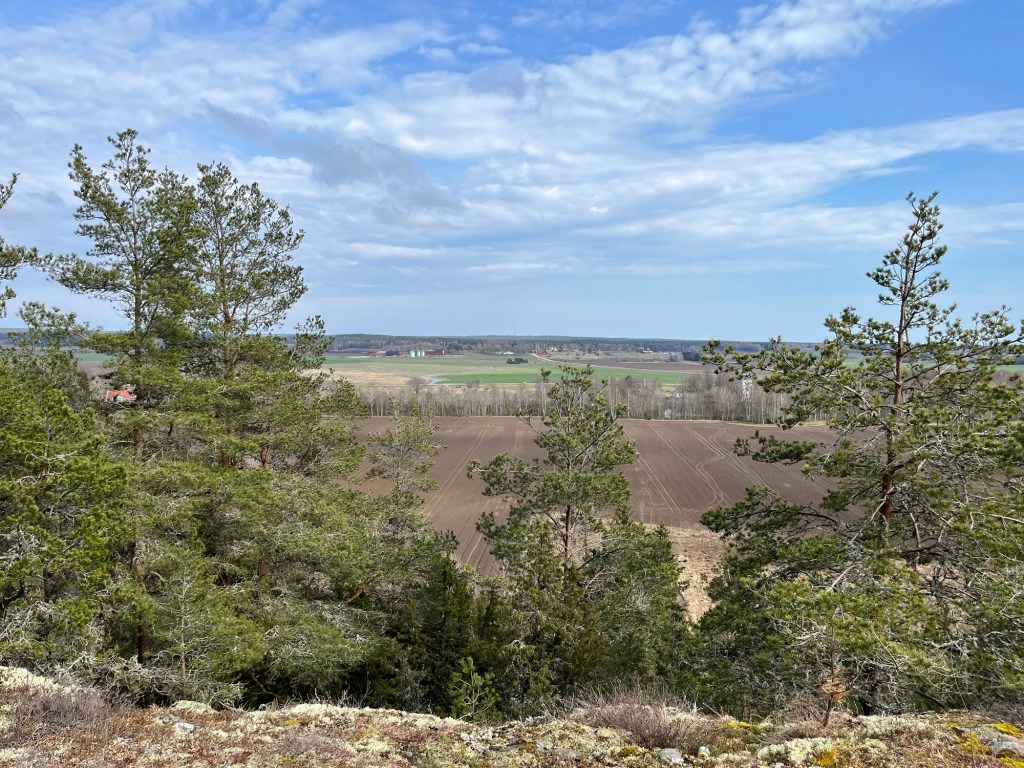
From Hökberget, the name translates to Hawk mountain you have a great view over the river Norsälven that runs between the lake Fryken and Lake Vänern. This has long been an important trade route. The concentration of hill-forts around it might explain their purpose as a way to control this trade.
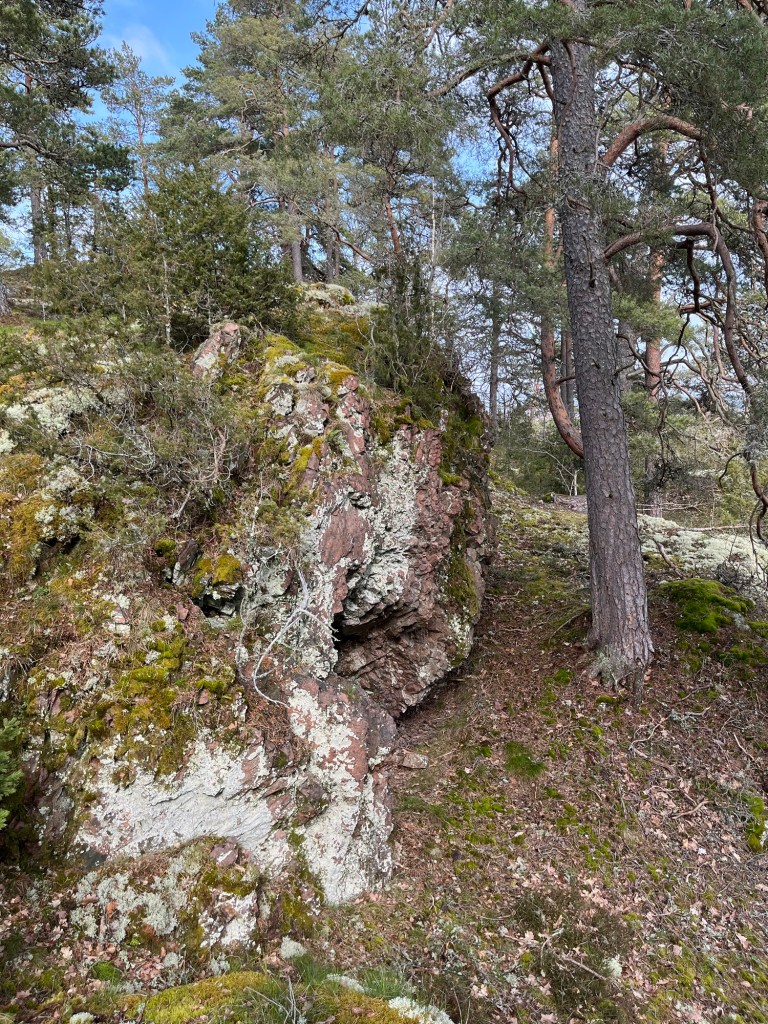
Because no archeological excavation has taken place it is impossible to say exactly when the hill-fort was built. But the location and dating of monuments in the vicinity makes me think that it is most likely from the migration period between 350-600 CE. Some hill-forts are older and some are younger, but as far as I know the majority was constructed during this period.
I would really recommend this place that is located not far from the town of Karlstad. Not only because the hill-fort, but also for the beautiful views and the nature here.


 Fornminnen
Lämna ett svar till Rönnkullen – Fornminnen Avbryt svar