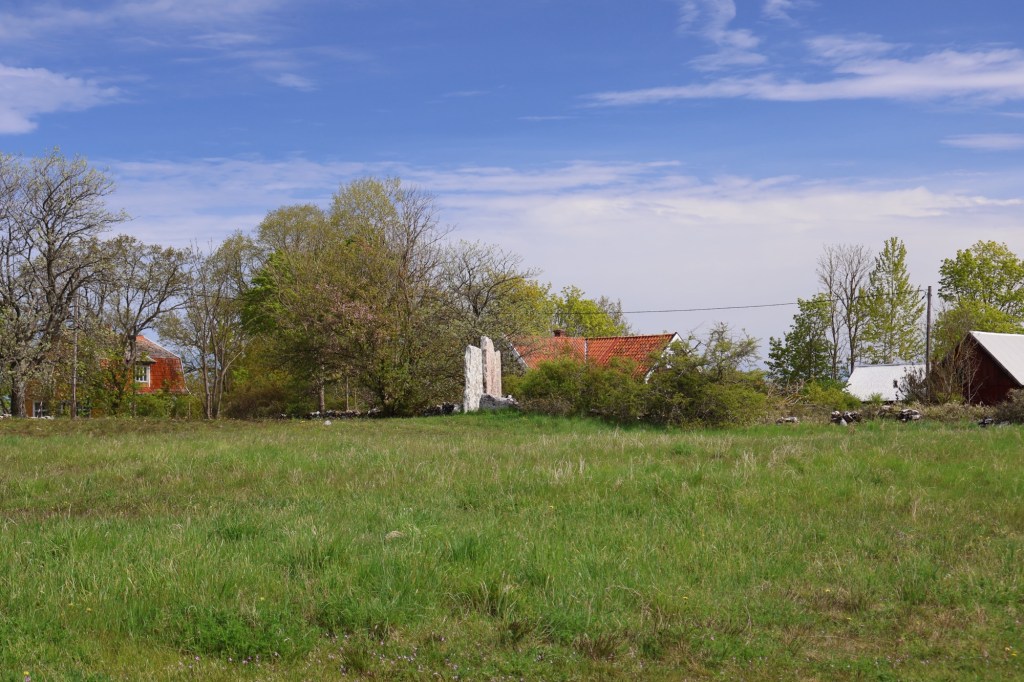
During my recent trip to the Swedish island of Öland I visited a small grave field in Högsrum, near Borgholm. It contains around 40 graves dating to the Iron Age. Around six of these graves have been excavated in the beginning of the 20th century. The archaeological excavation resulted in human remains and some everyday objects.
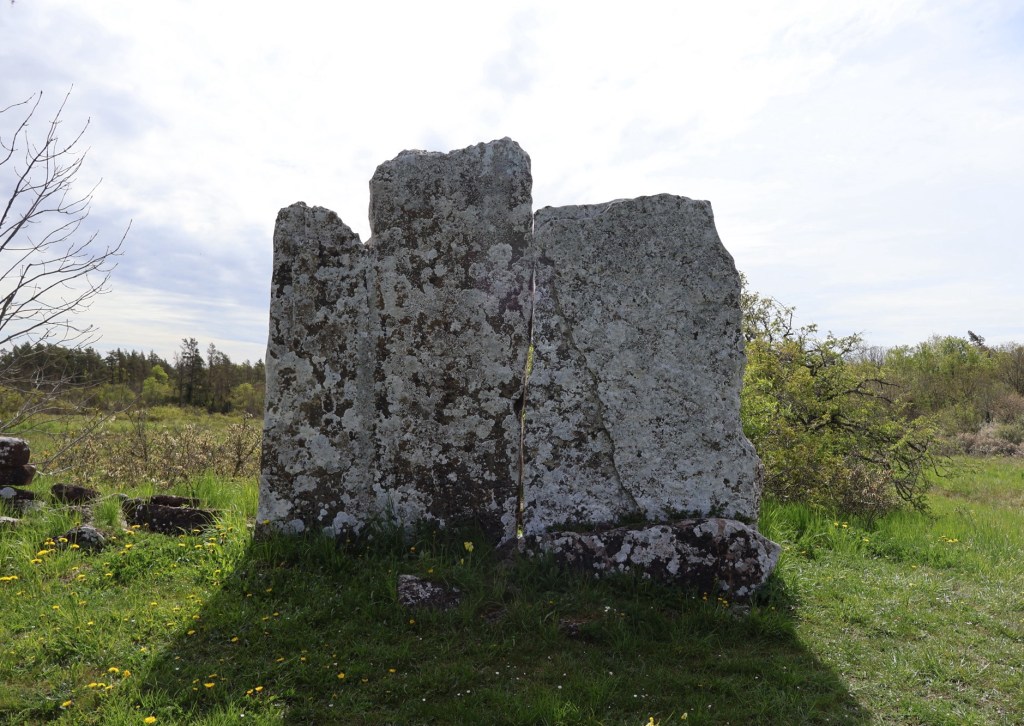
Öland is littered with grave fields from this period, most of the graves on this grave field don’t stand out so it wasn’t them that brought my attention to this place. It was one of the monuments on the grave field that had caught my attention.

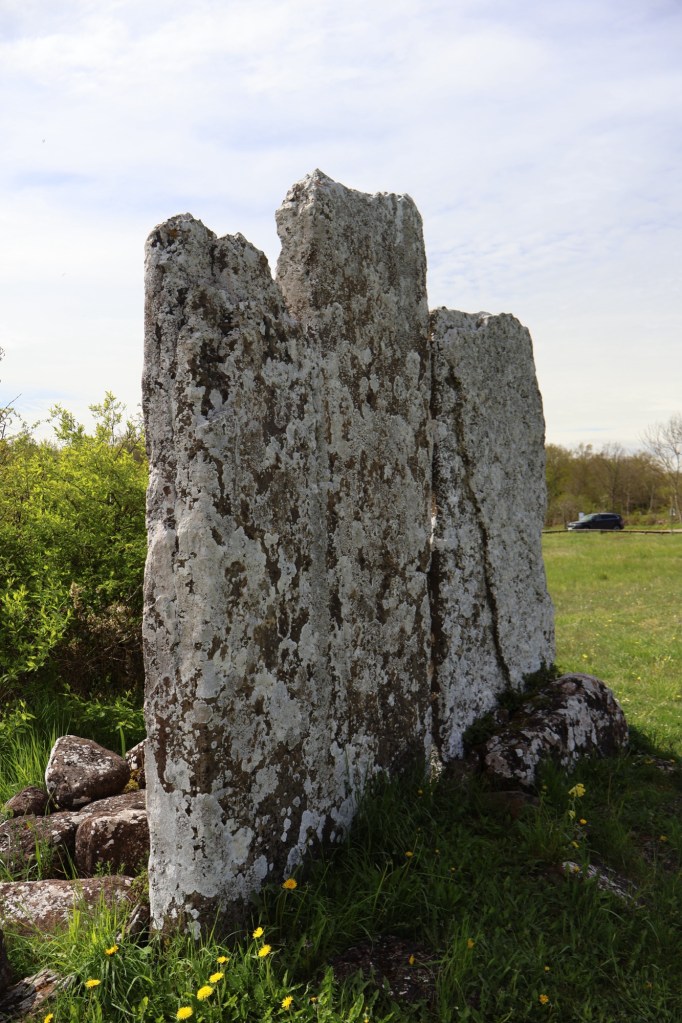
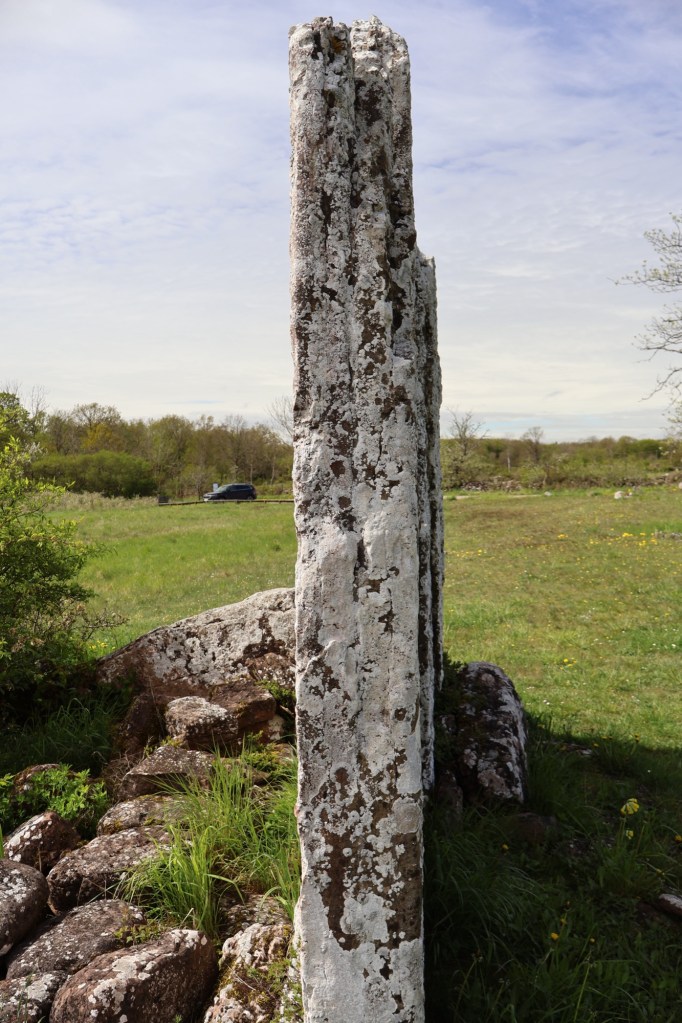
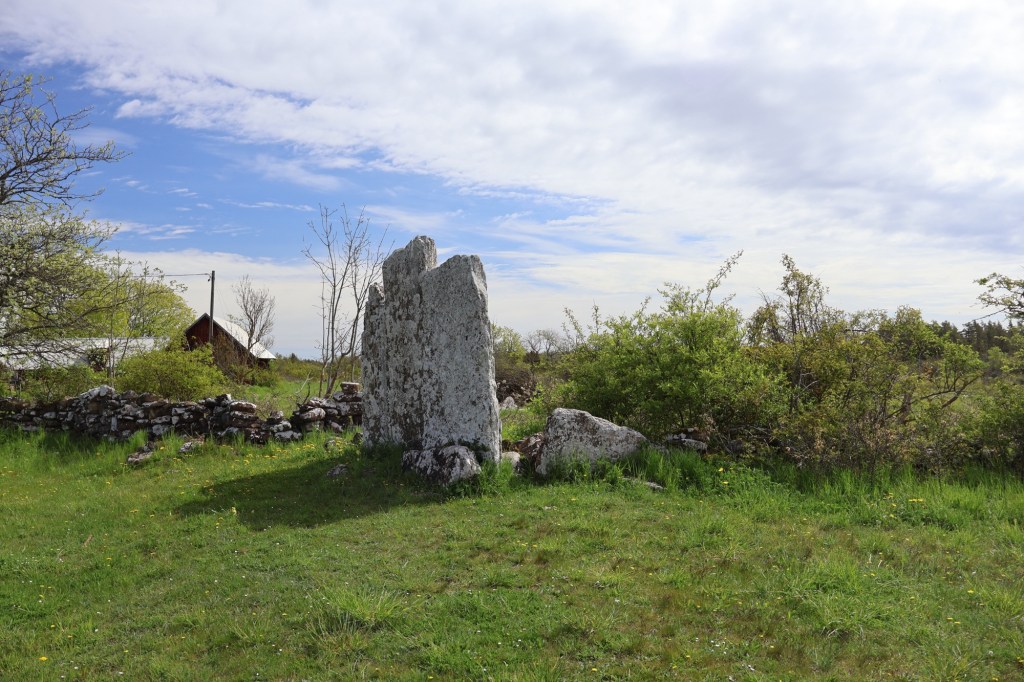
The monument is called Odens Flisor which would translate to something similar to Odins Chips or Shard. The monument consists of two erected flat chalk blocks that are around 3 meters tall. The shape of one of them makes it look like there’s actually three rocks.
This is relevant because there are several monuments in different parts of Sweden that goes by the name Odens flisor. Two are located in Jällby and Hudene in Västergötland. The similarity between them is that they all consist of three erected stones besides each other. A popular interpretation of their meaning is that they represent the three Norse Gods Odin, Thor and Freyr.
No one really knows how old the name Odens Flisor is but there’s a local legend on Öland about how they came to be.
One day Odin was out riding on his eight legged horse Sleipnir when he met a man that wanted to wrestle with him. Odin picked up a chard of stone from the soil and placed it sturdy in the ground. He then plunged his sword through the stone to tie Sleipnir to the hilt. Then the wrestling match began. It went on for a long time and it felt like it would never end. Sleipnir got tired of waiting, so he pulled himself loose and galloped away.
He threw himself on the ground and rolled around, his great weight and his eight legs tore up a great pit in the ground that filled with water. This is how the lake Gladvattnet was created that is said to be bottomless.
The name of the lake is very interesting as it contains the two words glad and vattnet (water). The word Glad or Glaðr is the name of a horse from Norse Mythology that together with the other horse Skinfaxi pulls Dagr who is the personification of the day across the sky each day. All the connections to horses are very interesting as they seem to have played a very special role on this island that I will write more about in future posts about the sacrificial bogs on Öland.
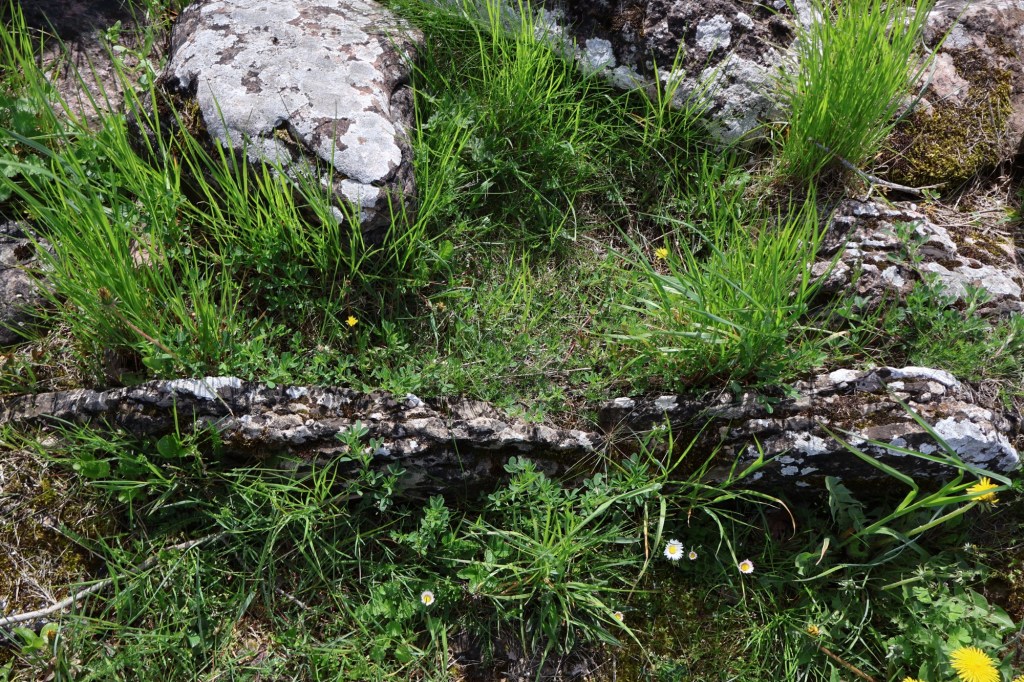
Odens flisor is thought to have been erected some time between 400 CE and 1050 CE.
This location is very close to the large grave field at Karum, the ruins of the Rönnerum Iron Age village and the very famous Ismantorp ring fort. I have visited all of them and they will be featured in individual posts. There is a hiking trail from Odens flisor that will take you to all these places if you have the time.

 Fornminnen
Lämna en kommentar