This post is about a subject that I haven’t written about before, rock paintings. This is because they are quite rare here in Sweden with only 52 known sites across the country. Most of them are found in the northern parts of Sweden and a few in Värmland and Bohuslän. A large concentration of them are found in the provinces of Jämtland and Härjedalen.
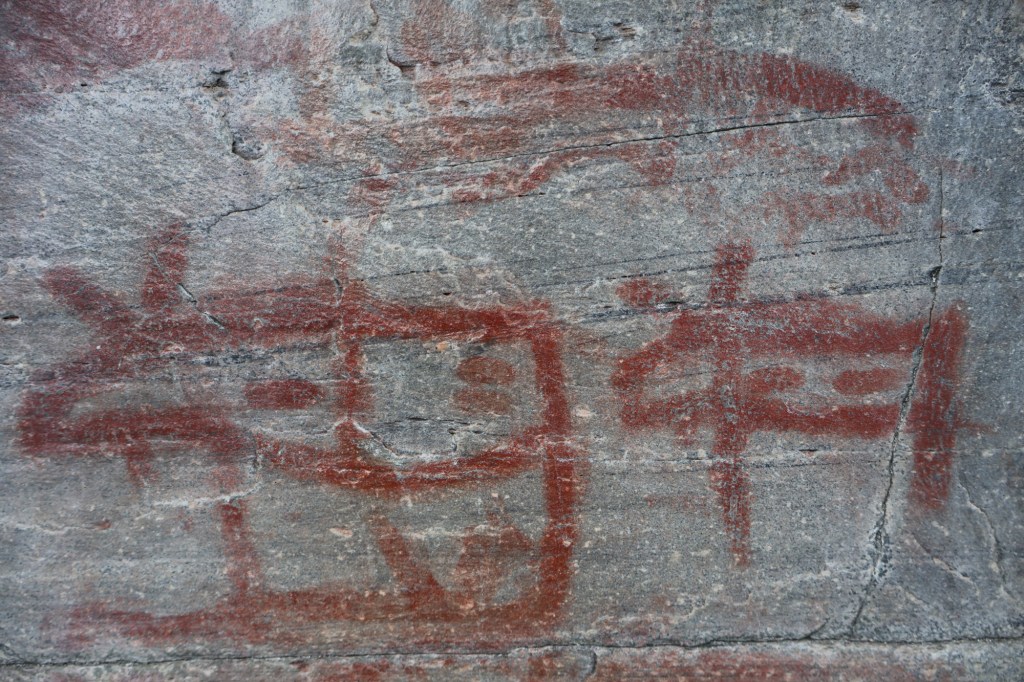
This time I visited the rock paintings at Flatruet that is located in the province of Härjedalen. Its very close to the ski resort of Funäsdalen.
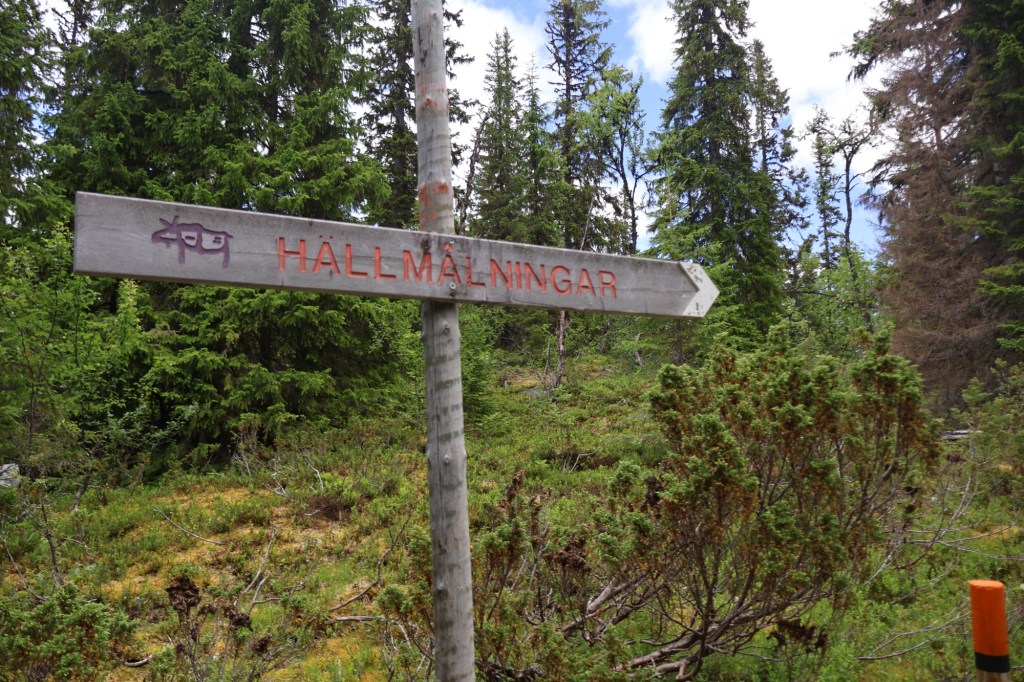
To reach the paintings I had to park the van at a parking lot next to the quaint fäbodvallen called Ruavallen.
A fäbodvall is a place where the villagers would bring the cattle during the summers for the pasture. The women who tended to the animals would live in the small houses and make cheese and other dairy products.
Ruavallen, outside of the village of Messlingen is the starting point of several hiking trails. The one that I choose is called “Hällmålningsrundan” (rock art trail).
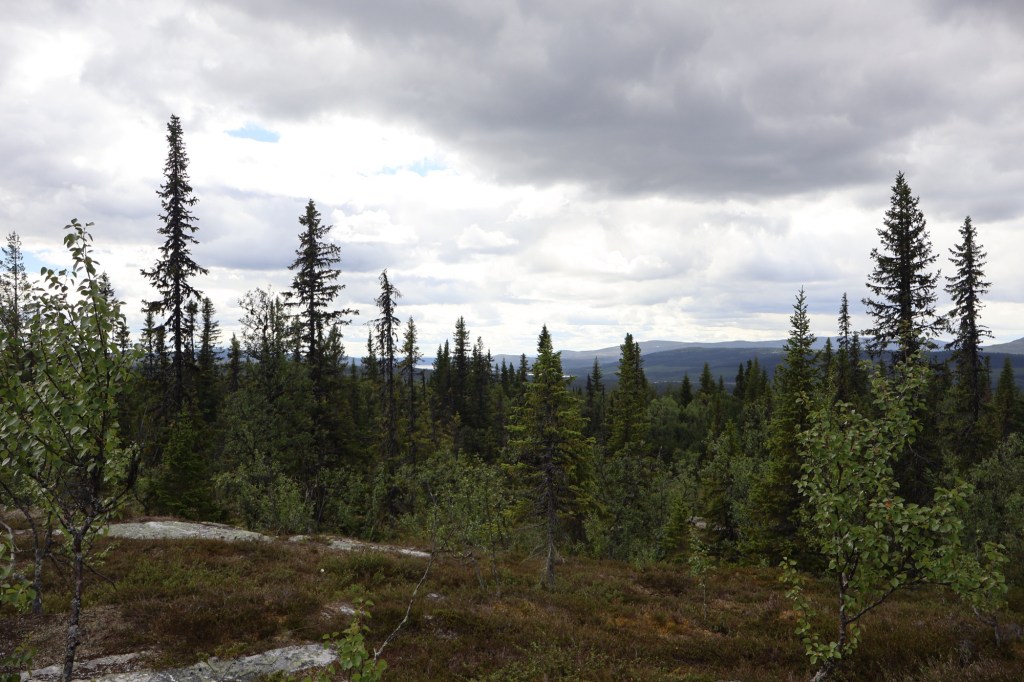
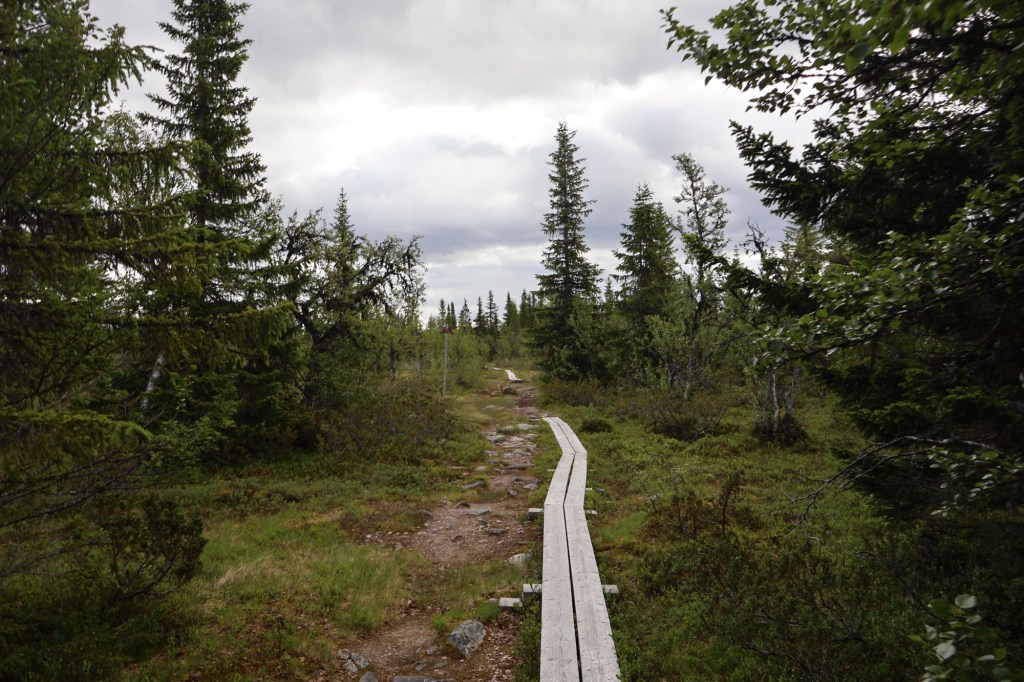
The trail is an easy hike of about 2 kilometers up the mountain, and I enjoyed the views and the beautiful nature.
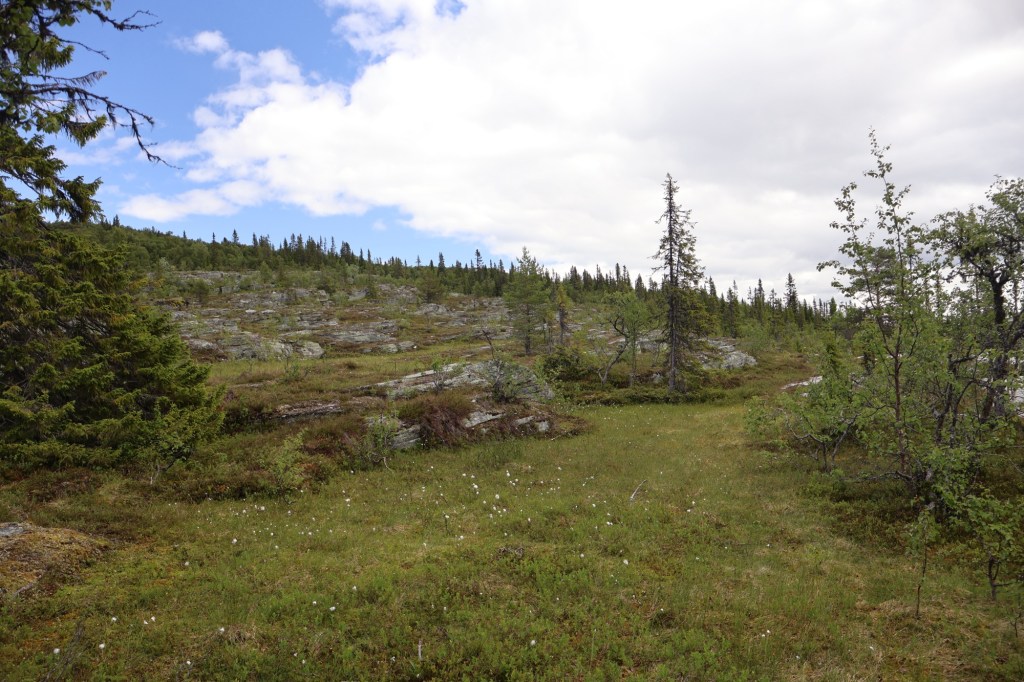
The site of the rock paintings is easy to find as a large information sign marks the spot.
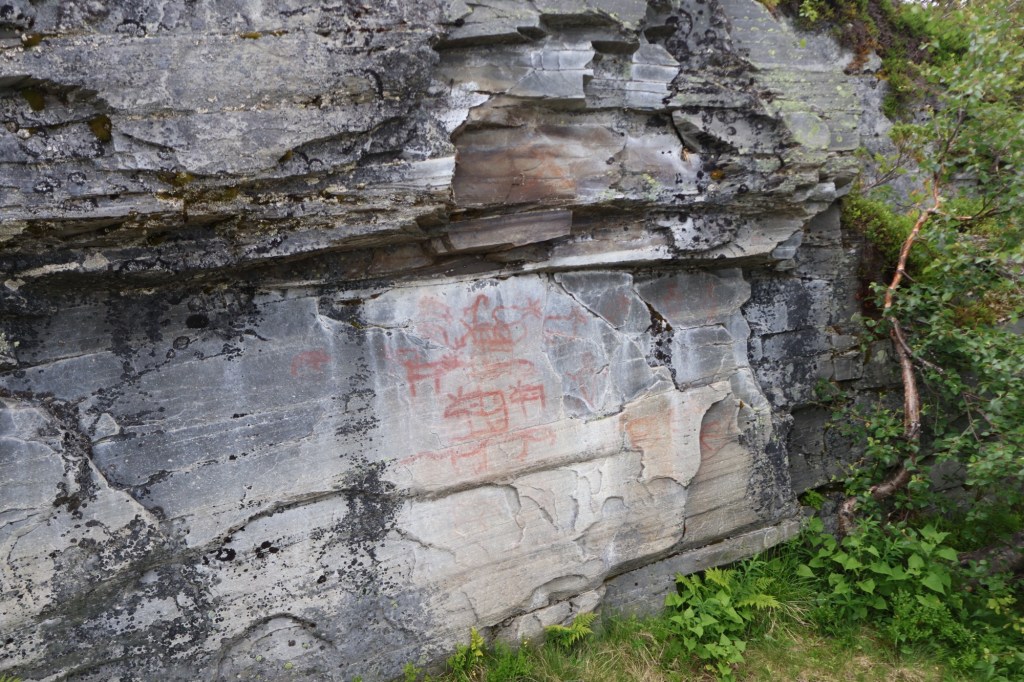
The paintings are made on a rock face consisting of slate with a protruding part that has protected the paintings over millennia.
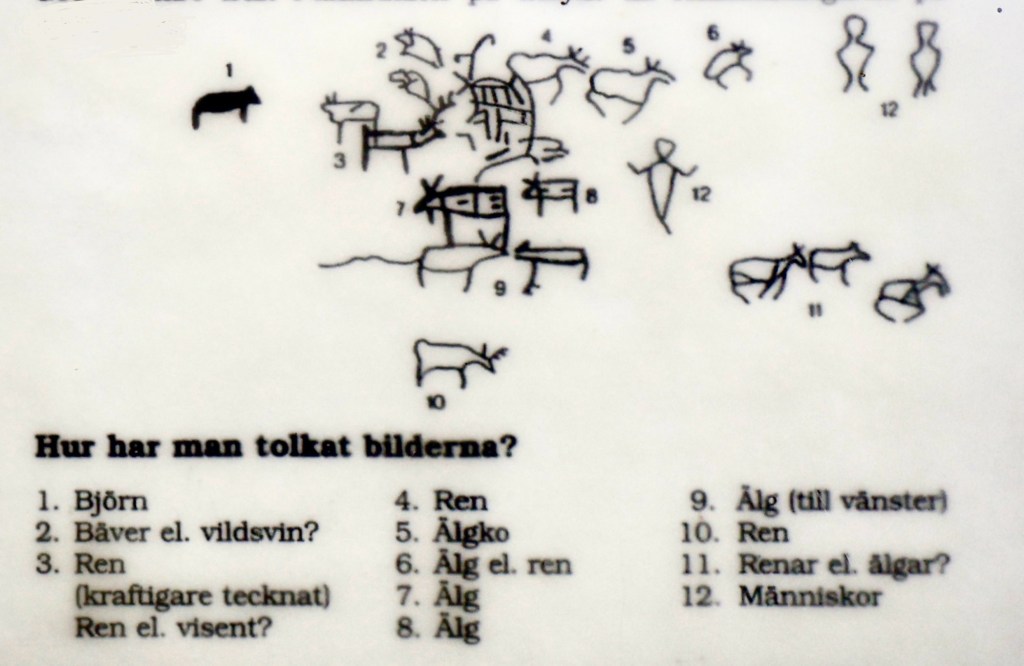
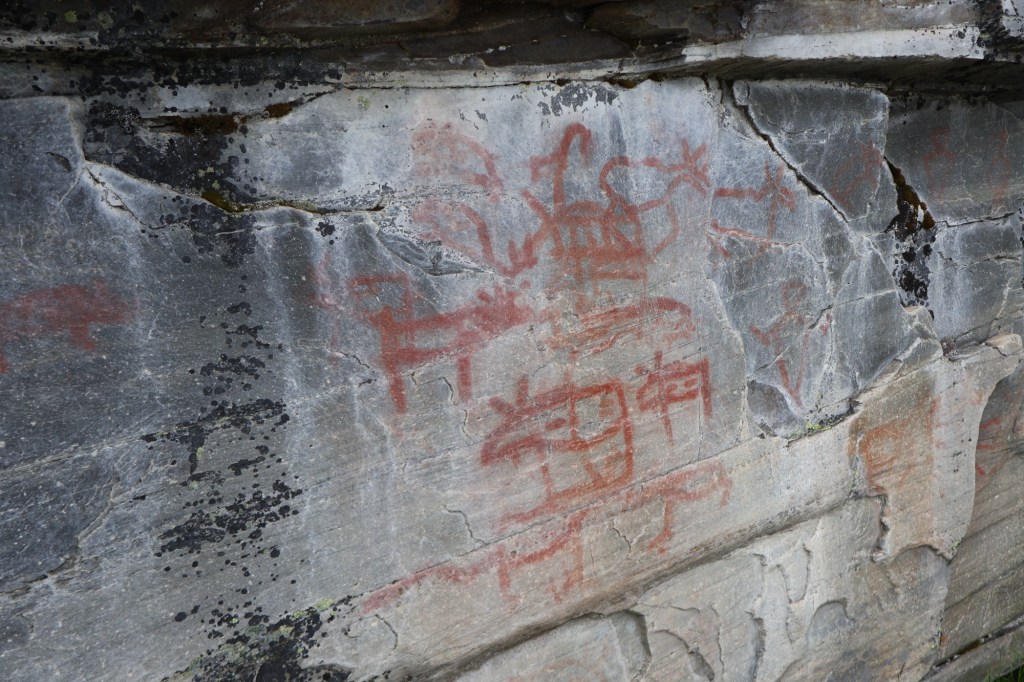
They are made using a paint of animal fat mixed with red ochre and consists of around 20 different figures.
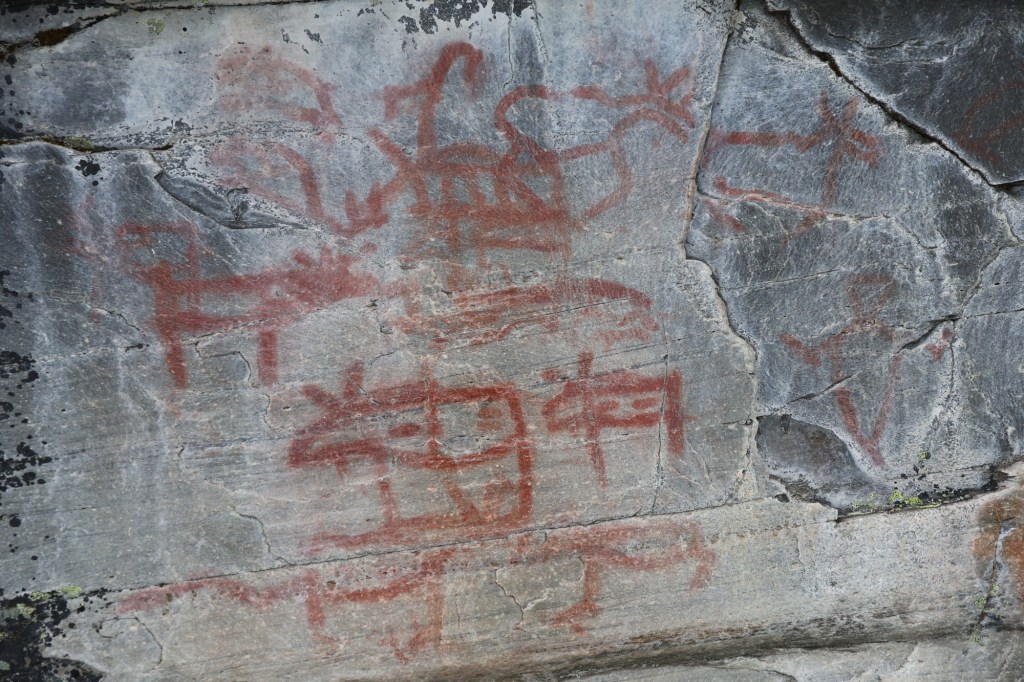
The moose and reindeer paintings are the most common. But there is also a few humans, a bear and something that is either a wolf or a dog. One of the moose might also be interpreted as a aurochs or something similar.
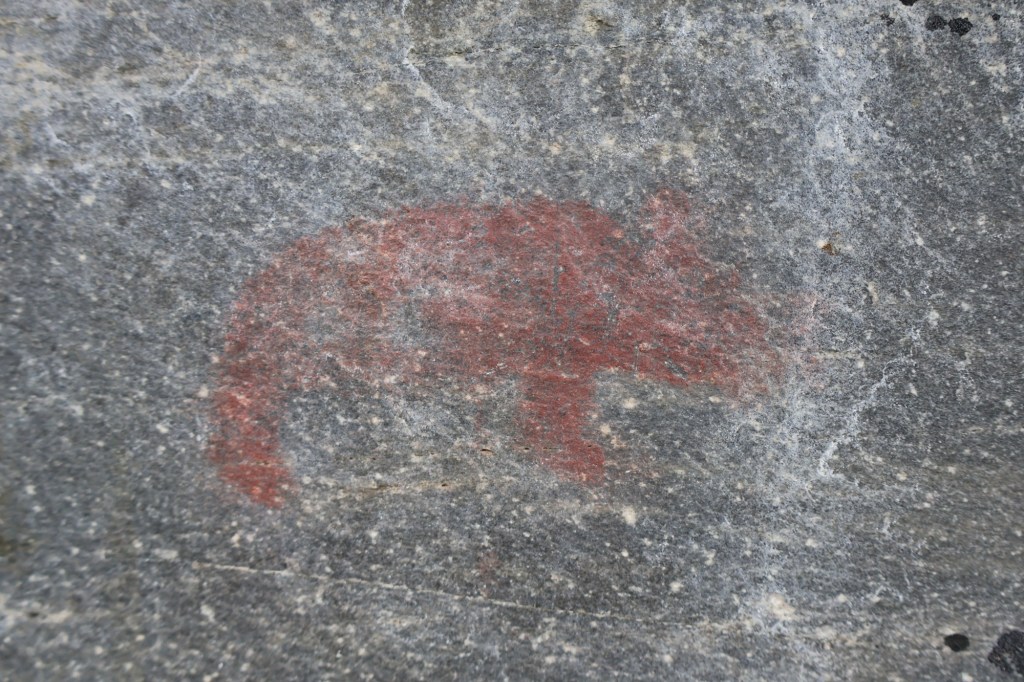
It’s interesting that the bear is alone facing the group of reindeer and moose. On the opposite side are the humans facing the group of animals.
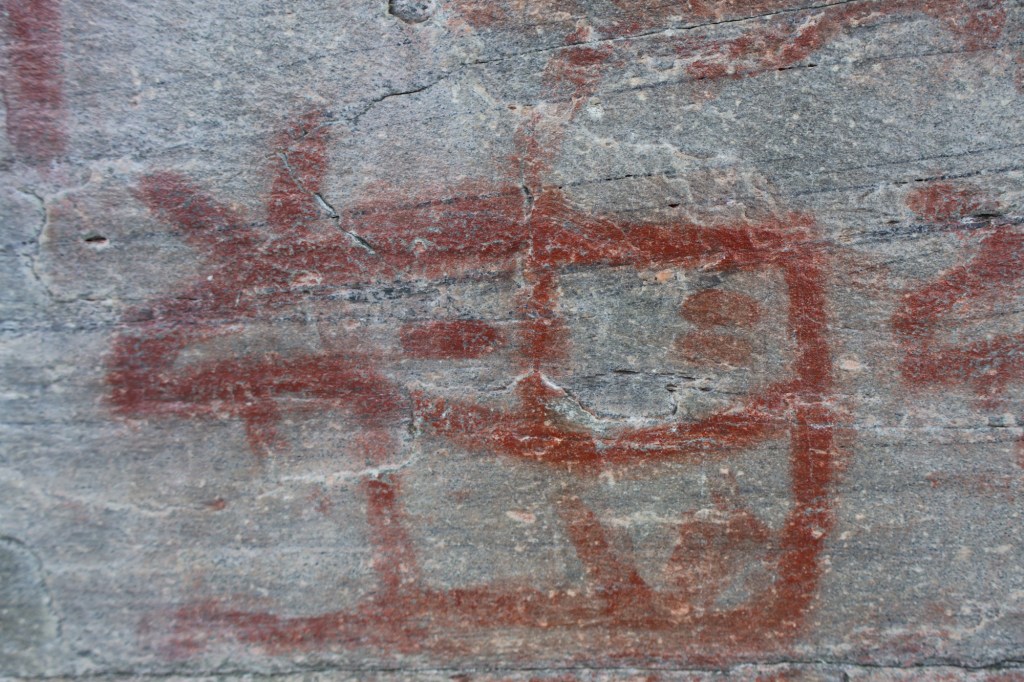
The dating of the paintings are made based on the style which makes them around 4000 years old. They are very similar in style to petroglyphs in northern Scandinavia made around that time.
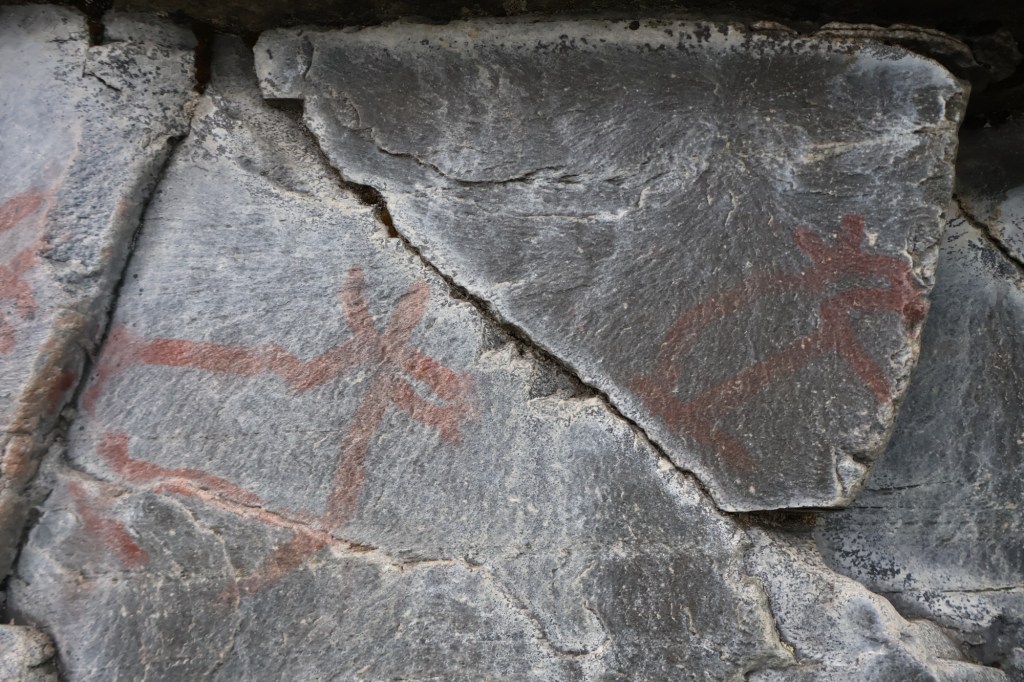
This particular site has been archaeologically excavated in 2003 and some very interesting findings were made. The archaeologists found hearts containing coal that was carbon dated to 4000 BCE and 1200 CE. Which means that the site was used long before and after the paintings.
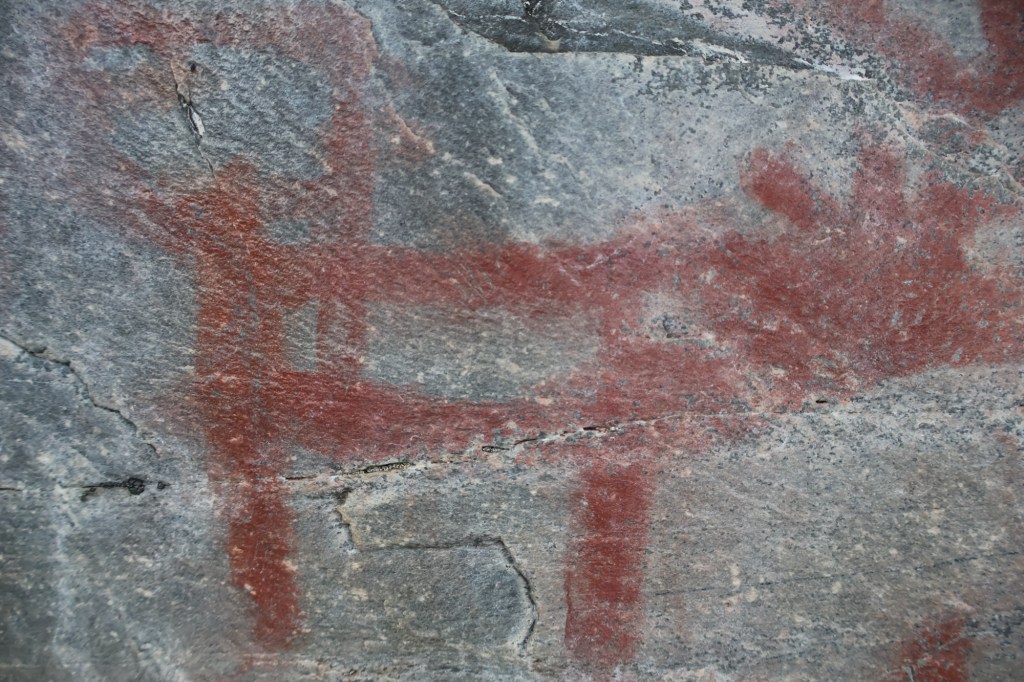
They also found shattered stone arrowheads that seem to have been fired against the rock paintings and shattered in the process. The arrowheads were made using quartzite which was rare and exclusive.

The archeologists think that this was some kind of ritual to have a successful hunt.
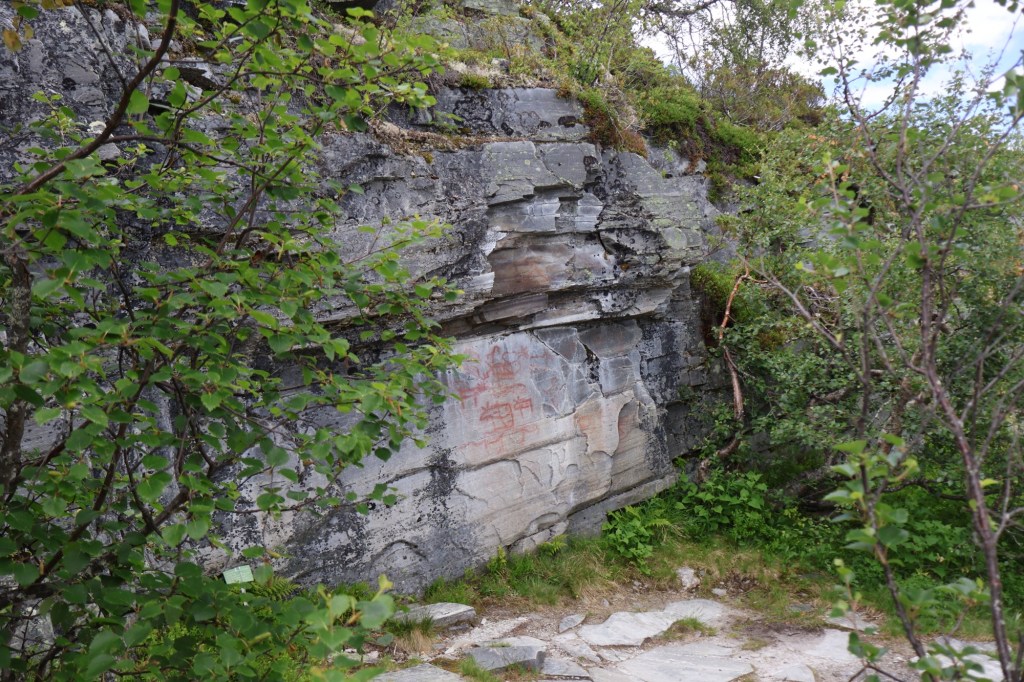
My personal theory is that it might have been the ritual killing of a tribes spirit animals as the land was taken over by another tribe. But it is just guesswork and we will never know.
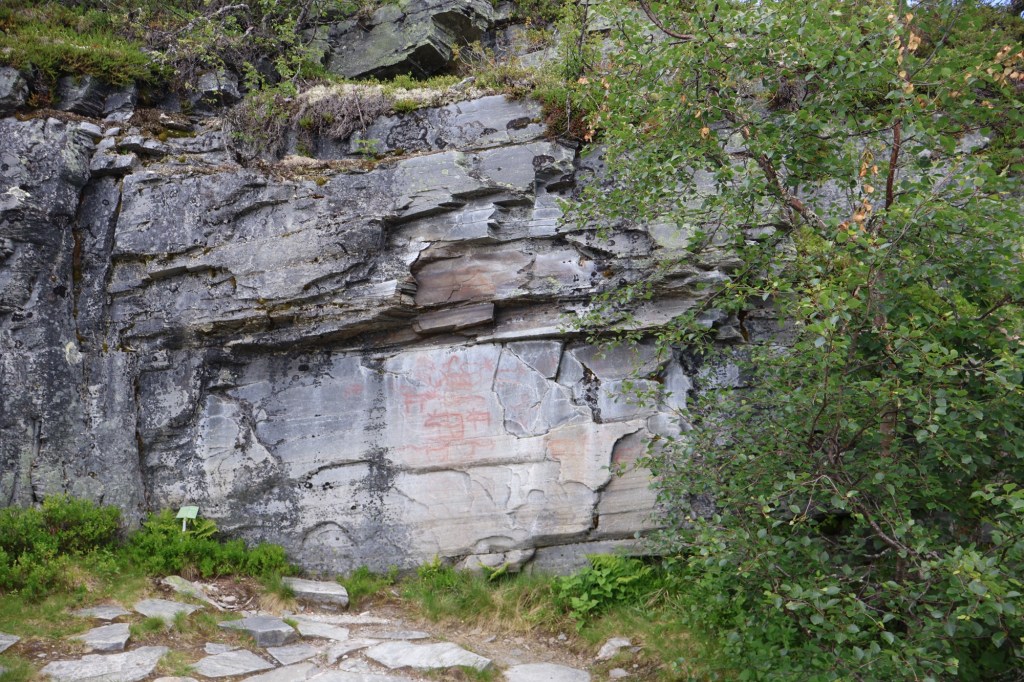
What we do know however is that the wild reindeer and moose were extremely important for these hunter and gatherers as their main prey. They provided both meat as well as hides, antlers and sinew used for bowstrings and sewing.
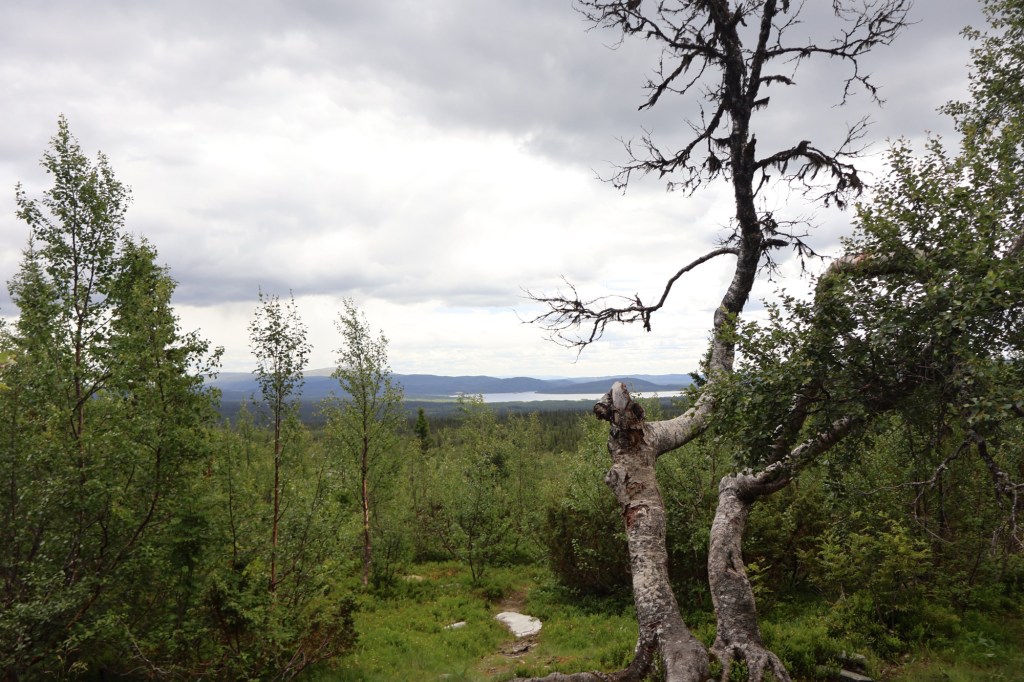
Down by the lake several settlements have been found along with pit traps and more rock art. Maybe this was the home of the hunters that made these paintings?
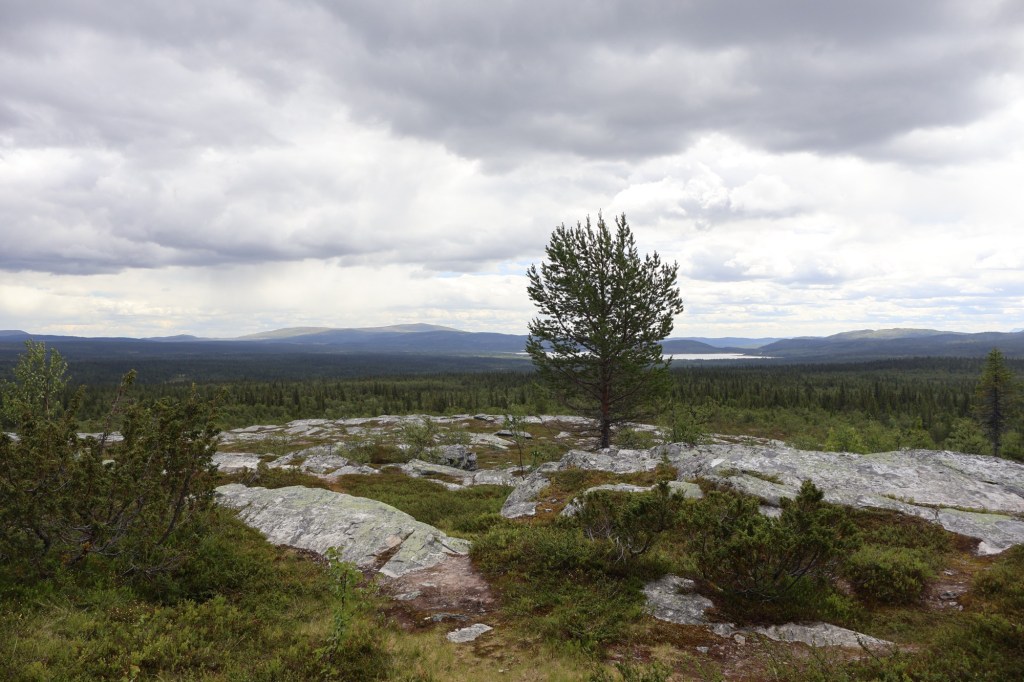
The rock art at Flatruet was rediscovered by the public by the end of the 19th century and has since then been a popular destination.

 Fornminnen
Lämna ett svar till The Rock Paintings at Tumlehed – Fornminnen Avbryt svar