Today I got the opportunity to visit Skramlestenen, a runestone that I have been wanting to visit for a long time. It’s the fourth of a total of four runestones in the province of Värmland that I have visited and written about. The other stones are the two Viking Age runestones of Hovlanda and Rör. There is also one older runestone that predates the Viking Age, Järsbergsstenen that is written using the runic alphabet, the Elder Futhark.
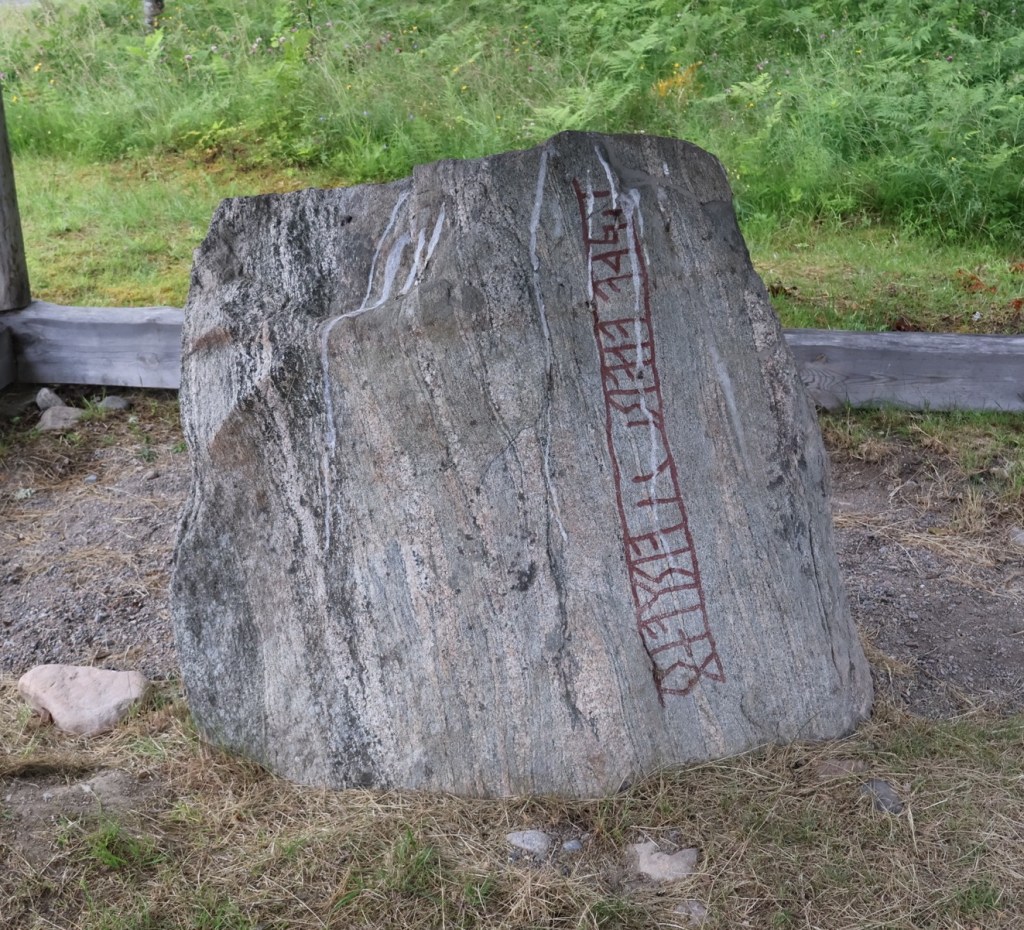
The Skramle Runestone is just like Järsbergstenen written using the Elder Futhark in the Proto-Norse Germanic language that was spoken in Scandinavia before Old Norse, that was spoken during the Viking Age. The stone is most likely dated to some time between 520 and 570CE.
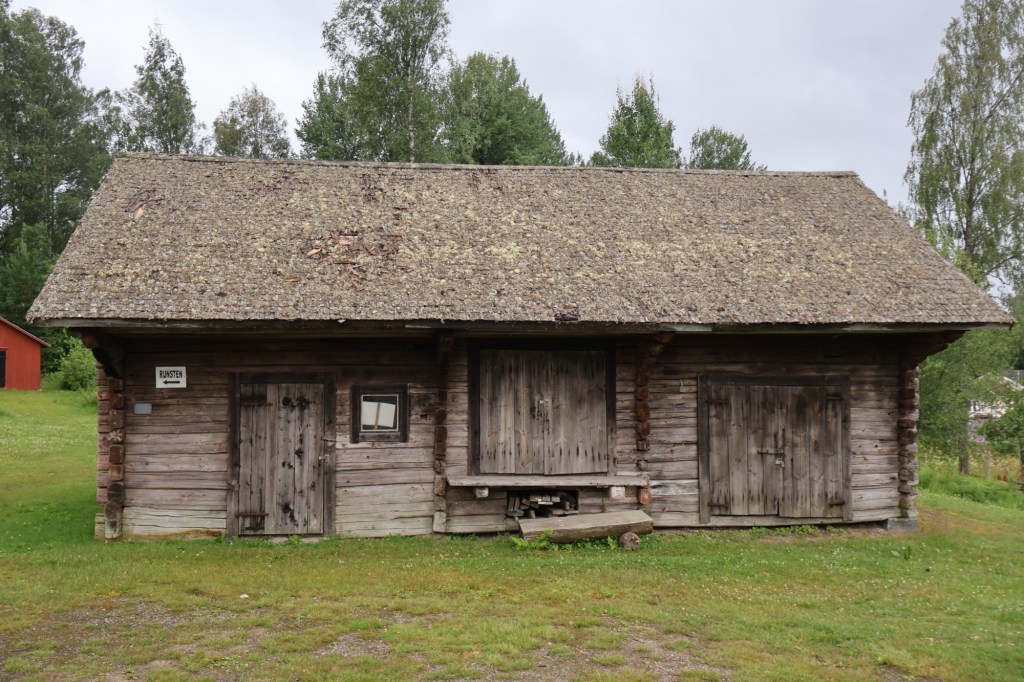
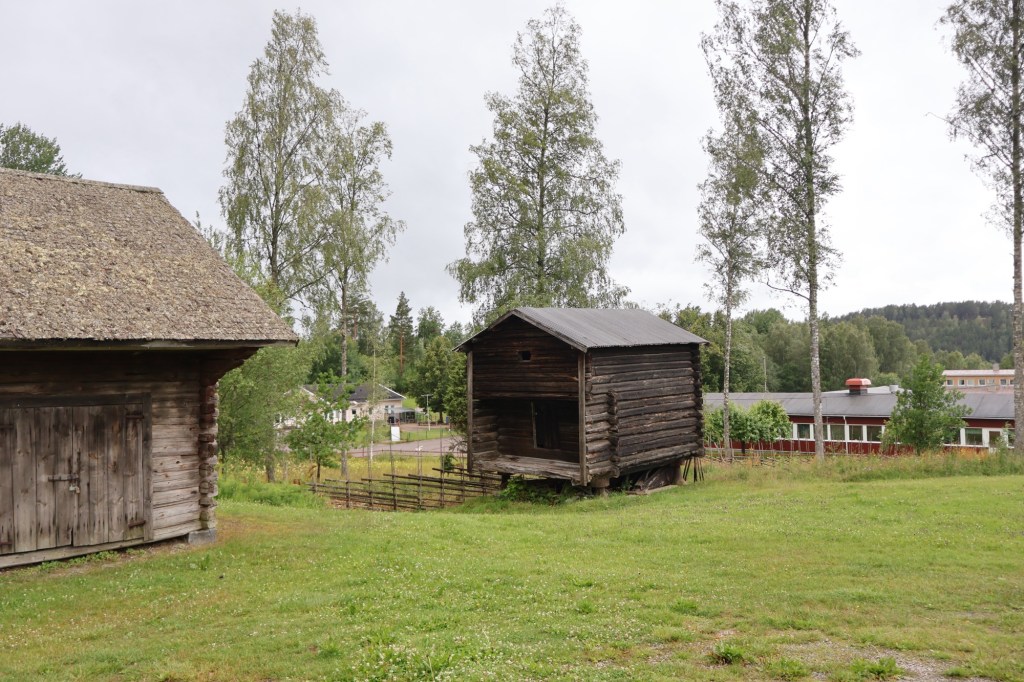
The stone is currently located at Gunnarskogs Hembyggdsgård, a open air museum in the western part of the Swedish province of Värmland which is quite close to the border with Norway. The stone is protected from the elements by a pavilion roof.
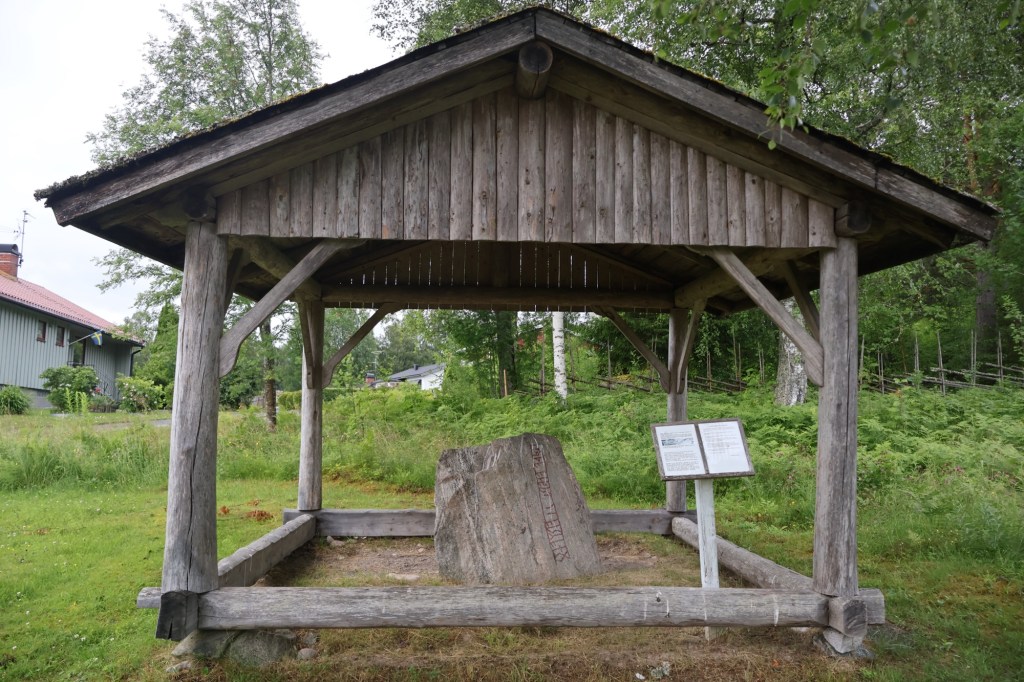
This is however not its original place. It was found about a kilometer away on a peninsula called Skramle udde in the lake Gunnern.
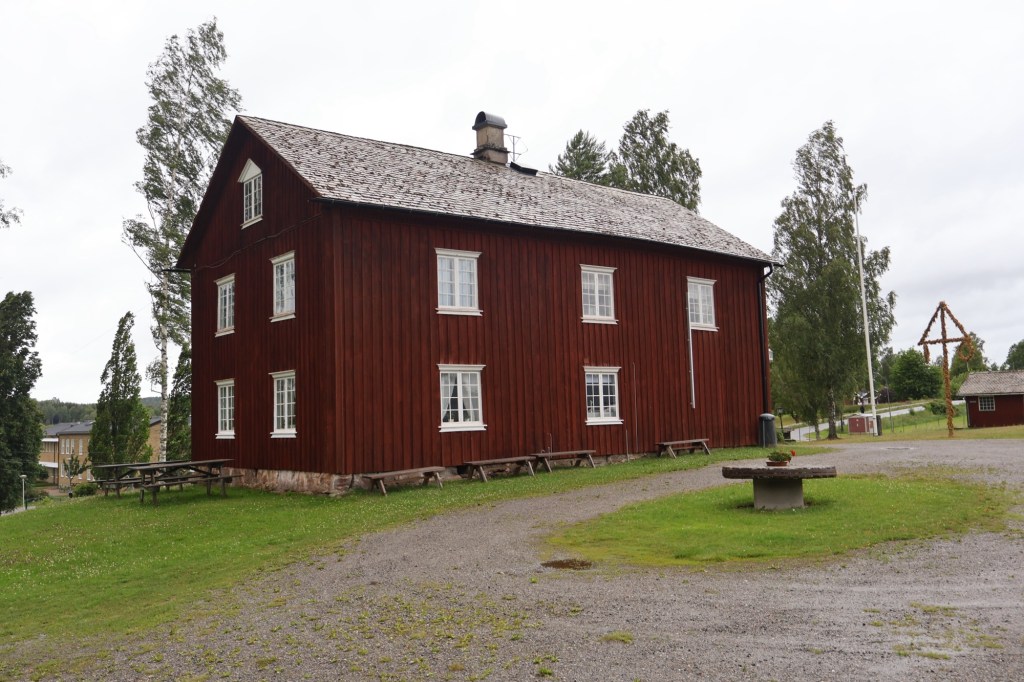
The circumstances of its finding is unusual to say the least. Most runestones are found as parts of churches, bridges, walls or are just left still standing. Others have been found while plowing a field or digging for construction.
But the Skramle Runestone was unusually enough found during an archaeological excavation of a farm that was abandoned during medieval times, most likely because of the plague that left many farms across Europe abandoned.
The farm at Skramle udde was known in oral tradition in Gunnarskog as the oldest farm in the area. During the spring of 1993 excavations begun and archaeologists found the remains of the farm along with weaving weights, spindle whorls and arrowheads.
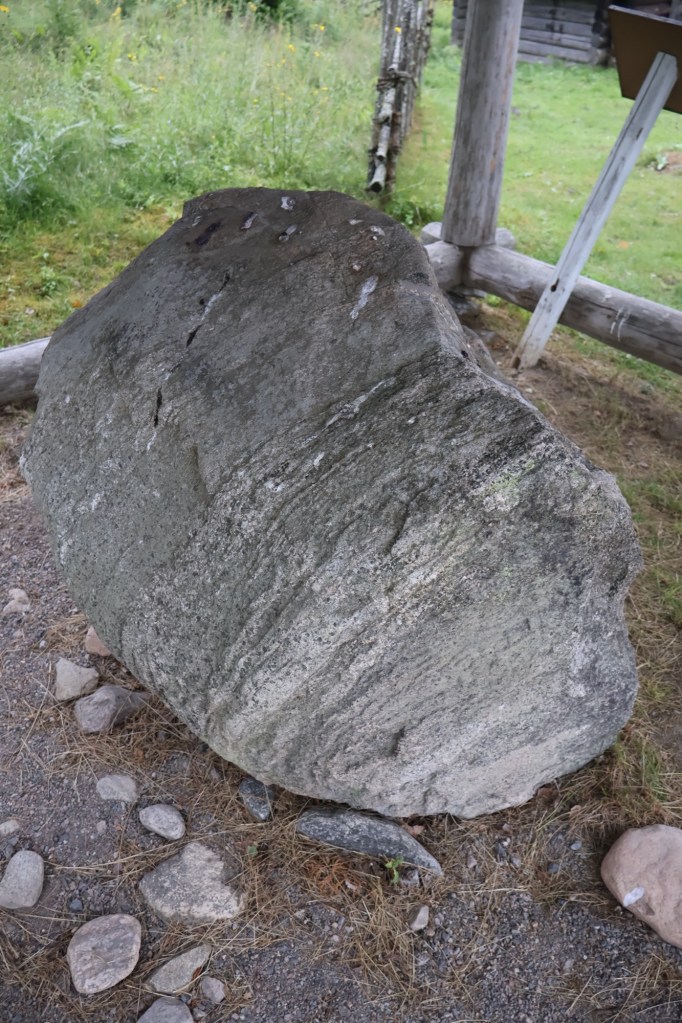
In the foundation of one of the buildings the archaeologists found the runestone. The building was constructed in the 13th century and in use into the 14th century.
The archeologists found a house foundation at the site from a building that was in use from 400-600CE. The archeological excavation was fully completed in 1998.
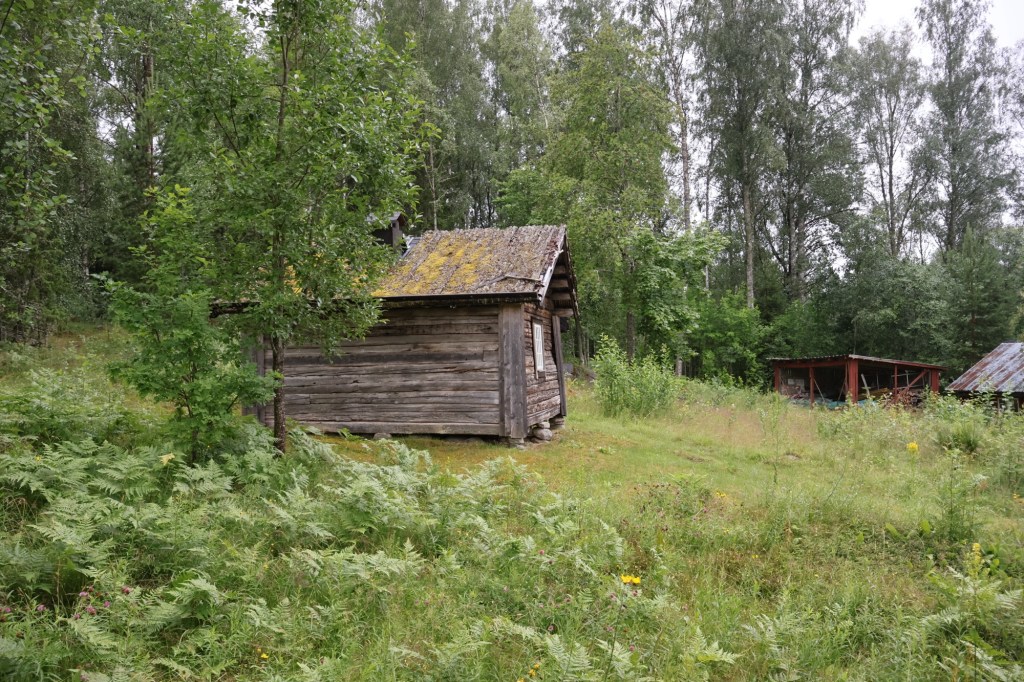
I visited the site where the stone was found, but the entire site is covered by a thicket of bushes and small trees.
The runic inscription was at the finding extremely hard to read and interpret. Partly because Elder Futhark inscriptions are harder to read and understand, because we do not know as much about the language as with Old Norse.
It was also hard to interpret because the inscription is very withered. The stone is made up of different types of minerals that have withered at different rates. As a result of this a pit can be found in the inscription that was at first interpreted as a ”skålgrop” a fairymill. This is however unlikely.
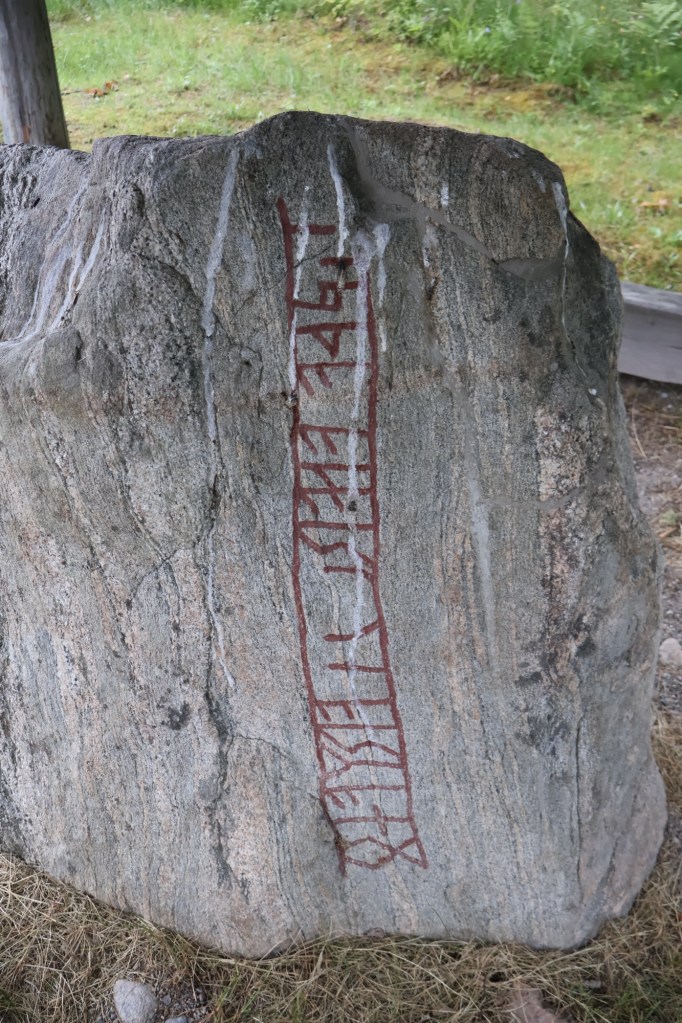
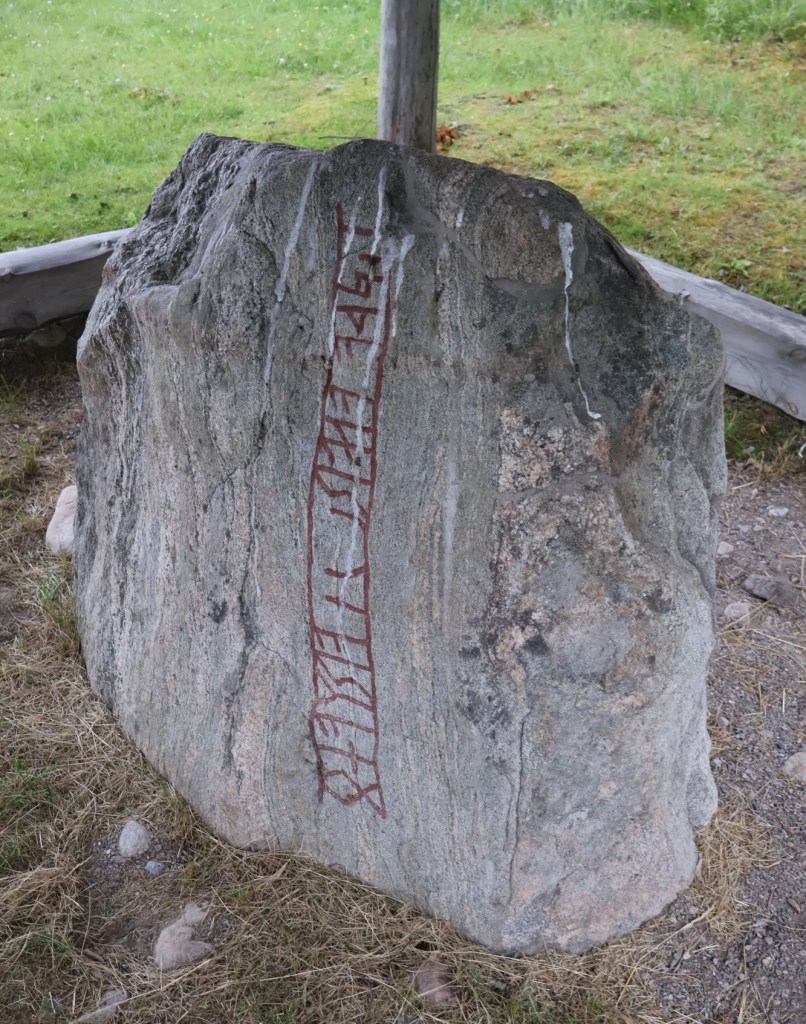
The stone has been scanned using laser to make the reading easier. Parts of the inscription isn’t fully interpreted, but parts can be read:
—þaah=ar(f)arka(i)o
Othawin carved, I know danger
So we know that the person that carved the runes was named Othawin or possibly Otha. The other part reads f)arka(i)o which might be read as the modern Swedish word fara (danger).
The inscription has most likely some kind of magical interpretation that we will never know.
What I find is especially interesting about this stone is that it is possibly made during the crisis of the 6th century. In 536CE several volcanic eruptions took place across the globe spewing particles of ash into the atmosphere. This blocked out a lot of the rays of the sun resulting in a rapid cooling of the earth. In Scandinavia that is already a cold place this resulted in a summer that never came with a winter that didn’t end. This event is believed by some to be a collective memory that resulted in the Norse myth of the Fimbulvetr, the mighty winter. It is also possible that the Justinian plague that killed of large parts of the population in the Roman Empire also spread in Scandinavia during this time.
These events changed the structure of society in Scandinavia and also the focus of the religion shifted. Is Othawin telling us that he knows the danger of these times as a survivor on his own farm? We will of course never know, but the cryptic wording on the stone really awakens the imagination of the reader.
One curious fact is that Räxed, a place very close to Skramle is the birthplace of Bror Rexed in 1914. He was the father of “Du-reformen” a reform of the Swedish language that dropped all the use of titles in common speech.


Lämna en kommentar