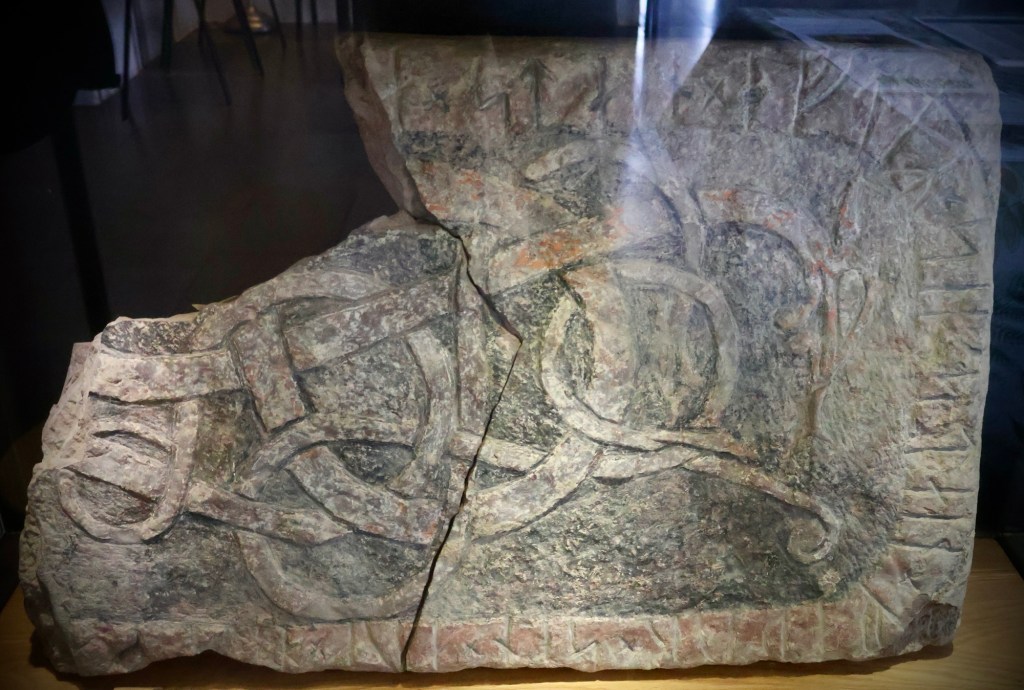
During my last visit to the island of Öland along Swedish east coast in the Baltic Sea I decided to visit the collection of runestones and fragments housed in Köping Church.
Köpingsvik during the Viking Age was one of the most important marketplaces in this part of the Baltic Sea. This is obvious from the many and rich archeological finds made here. One of my favorites are the so called Klinta Staff, a völvas distaff found in a particularly rich female grave that most likely belonged to a völva that practiced Seidr. The staff is on display at Historiska Museet in Stockholm.
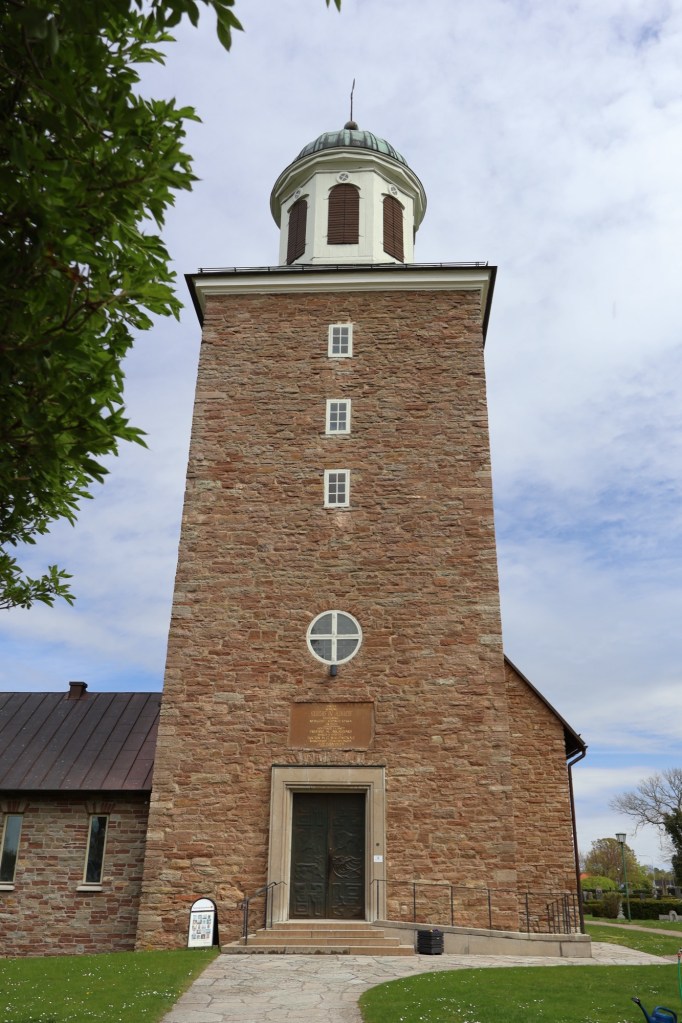
When I arrived at Köping Church i was at first greatly disappointed because the church was closed. So I went for a walk around the church. The building that can be seen today isn’t very old, it is built 1954-55 in a style that looks older than it is. But the first church here was probably erected using wood around year 1000. It was replaced in the 12th century by a stone church. This church was then added on during the 13th and 14th centuries. In 1805 the old church was demolished and replaced with a new one. Most of this church was once more demolished and the only thing that remains is the tower that became part of the new church built in the 1950s.

Just when I was about to give up and leave a car pulled up with two caretakers from Svenska kyrkan, the Swedish Church. I asked them if the church was closed and they confirmed this. But to my great luck they offered to let me in for a quick look at the runestones that are housed in the church’s weapons house or porch. I was in a great hurry and this is the reason for the bad quality of the photos, along with bad lighting and glass casings.
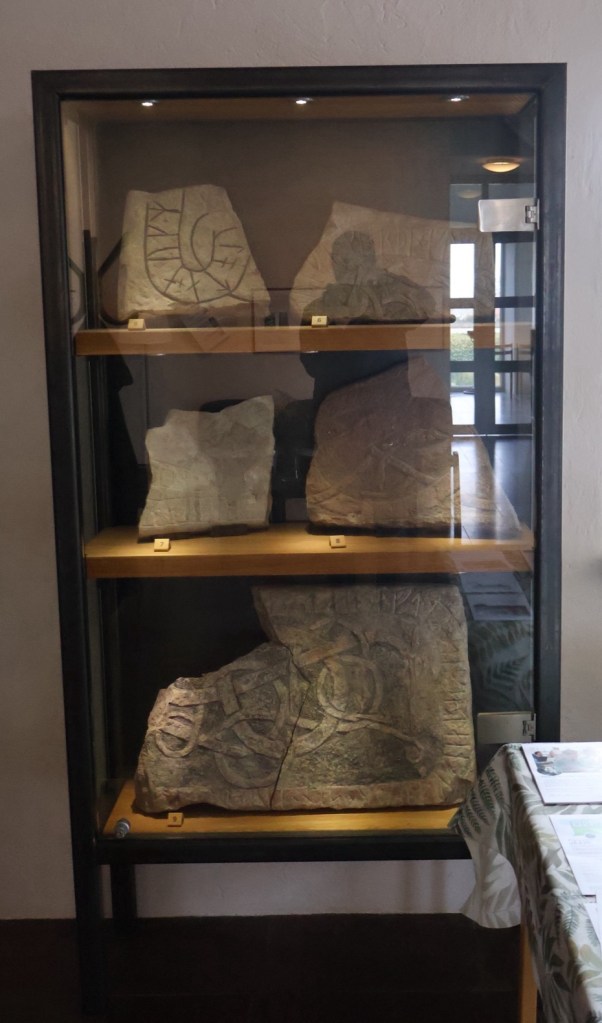
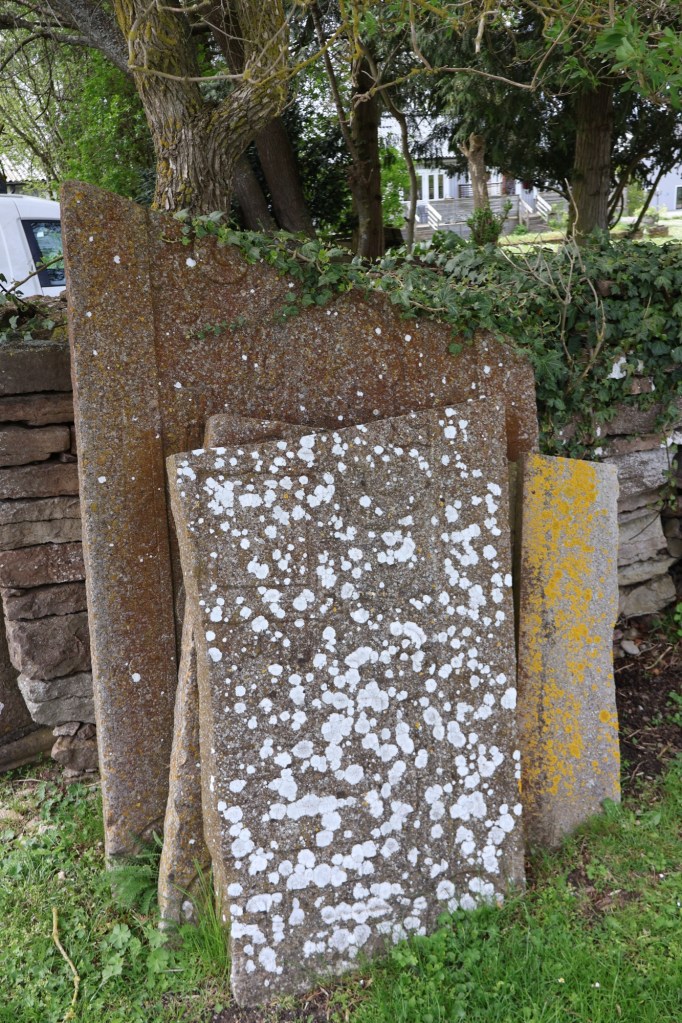
This church has the largest concentration of runestones and fragments there of in Sweden and most likely the world. 74 known rocks have been found here even if most of them are fragments. There are however a few that are complete or nearly complete. It is likely that more stones are here but that has not yet been found.
One spectacular thing here is that many of the stones retain their original paint. Not just the runes, but also the decoration. Some makers has filled in some words with alternate colors to make it easier to distinguish one word from another. The reason why the paint remains to this day is because of how they were stored.

Most of the stones were likely carved in the later part of the 11th. When the stone church was erected in the 12th century, the builders smashed most of the stones and used them as building materials in the construction of the stone church.
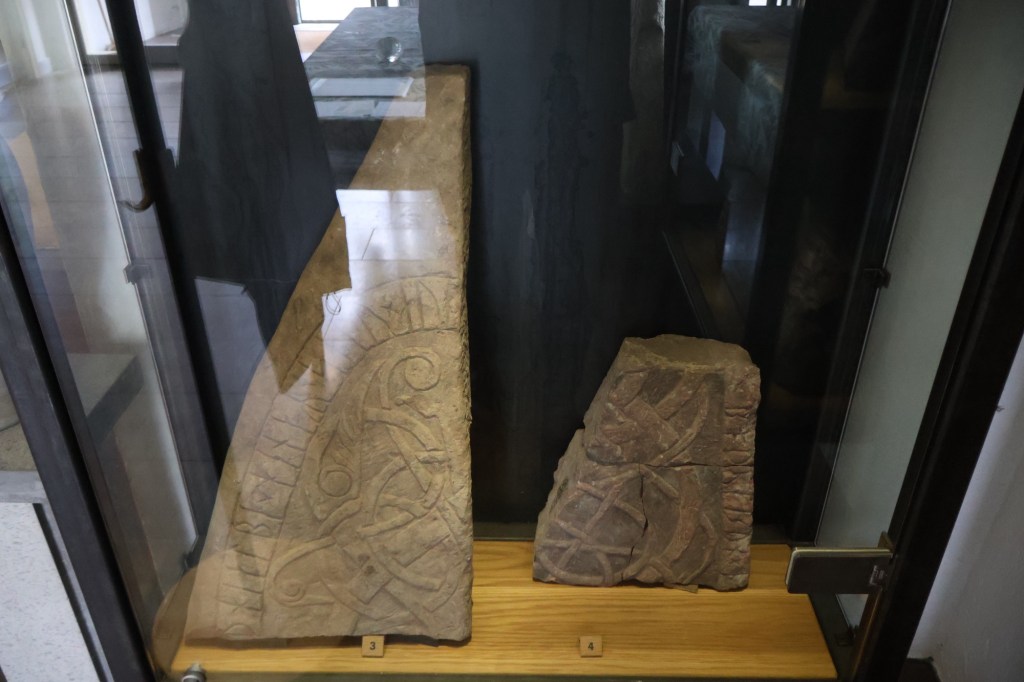
Why they were smashed is hard to say. It’s not because they were pagan, they are all most likely Christian and some even has prayers on them. It is possible that the church owned the stones and wanted a break with the old. By smashing them they told the people that from now on the church was the only way to communicate with God.
It is also possible that it was done with the knowing and support of the families that originally erected the stones and that they saw it as a honor to help support the construction by including their relatives in the structure itself. I tend to lean towards the later theory. Maybe it was also a rest of the pagan ancestor veneration to want their ancestors to live on in the building?

It is lucky for us today that the stones were treated in this way as this is the reason for so many of them having the paint still on them. It is only the surfaces that had mortar on them that has the paint remaining. Some stones have had new paint applied during the 20th century. Which ones are obvious to the naked eye.

Most of the stones are created from the local chalk stone. Köpingsvik was during the Viking Age a large producer of stone products. Archaeologists have found a primitive type of mill that was used to grind chalk slabs smooth and flat. This type of mill was still in use here on Öland in modern times. The runestones were most likely ground flat in this way prior to being carved removing the deeper laying parts leaving the protruding parts smooth and flat.
On display in the weapons house are a portion of the stones that has been found here. “Only” 24 fragments and one complete stone. The rest are stored in the church tower and a few are held at Historiska Museet in Stockholm. The ones in Stockholm are the ones whit the best preservation of the paint. Below I will percent the ones on display.
SHM inv. nr 25339:15

This fragment has paint in very good preservation. The bottom is black, the dragons red and the text has been alternating between red and black. The inscription reads:
…-in × auk × þiula… …at × faþu… …
…and Tjud- … after (his) father…
SHM inv. nr 25339:16
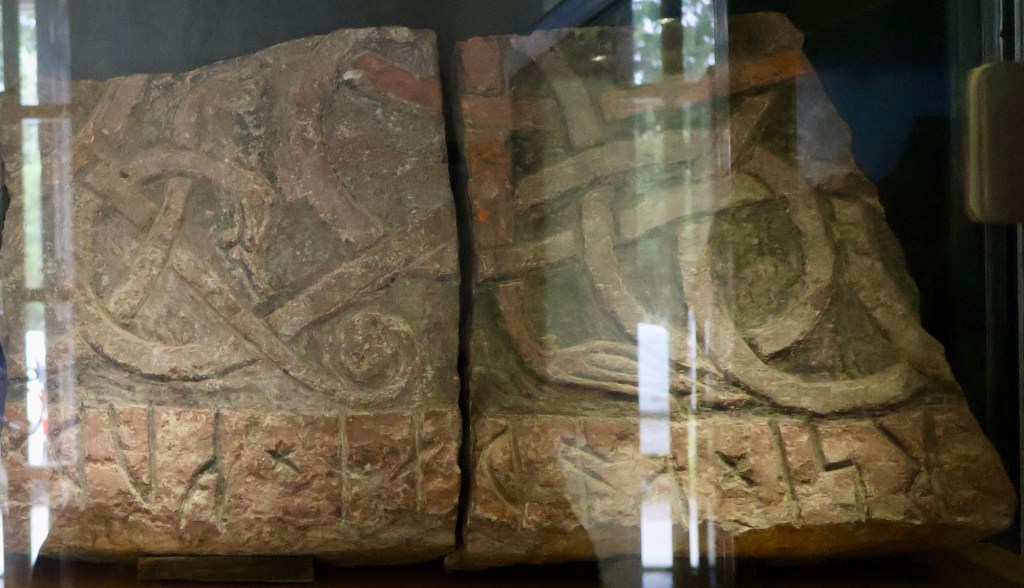
The dragons on this two stone fragments are particularly skillfully done. The two fragments fit perfectly together. The bottom has been black with red dragons and the rune sling was also red. The words are alternating between black and white. The inscription reads:
… r si × koþan × kuþ × …
… His good father (or brother). God …
Nilsson nr 163

This fragment was found while digging a flower border 10 meters west of the church. It has a nicely preserved animal decoration but no traces of paint. The inscription reads:
…þ hialbi × henaR × salu × auk…
…God help her soul and…
SHM inv. nr 15535:2, SHM inv. nr 15535:5, SBFJ 14, 29; JO 27

This stone is consists of 3 fragments that fit perfectly together. The bottom and the runes has black paint preserved on them and ornamentation has been red. The inscription reads:
…× roþkerþa × a…
…Rodgärda and (?)…
Rodgärda is a female name and it is like she and someone else that commissioned the runestone.
SHM inv. nr 25339:11
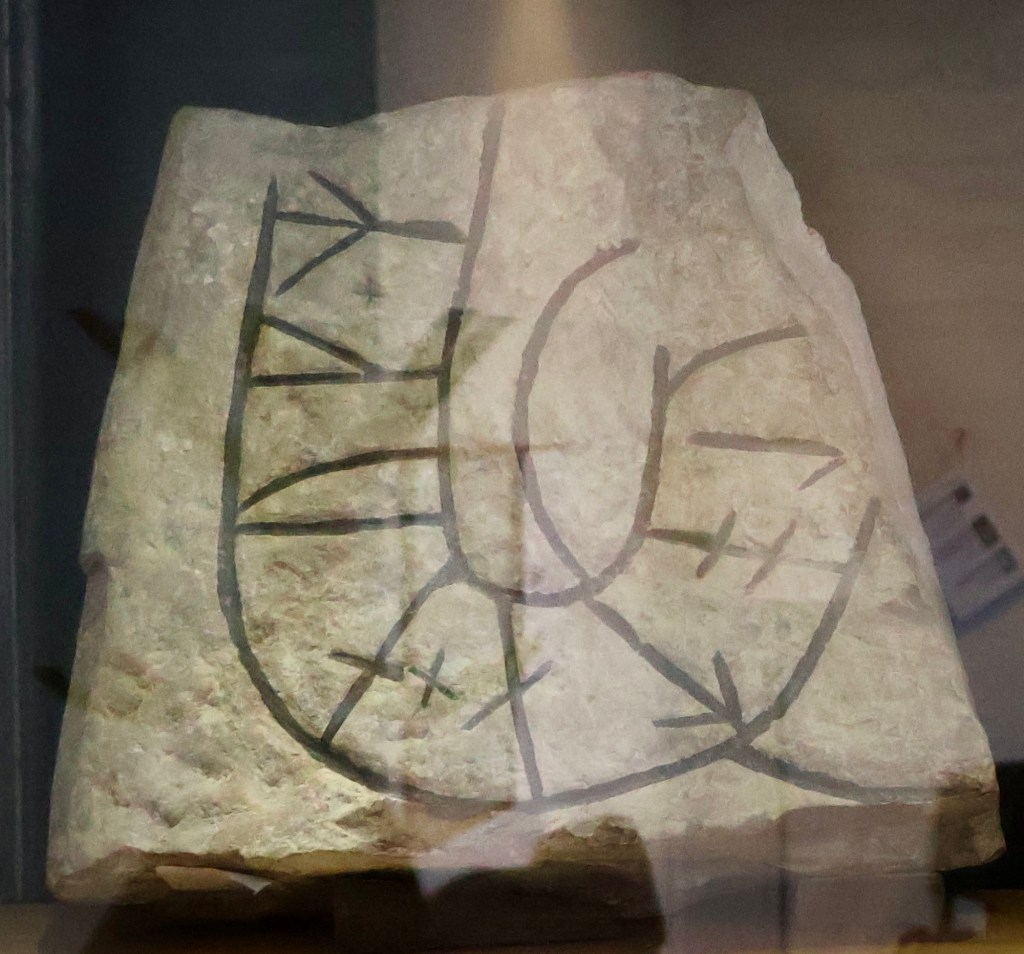
A fragment of a more traditional runestone with inscriptions on two sides. The paint on this fragment is modern. The inscription reads:
-iota × auk + m… …koþ…
Dota(?) and … God(?) …
The inscription on this fragment is hard to interpret, but it is likely a female named Dota that is a name that occurs in other sources from medieval Sweden.
SHM inv. nr 25339:17
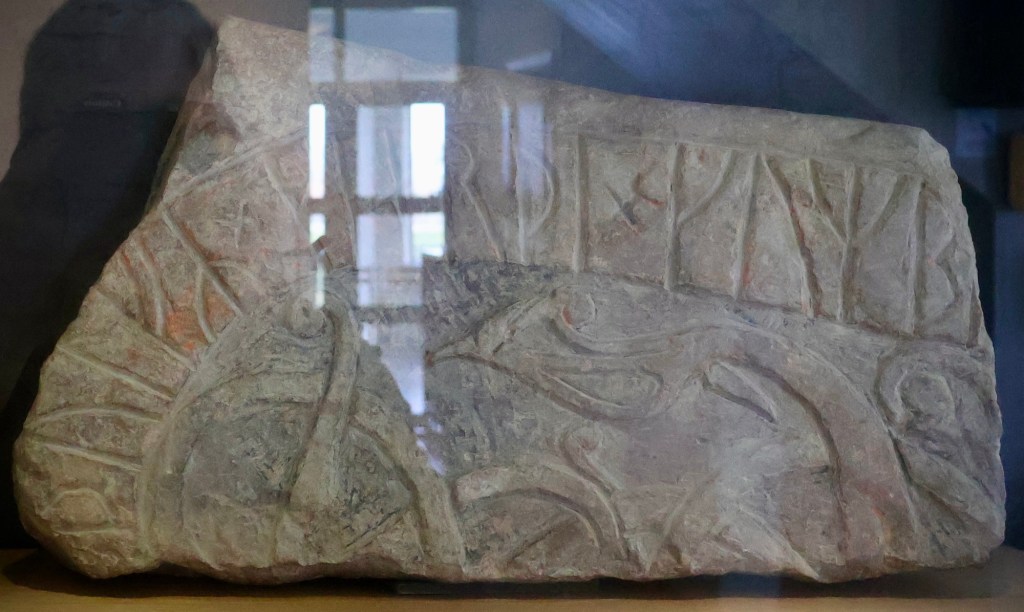
This fragment has its original paint with black bottom and black runes. The ornamentation have been red. This stone is of exceptional quality in the workmanship. The inscription reads:
…þulR × kiarþi × kumb-…
-Ulv made the monument…
SHM inv. nr 25339:3
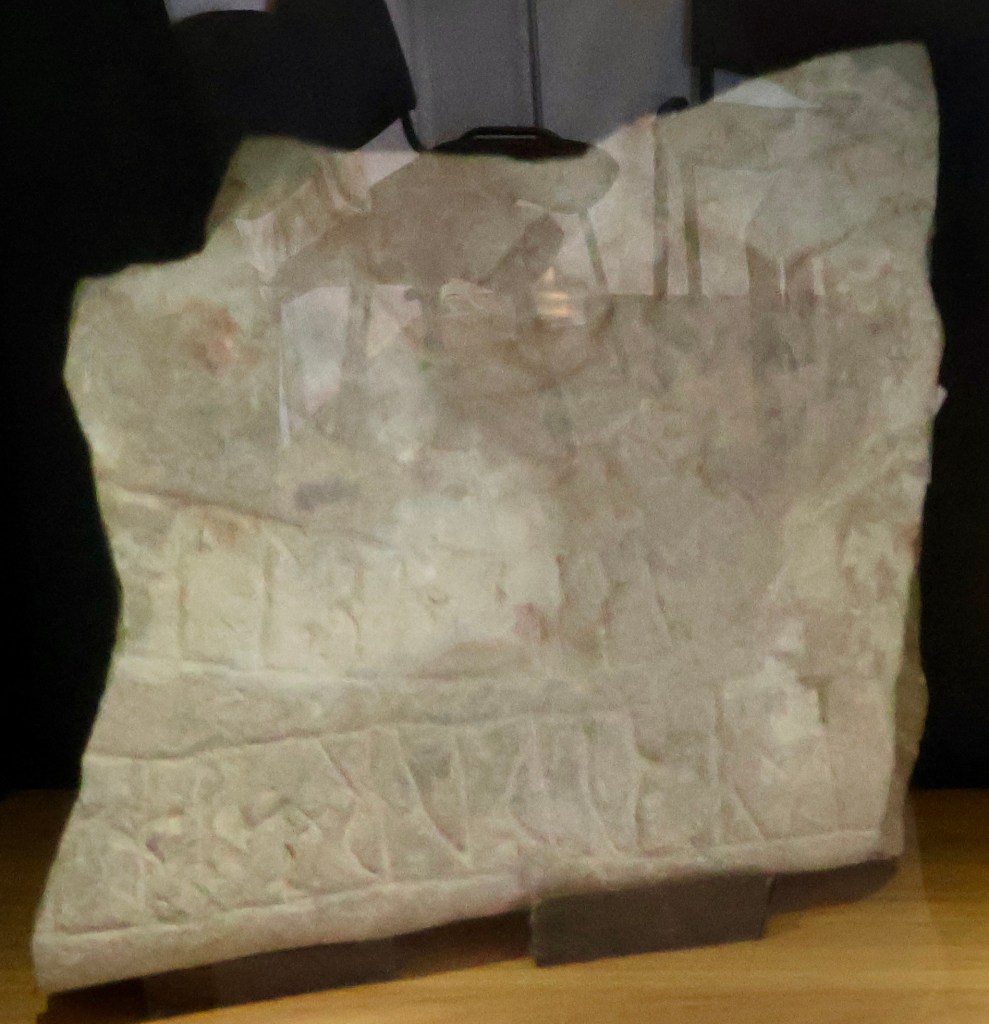
A fragment of grayish chalk. The inscription reads:
…urk… …-k × muþur × sina … …-albi × sial
…His mother. … (God) help her soul.
SHM inv. nr 15535:11

The front of this fragment has a snakes head and the side has a runic inscription. The inscription reads:
…-rimar : litu : r … …sin ×
… Grimar(?) let raise …his ×
SHM inv. nr 25339:29
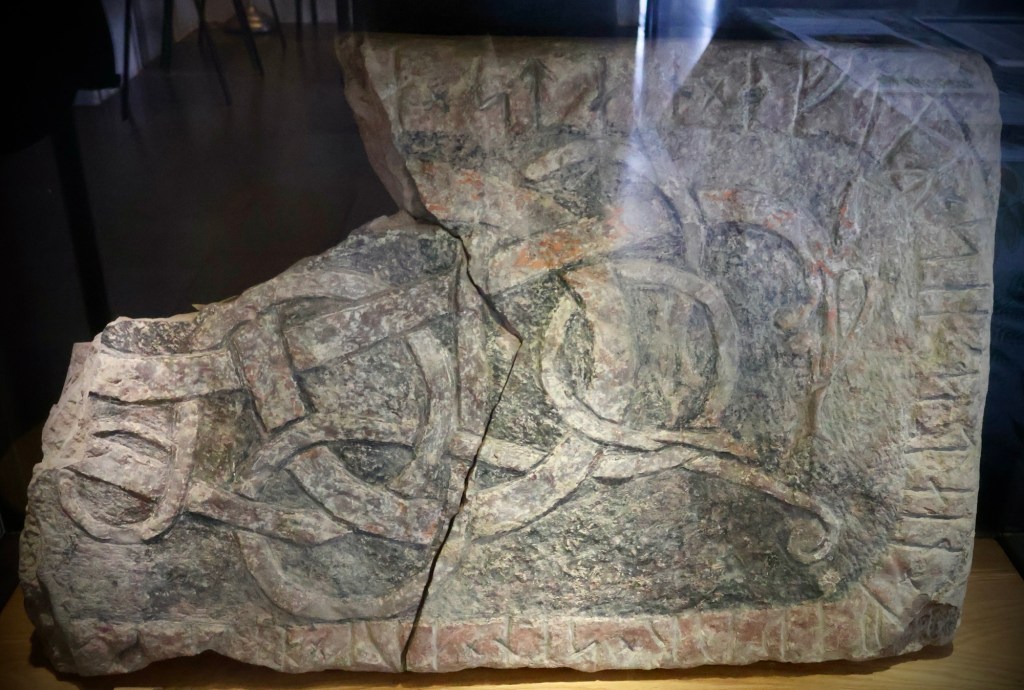
This beautiful runestone was originally painted with red color on the dragon and violet on the smaller one with a red eye. The runes were black and the rune stripe was violet. The inscription reads:
…a × stain × eftiR × Sigstain × faþur × sin × auk × h…-ka …
…the stone after Sigsten, his father, and Helga (or Helge)
It’s most likely Helga as it is likely the wife of Sigsten.
SHM inv. nr 25339:6
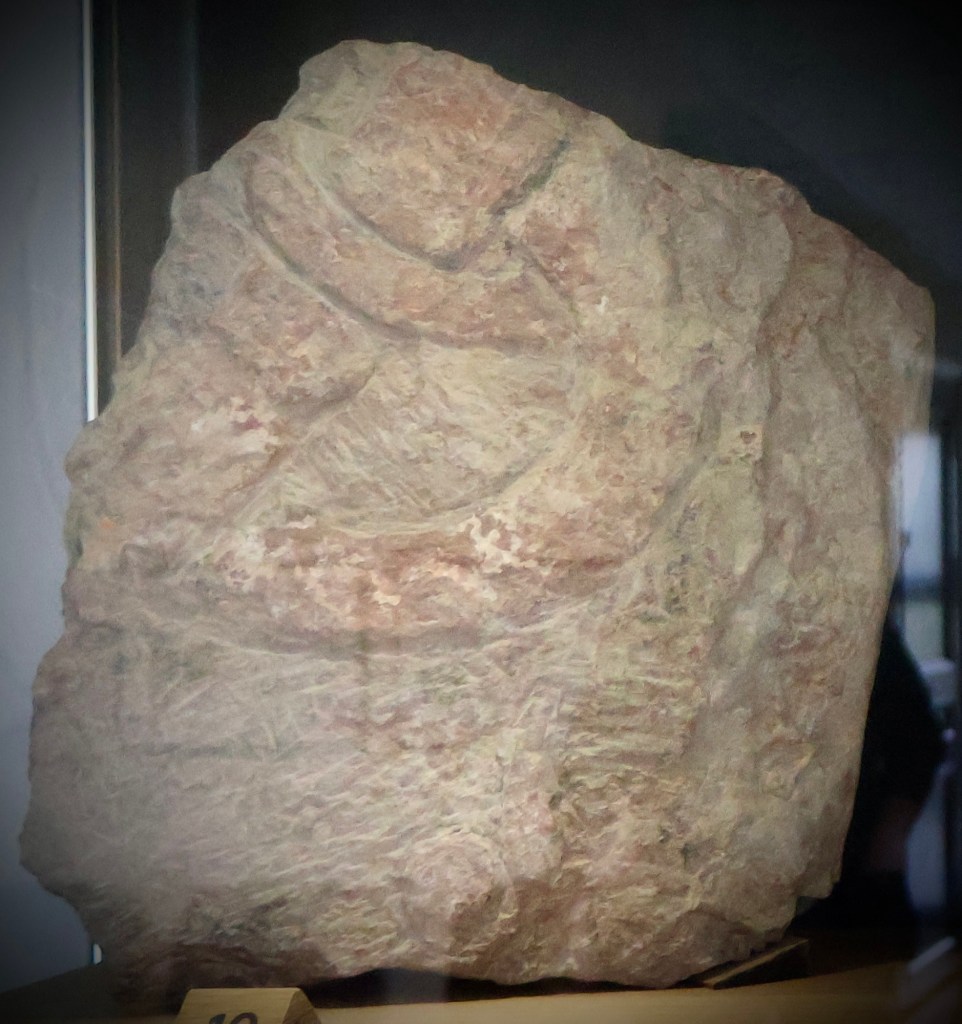
This fragment has no inscription but has painted. The bottom was black, the decor was red with black contour. There is evidence that it was originally painted in a different way using iron oxide.
SHM inv. nr 17565:1

This fragment has paint residue in the colors red and black. The inscription reads:
…R × suain × bont…
…After Sven, (her) husband…
SHM inv. nr 25339:7
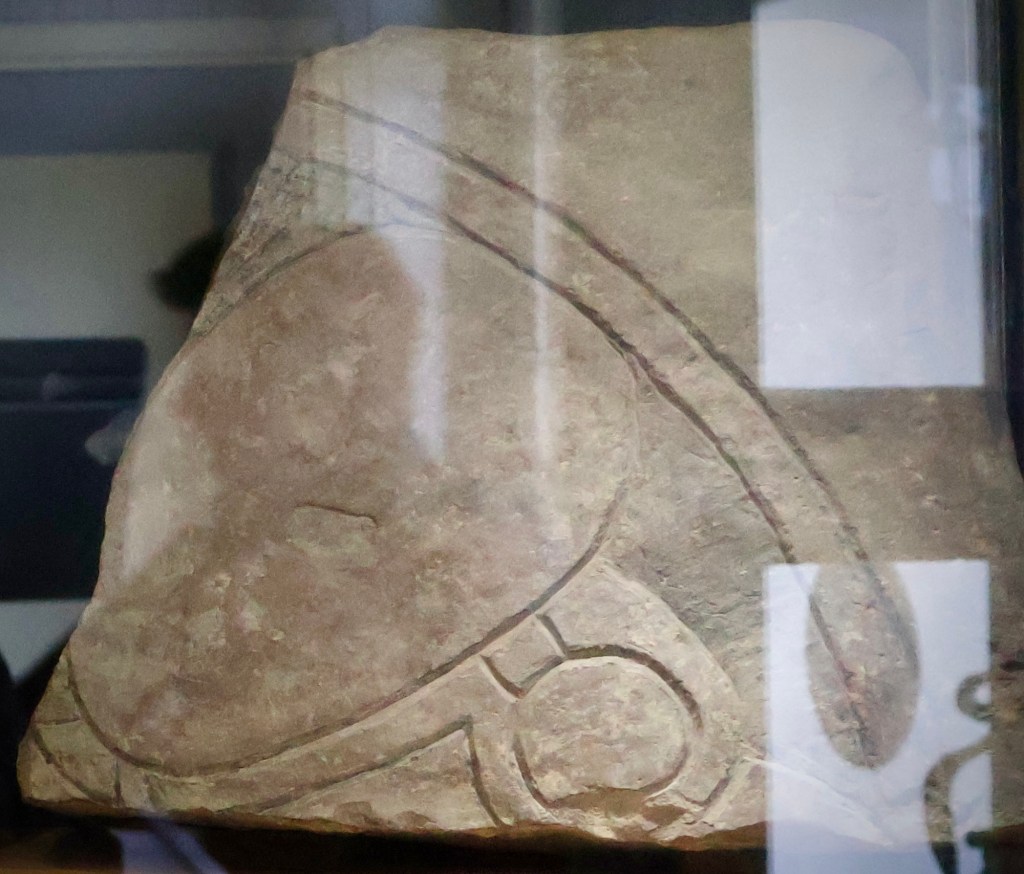
This fragment has no runes. It most likely depicts a cross. It has traces of oxide red and dark red paint, as well as black.
SHM inv. nr 15535:12
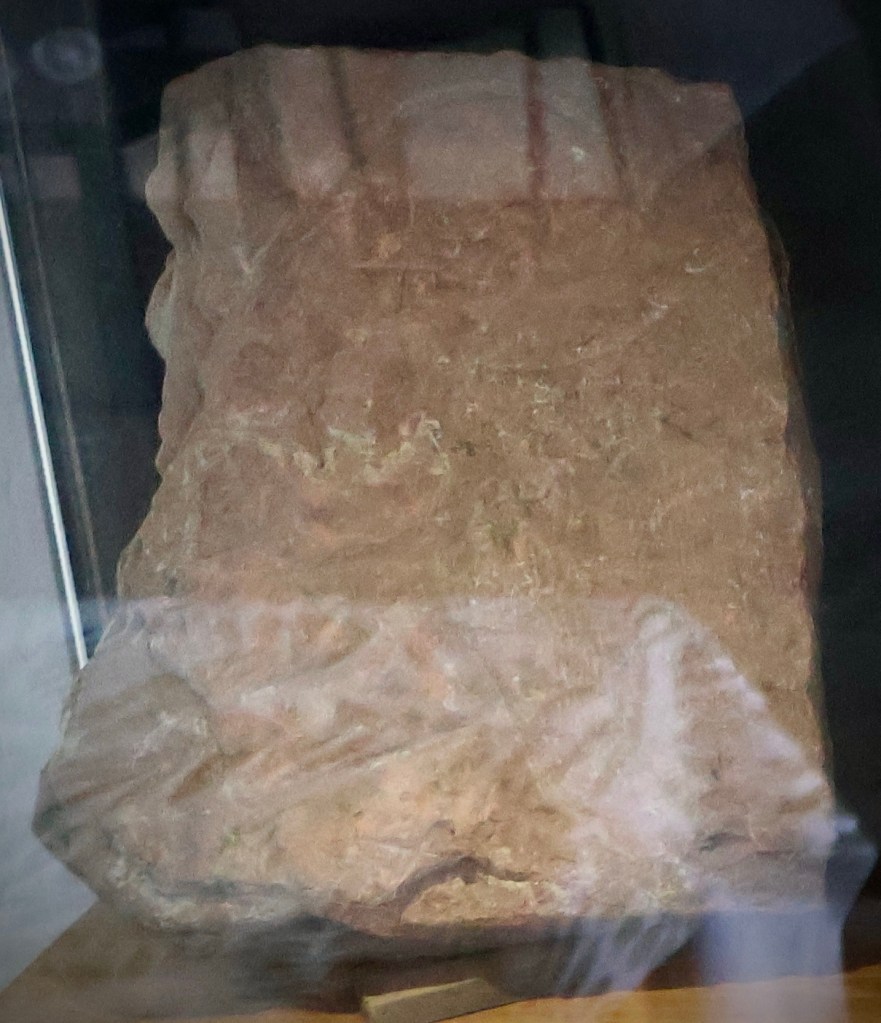
This fragment has just a female name written on it with runes. The inscription reads:
× asi ×…
Åse …
SHM inv. nr 25339:9
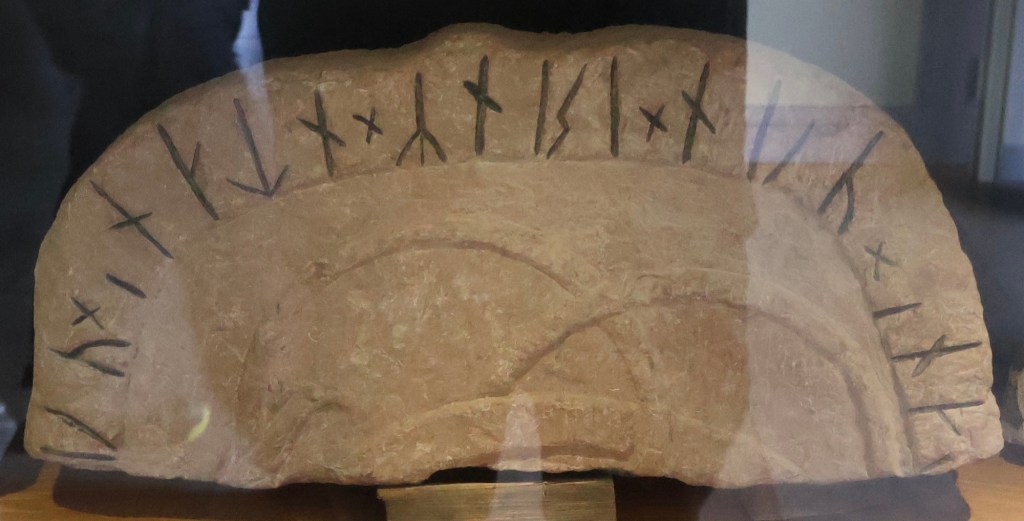
This fragment is the top of a particularly well made runestone. The inscription reads:
…uk × santa × mari × auk × sant…
…and Saint Mary and Saint…
It is possible that the second lost name is of the saint to which the church was dedicated.
SHM inv. nr 15535:6
This fragment has a inscription that reads:
…an , …
The meaning is not possible to interpret.
SHM inv. nr 17565:3

This fragment has no special decorations and no paint has been found. The inscription reads:
…it × raisa × stai-… … …oanta × sin × kuþ…
…let raise the stone … her husband. God…
SHM inv. nr 25339:27

This fragment is the bottom right part of a runestone. It has paint residue. The runes were painted black, the ornamentation and the rune stripe was red with black outlines. The inscription reads:
…ftiR × haralt × faþur ×…
…after Harald, (his) father.
Nr 19

This fragment isn’t registered for some reason. It has paint residue on it. The ornamentation and the rune stripe is red with black contours. Four runes are readable. The inscription reads:
…hean-…
….Her-(s)…
SHM inv. nr 25339:14

This fragment has some paint preserved, black and red. The runes are damaged and only two are readable.
SHM inv. nr 15535:13
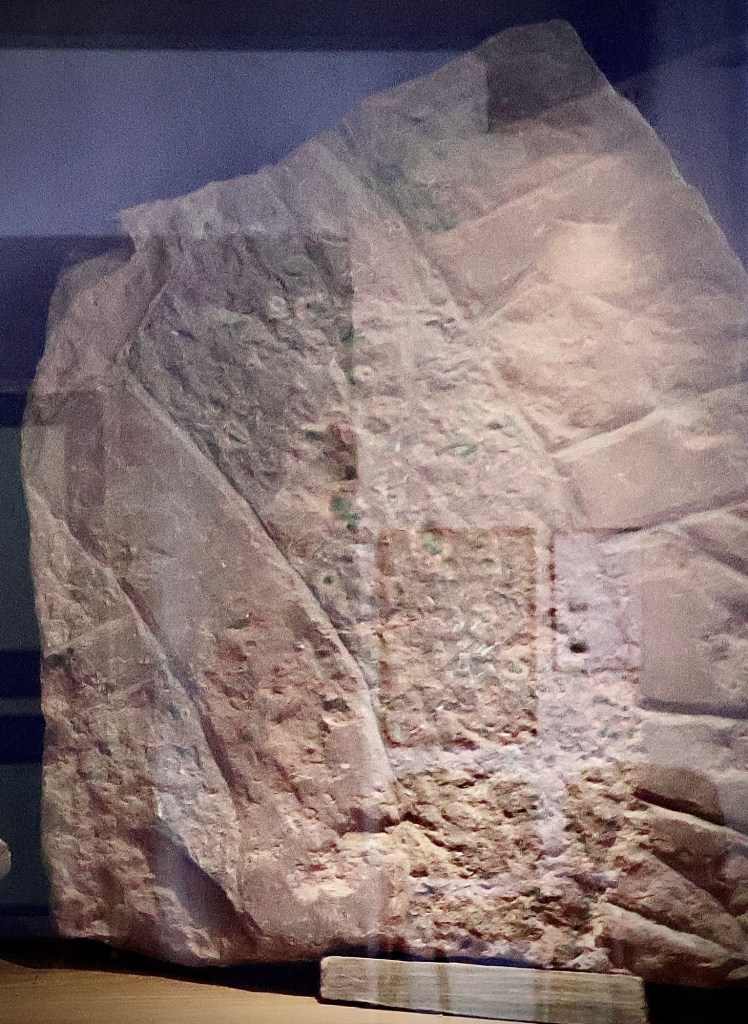
This fragment was found in a field just outside the graveyard. It has tiny residue of black paint in the runes. Just tiny soot particles. The inscription reads:
…ir × eftiR …
…After…
SHM inv. nr 25339:C
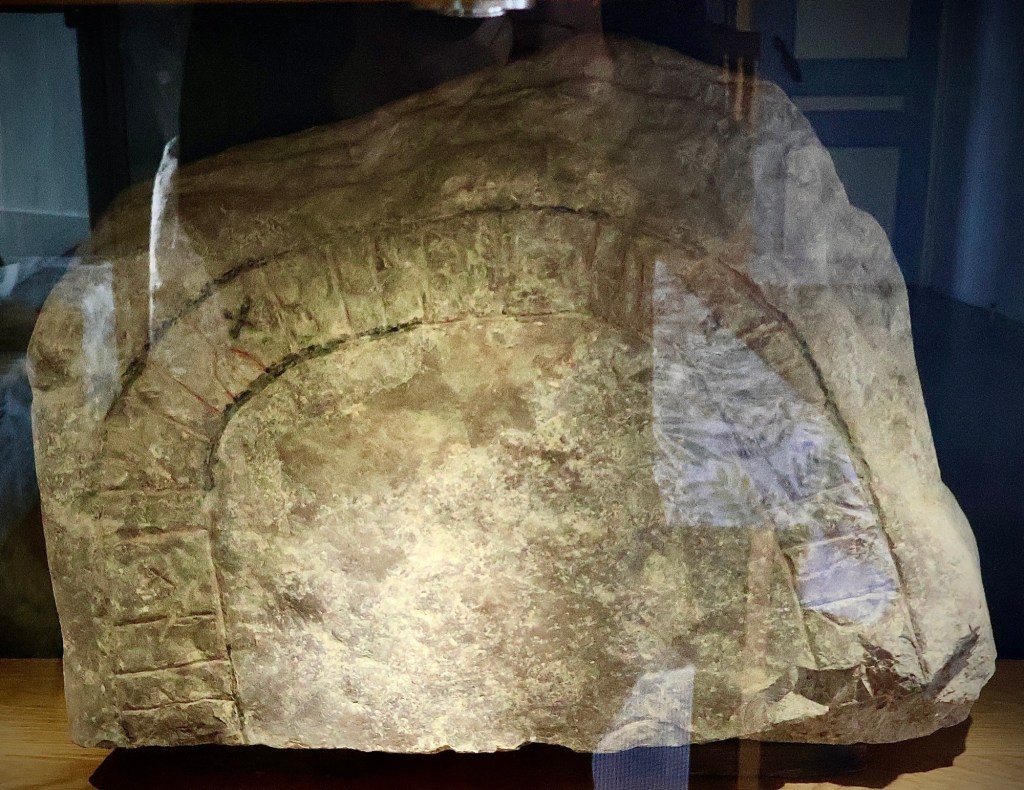
This runestone had red painted runes. The inscription reads:
…rain × eftiR × biarn × sun × sin × kuþ …
…stone after Björn, his son. God …
Öl 52

These two fragments fit perfectly together. The runes have traces of white paint. The inscription reads:
… × kumbl × aftiR … …-str auk × s…-ta × …
…monument after … Christ and Saint …
SHM inv. nr 25339:24
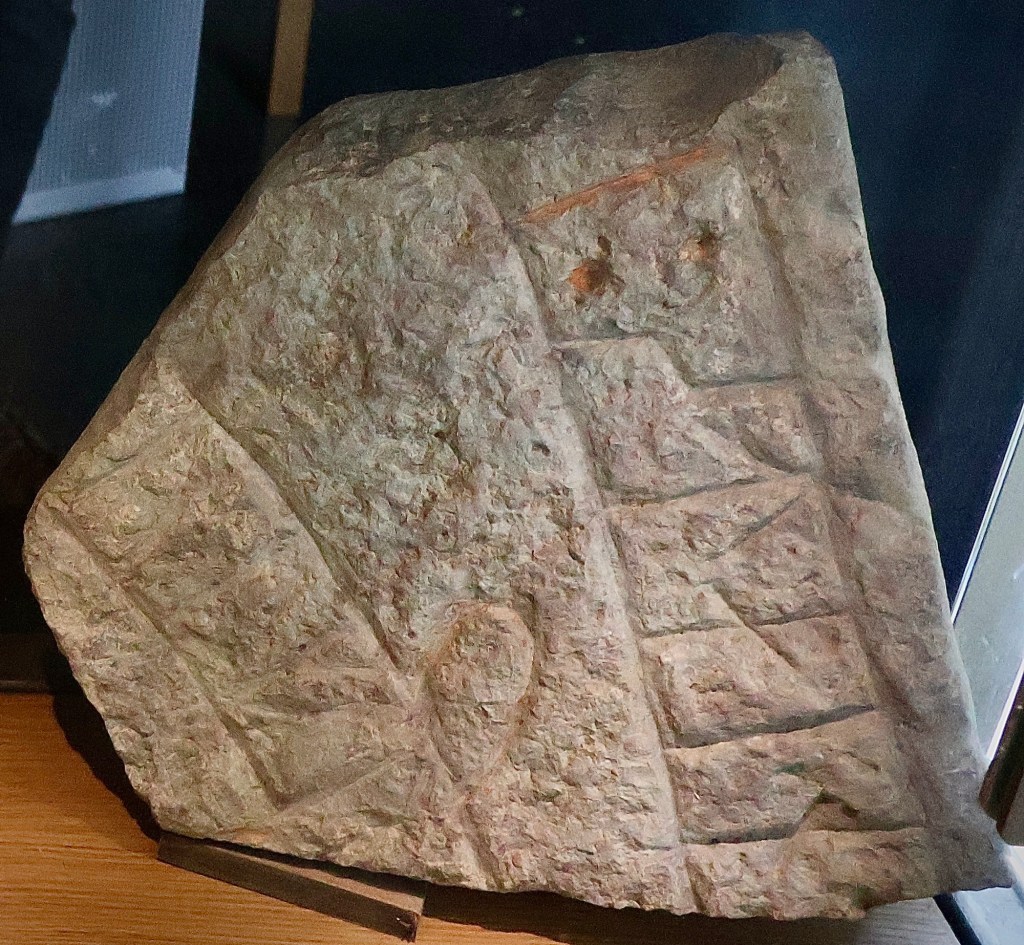
The runes on this fragment has been red, but it seems that it has just been every other word. The outline of the decoration has also been red. The inscription reads:
…UlfR -… … …i : stain : …
… Ulv … raised the stone…
Öl 47

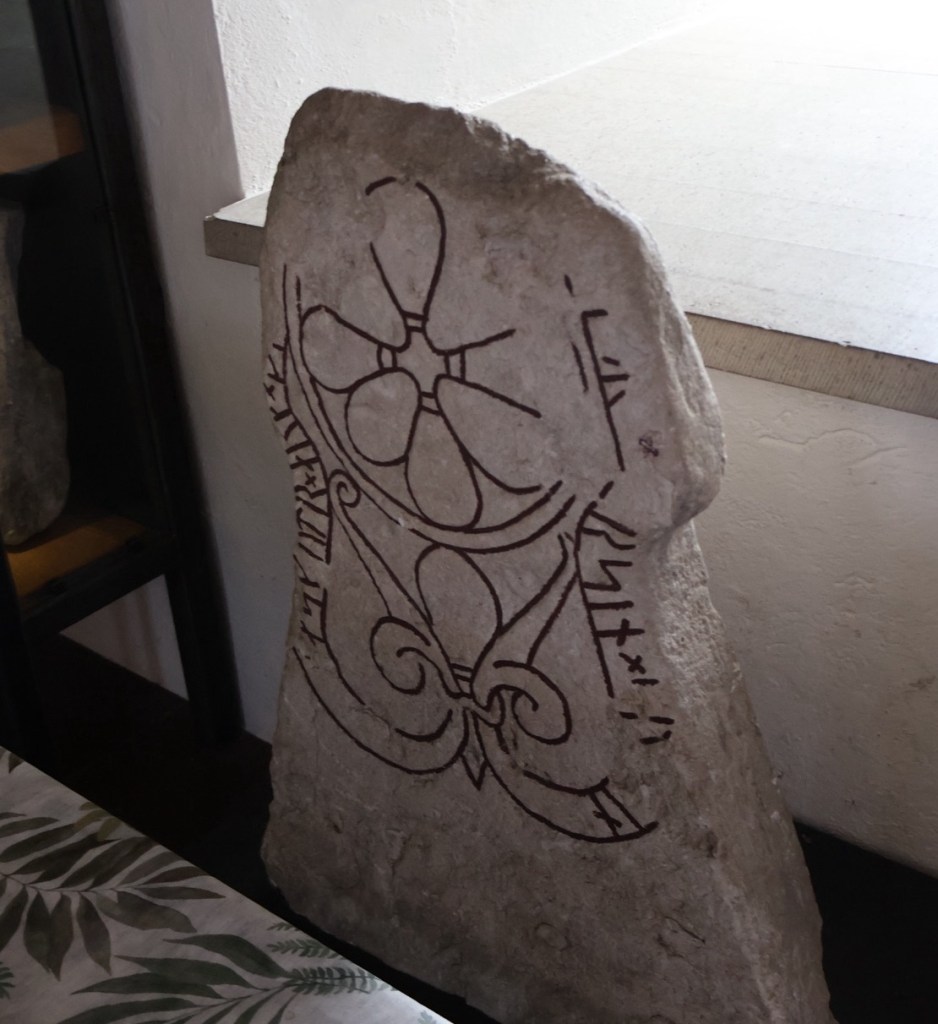
This is a complete runestone. It’s different from the others and are made using sandstone in the Gotlandic picture stone style. It has carvings on both sides. The stone is of a type that occurs on the island of Gotland but the style of the ornamentation is more in line with the tradition on Öland. So it is likely a Viking Age import that has been finished in Köpingsvik. The inscription reads:
Askutr × auk × þ-… … …-R × …r sin × au…in
Åsgöt and … after his father(?) Östen.

 Fornminnen
Lämna ett svar till Tingsflisan – Fornminnen Avbryt svar