I had been driving for many hours through northern Sweden to reach Saivaara in the province of Norrbotten, not far from the border with Finland, about halfway between Sangis and Övertorneå.
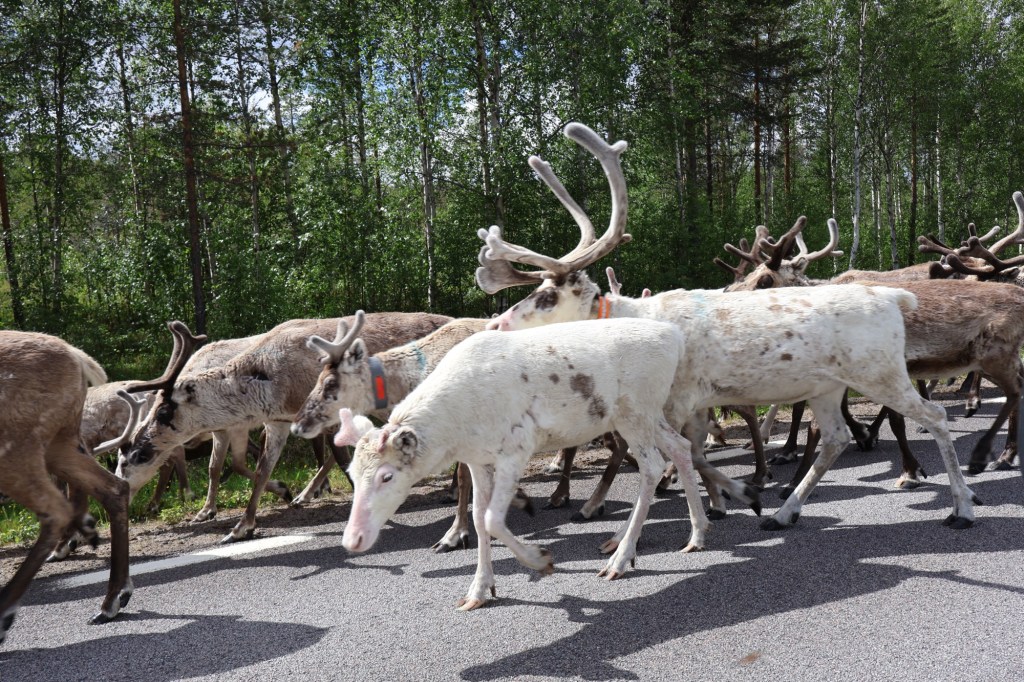
I arrived quite late in the evening because of the long drive. Which wasn’t a problem because of the midsummer sun at this very much northern location. The only problem with visiting in the evening was the extreme amounts of bloodsucking mosquitoes.

Luckily enough I was well prepared for them with a net that covered my entire head and some effective mosquito repellent which I highly recommend for any travelers in northern Scandinavia.
This region is also known as Torne valley or Meänmaa which means “Our Land” in the local language Meänkieli spoken by the Tornedal Finn or Kven as some of them like to be called.
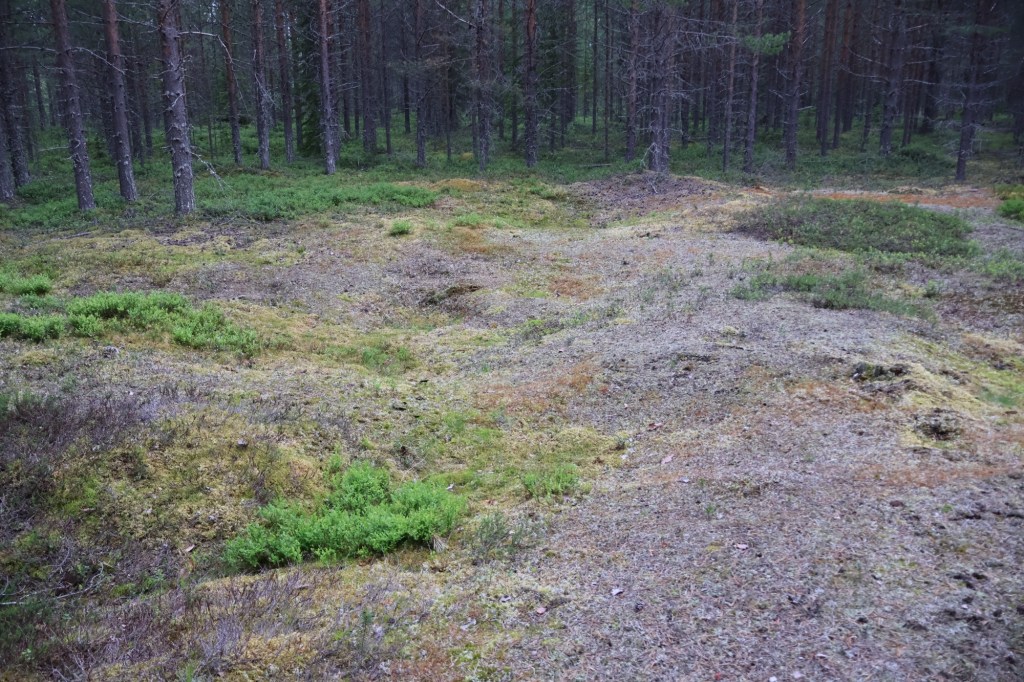
Saivaara as it is called are what remains of a Stone Age settlement dating to between 3500 and 2900 BCE.

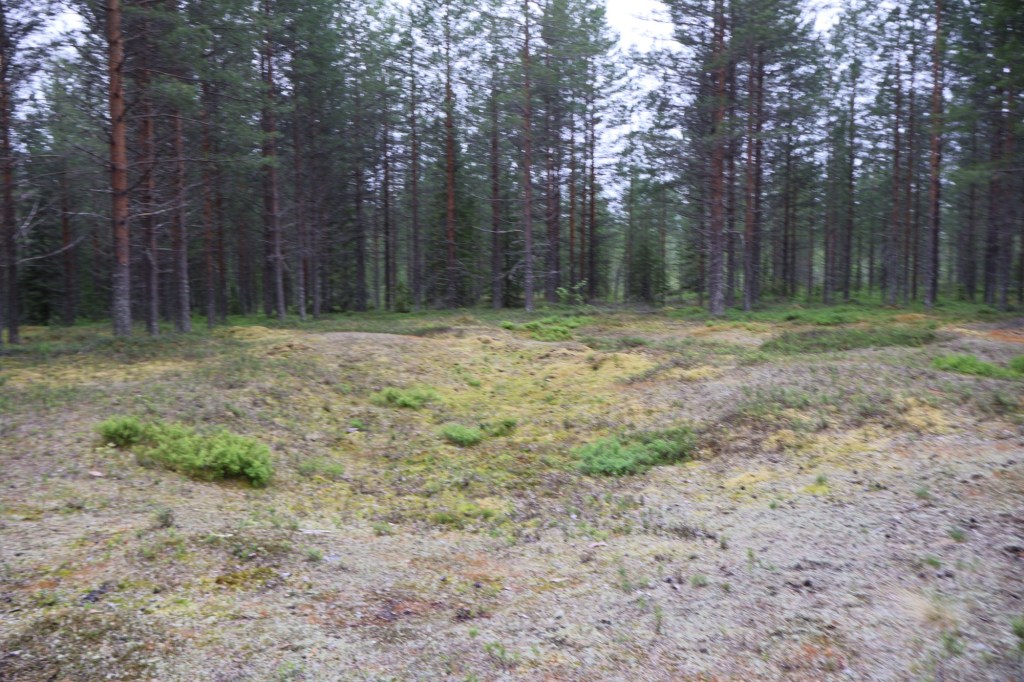
This site is particularly well preserved and in the pine forest it is easy to see the pits that was the foundation of around 50 houses or huts.
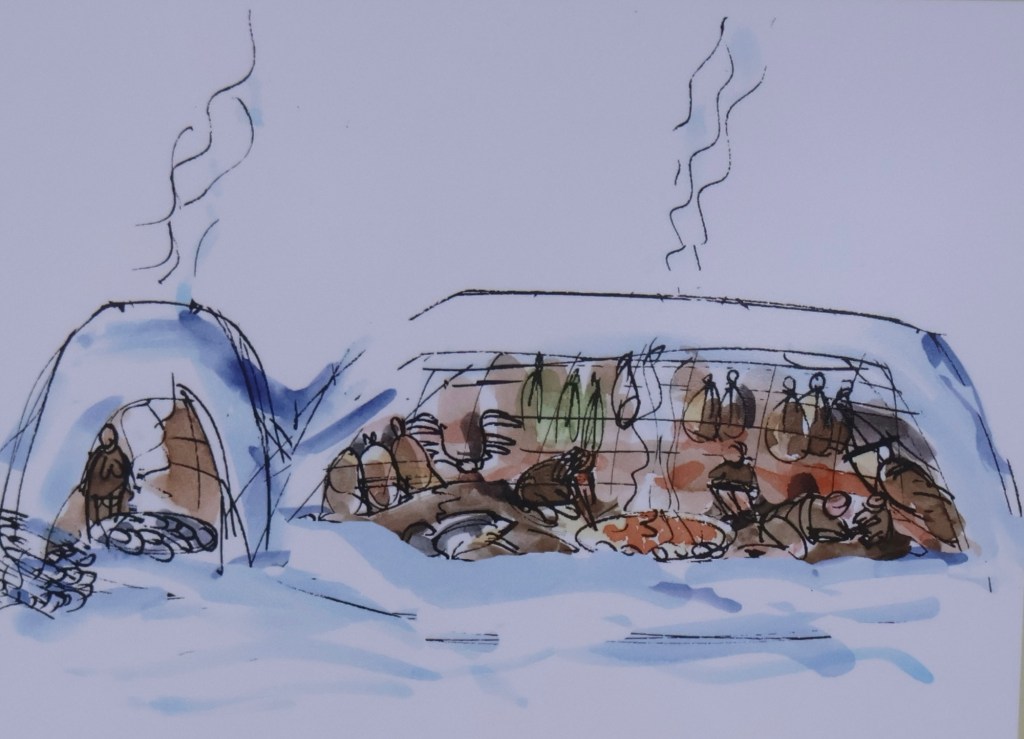
Several of the larger buildings have a smaller pit next to it indicating that they had an adjoining building. It is possible that they worked as a type of air lock to preserve heat. They were quite large with floor area of 20-50 m². They builders dug a pit placing the sand as walls and timber was placed inside the pit so that the sand would pour back in. This timber was still there and has been found by archaeologists. Above the pit a roof was constructed and these huts must have been quite cosy.
A few of the foundations have been excavated by archaeologists that found relatively little finds. Some of them were knives and scrapers used for hide preparation made out of quartz. They also found a gum that someone had been chewing on made from tree resin. I assume that it was pine and that it was do be used fix a hole in a canoe or a container.

A chard of an unusual type of ceramic was found in one of the houses. It contained asbestos and was of the type called Pöljä ceramic after a settlement in Finland whey it was found. The shard was likely a part of a pot, because of the asbestos it could be made lighter with thin walls which is ideal for someone that moves around a lot.
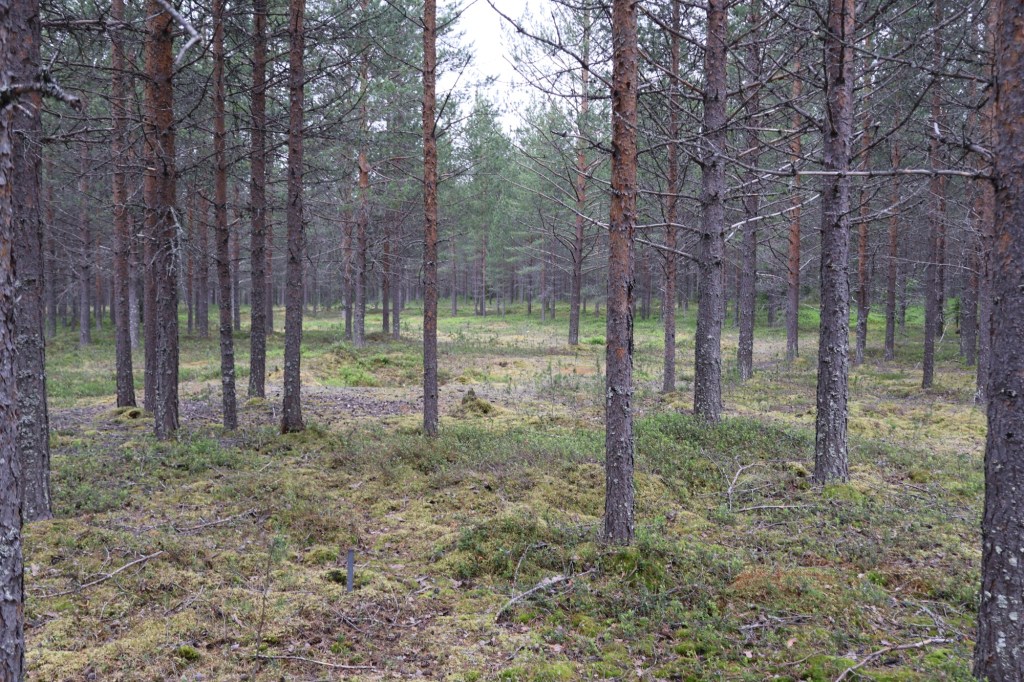
The relatively small amount of archaeological finds here are likely a result of it being inhabited only at certain times of the year. Most likely during the winter.
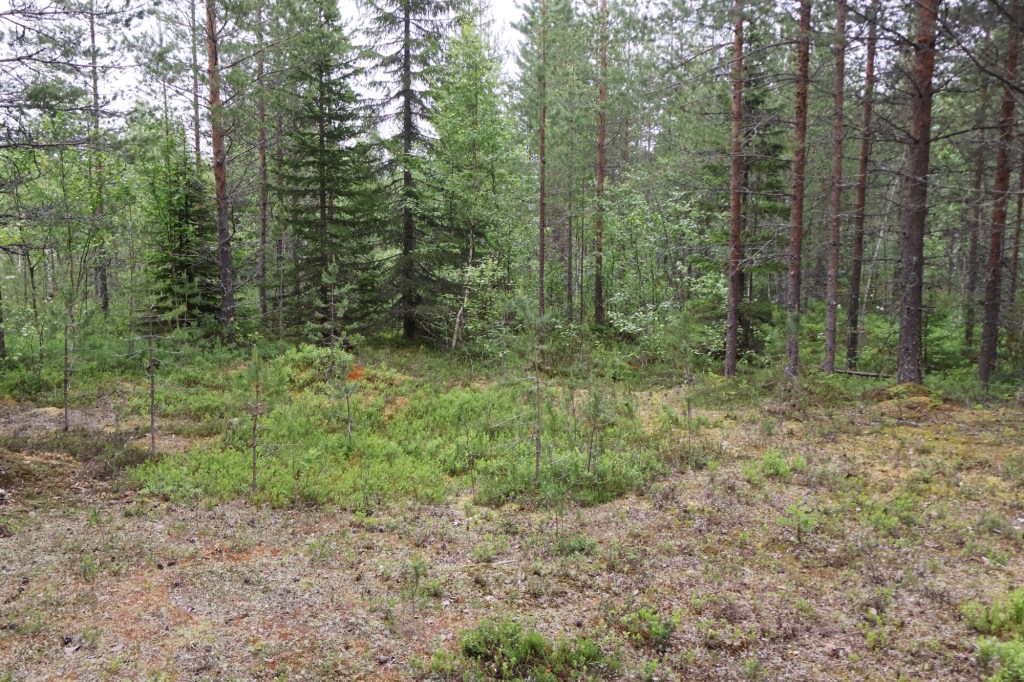
The people living here were hunters and gatherers. The first hunters that entered Scandinavia after the Ice Age were following reindeer and other large animals. As time went on and the changing environment and climate it became harder to live only on this type of prey.

Marine protein in the form of fish, sea birds and especially seals became increasingly more important as a food source. Especially seals that contained a lot of fat and blubber became a lifeline for these people. Besides providing food and hides the blubber could be lit on fire to heat and bring light inside the hut.
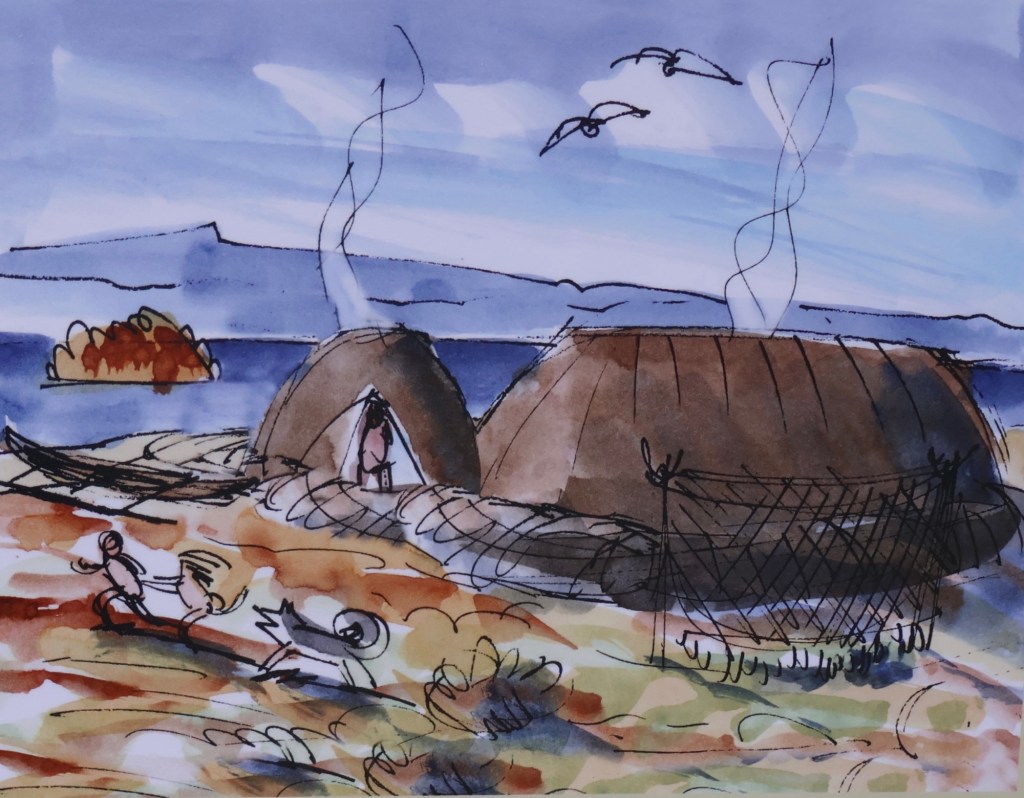
So how did this area look 5500 years ago? The pine forest that grows here today wasn’t present back then. Instead the settlement was located on a sand beach by the sea. A small peninsula gave some shelter to the beach. It must have been a perfect location to live.
About 20 kilometers to the east was a fjord into which the river Torne älv entered the sea. This river is today the border between Sweden and Finland.

The settlement is now located 60 meters above sea level and the sea is nowhere close. This is explained by the tectonic uplift that Scandinavia experiences. During the last ice age Scandinavia was covered by an ice sheet that measured several kilometers in thickness. This extreme weight pushed the land down below sea level. After the ice melted the land started to rise up. Faster at the beginning and the further north in Scandinavia the faster the land rises. The bog next to this site was once the sea.
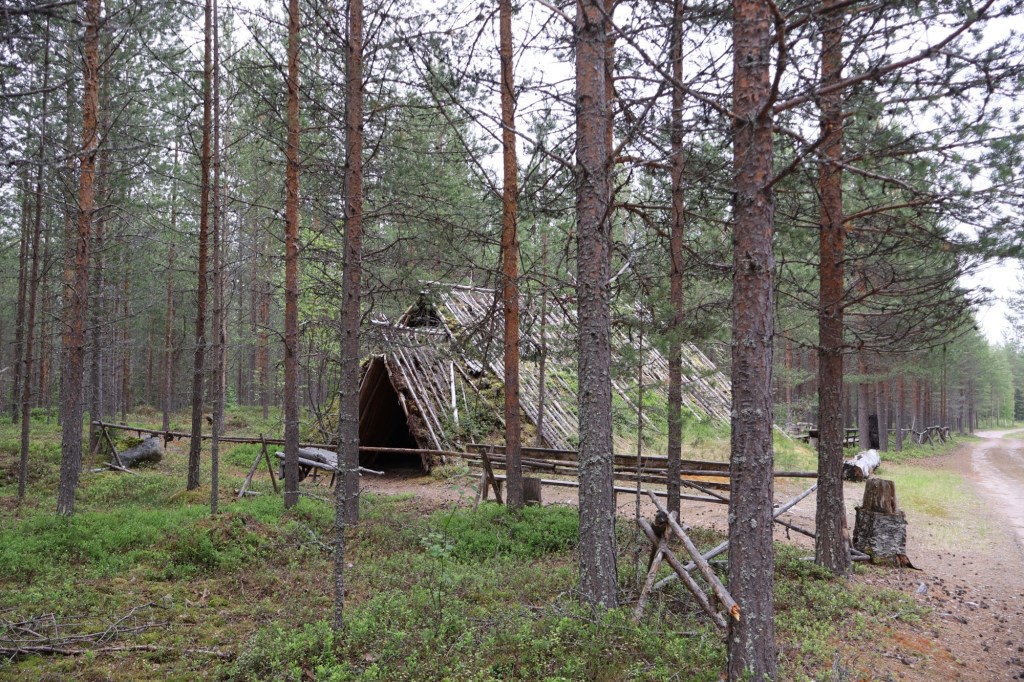
During the Stone Age the speed was quite high and this might be the reason why this settlement was eventually abandoned as it ended up to far from the sea. This land rise is still going on and northern Sweden with a speed of 10 mm each year in this area. While southern areas like Skåne is actually sinking.

Next to the archaeological site reconstructions of how the huts might have looked like have been built. There are also fire places and other structures for visitors. Local schools use this site as educational.


 Fornminnen
Lämna en kommentar