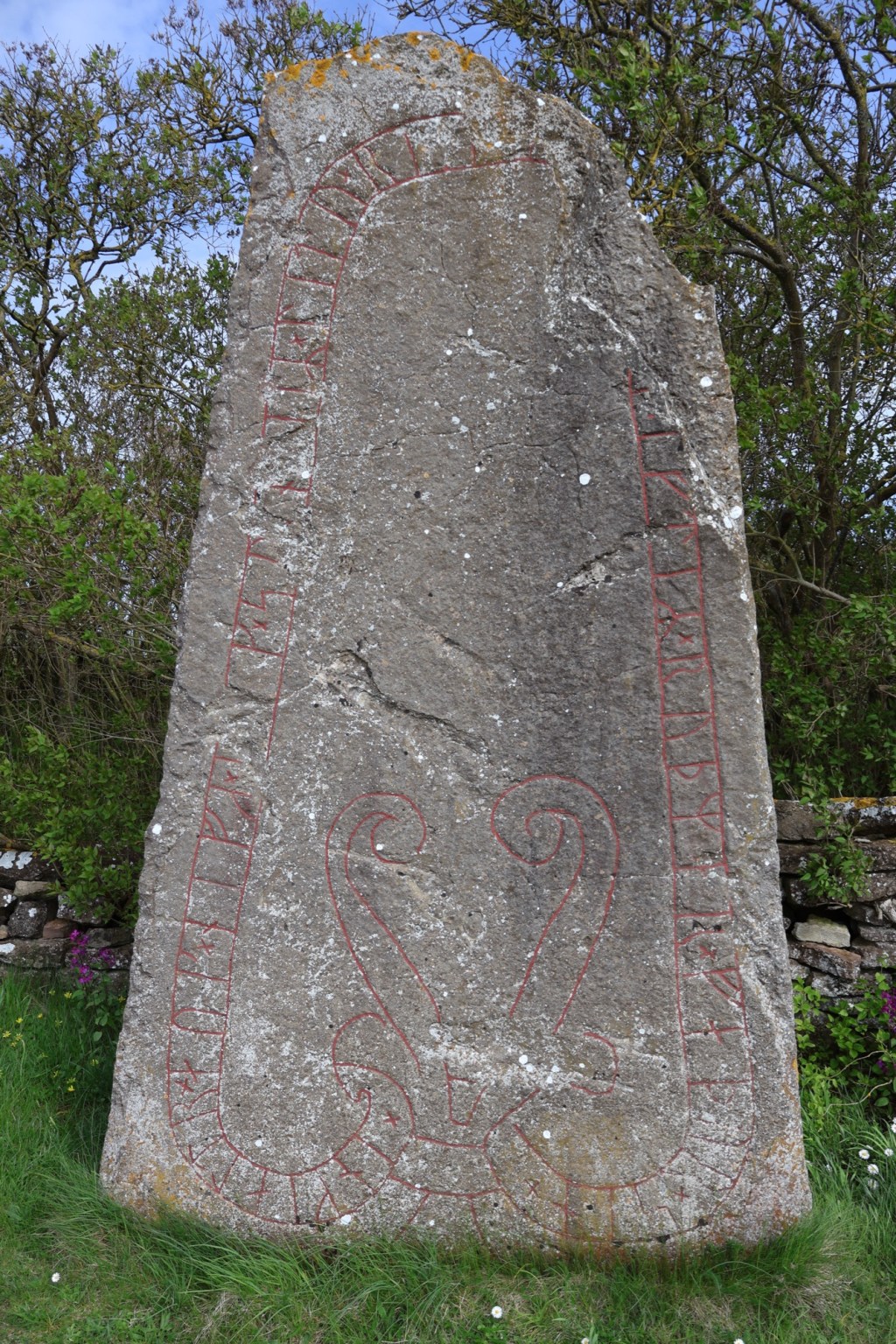
I spotted this massive runestone Whitley drivning down a small countryside road in Seby on southern Öland, a large island off the eastern coast of Sweden in the Baltic Sea.
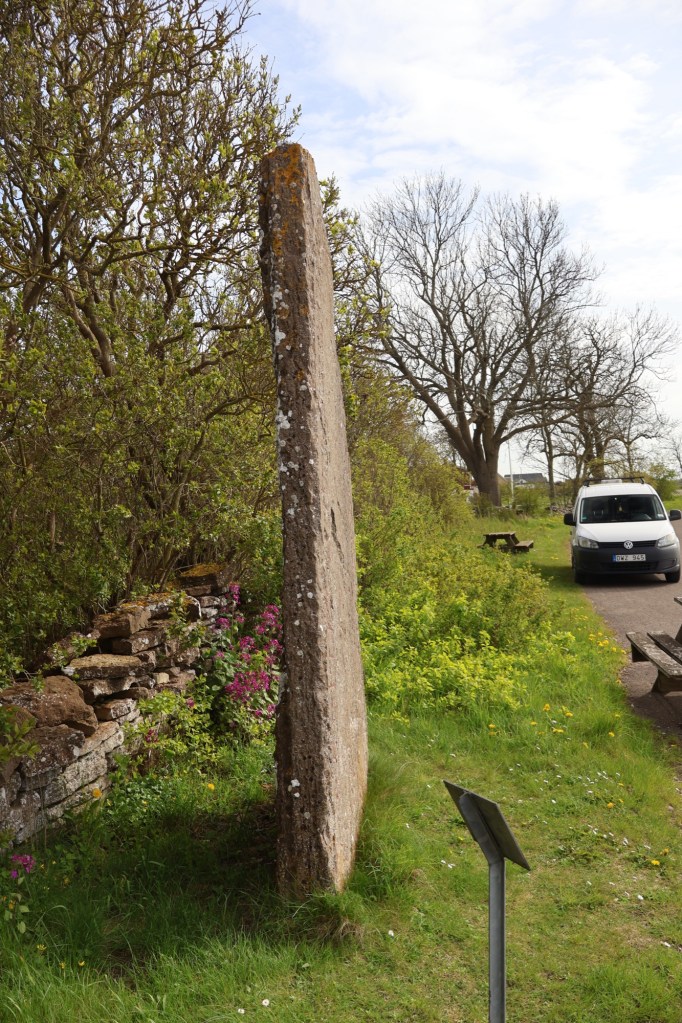
Right in front of the stone that has the signum ÖL 18 there is a perfect area to stop with the car for a rest.
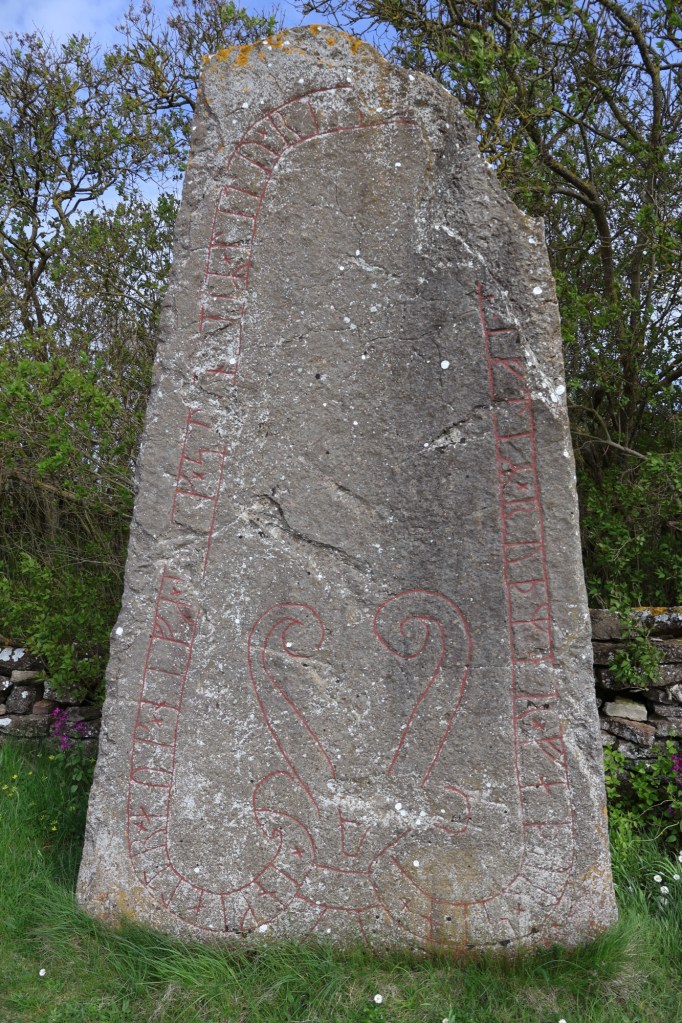
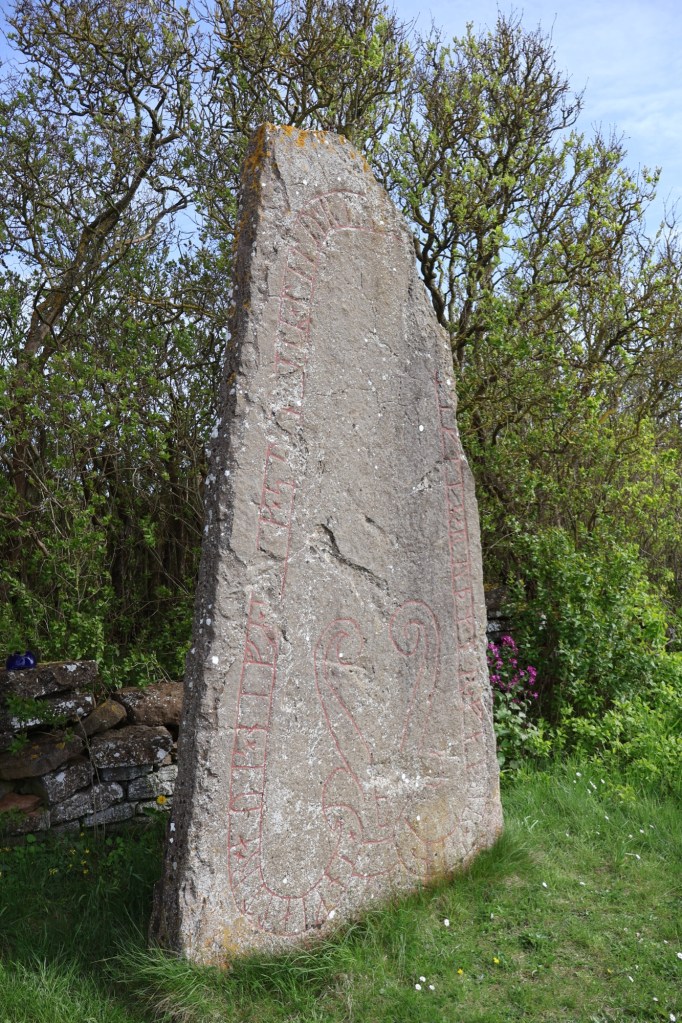
I did not exaggerate when I wrote that the stone is massive, measuring 3 m tall and 1.75 m wide. It’s made out of chalk with a double tailed runic band. It is in comparison to its size not very thick measuring only between 22.5 and 30 cm giving it a slender and delicate quality.
The runes measuring between 14 and 11 cm tall reads as following:
× inkialtr × auk × nifR × [au]k × su[i]n [× þa]iR × litu × risa …- × iftiR × ruþmar × faþur × sin ×
Ingialdr ok NefR ok Svæinn, þæiR letu ræisa [stæin] æftiR Hroðmar, faður sinn.
Ingjald and Näf and Sveinn, they had this stone raised in memory of Hróðmar, their father

The inscription talks about three brothers that erected the stone in memory of their father that had died.
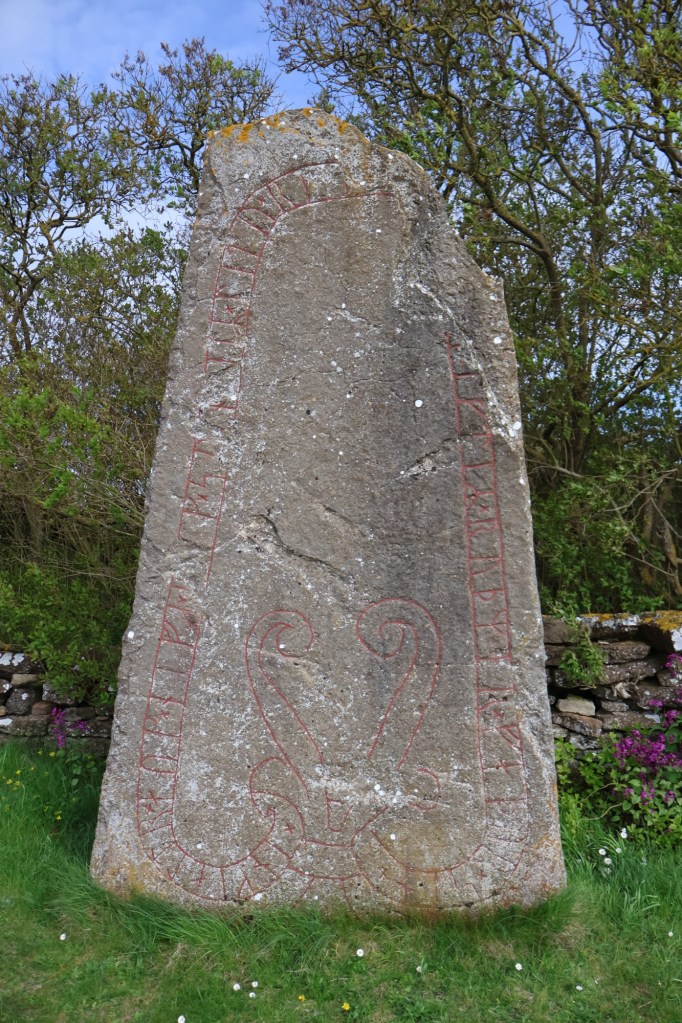
The brother called Näf or NefR has an interesting and somewhat funny name as it is a byname that means “the one with the nose” referring to a person with large and deformed nose.

The other brother Ingjald probably mentioned on another runestone found near by known as ÖL 17. This stone is now missing but used to stand in Seby as well. The inscription on this stone reads:
[× þurkuþr × raisti × stain × þenh × iftiʀ × inkialt × bruþur × sin ×]
Þorguðr ræisti stæin þenna æftiʀ Ingiald, broður sinn.
Torgunn (or Torgot?) raised this stone after Ingjald, his brother.
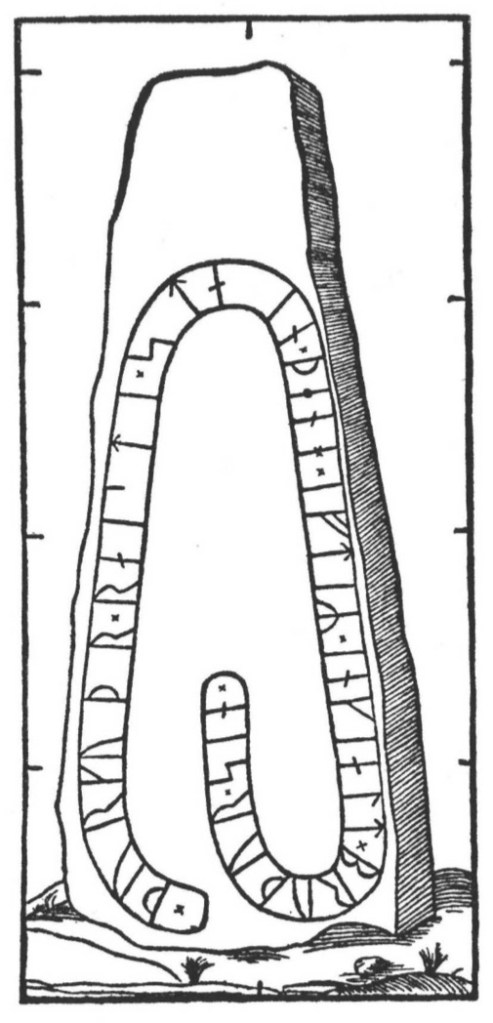
So from this we can draw the assumption that among the two Viking Age runestones ÖL 17 is younger than ÖL 18 and that they were at least 4 brothers. ÖL 18 was probably made between 1020 and 1080 CE.
The damage in the top right corner was precent already in 1634.


 Fornminnen
Lämna ett svar till Filip Falk Avbryt svar